There are many places where we can feel an overwhelm, for some of us, the overwhelm can be, well, overwhelming and trying to find somewhere to recalibrate can be difficult.
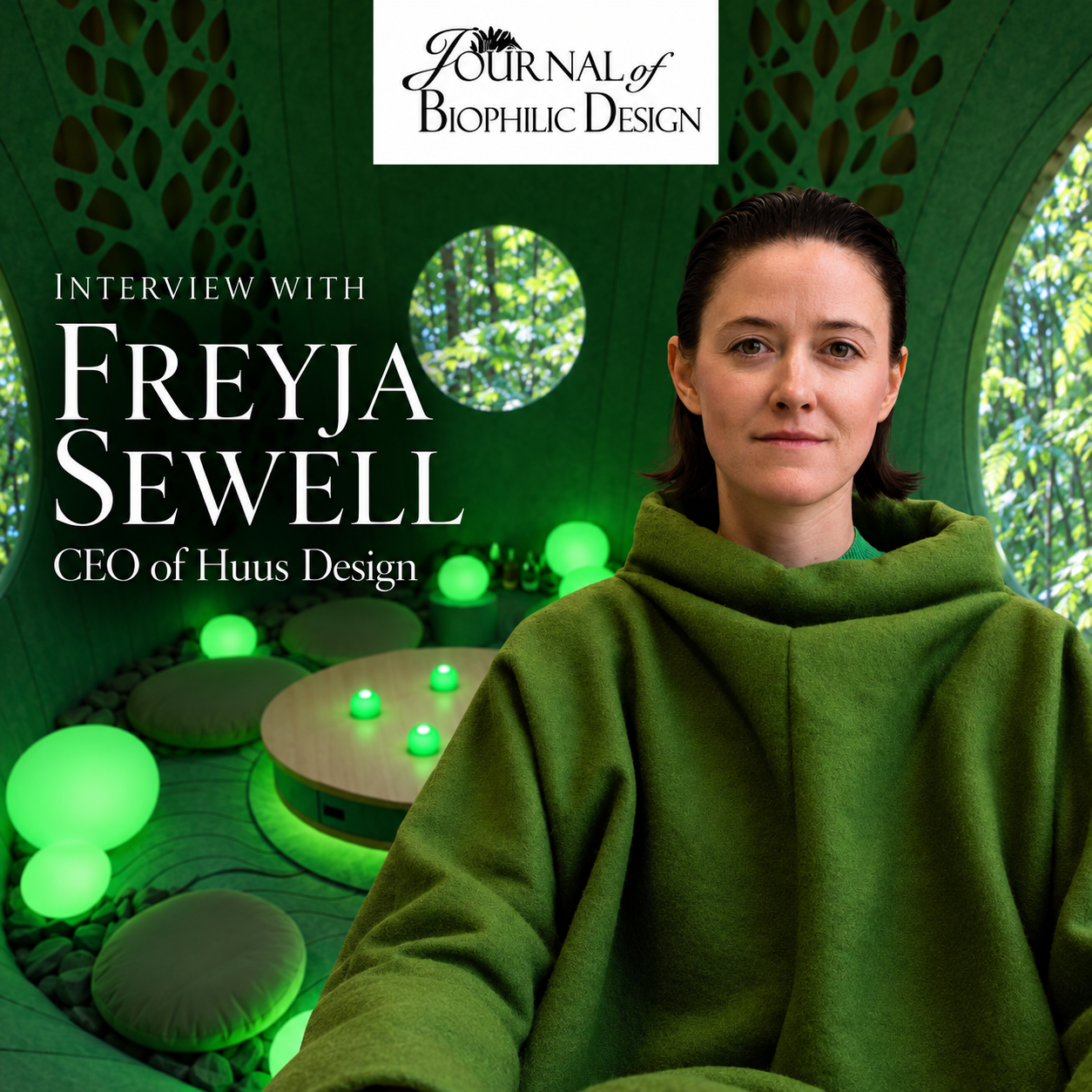
So how can design help us feel safe, connected and able to participate in the world? Designer and interdisciplinary artist Freyja Sewell begins with nature, sensory experience and a willingness to imagine things differently.
As a neurodivergent designer herself, Freyja is founder of HUUS Design, where she brings together art, technology, nature and sensory design to create gorgeous woven soft felt pods and other products including digital capability to help create environments that support human experience better. Her work is also woven by an ambition to make positive futures tangible.