Biophilic Design Monographs
Free publications exploring the ideas shaping the future of Biophilic Design
Some ideas deserve more than an article.
The Journal of Biophilic Design Monograph Series is a growing collection of beautifully designed, freely available publications that explore a single subject in depth. Each monograph brings together research, innovation, practice and inspiring case studies to advance understanding of one important aspect of Biophilic Design.
Rather than trying to cover everything at once, each publication focuses on one topic—whether a groundbreaking material, an emerging scientific field, a pioneering project, an influential practitioner or a new way of thinking about the relationship between people and nature.
Together, these publications create an evolving library of knowledge that helps designers, architects, researchers, policymakers and organisations implement Biophilic Design with greater confidence and clarity.
Why we publish them
The climate, biodiversity and wellbeing challenges facing our built environment require knowledge to travel faster.
Our aim is to accelerate understanding, communication and implementation of Biophilic Design around the world.
By making specialist knowledge accessible, beautifully presented and free to download, we hope these monographs become resources that are shared between colleagues, taught in universities, referenced by researchers, discussed in studios and used to inspire projects of every scale.
Every monograph is an invitation to learn from one another. We believe innovation grows when ideas are openly shared across disciplines and across borders.
More topics we'll be exploring
The series will cover a wide range of subjects, including:
Material innovation
Living and preserved planting systems
Bioreceptive architecture
Environmental psychology
Scientific research
Biophilic acoustics
Nature-inspired geometry
Moss, timber and natural material systems
Buildings and exemplary projects
Urban design and city planning
Healthcare, education, workplace and residential environments
Thought leadership from pioneers across the world
As the collection grows, each monograph will become part of an expanding reference library documenting the evolution of Biophilic Design.
Free for everyone
Every monograph is available to download free of charge.
This is made possible through partnerships with organisations, innovators and thought leaders who commission or support individual publications. Their investment allows the knowledge to remain openly accessible, helping ideas reach the widest possible audience while encouraging better design for people and planet.
New Monograph
Monograph 2 - Nature Preserved: The Definitive Guide to Preserved Plants
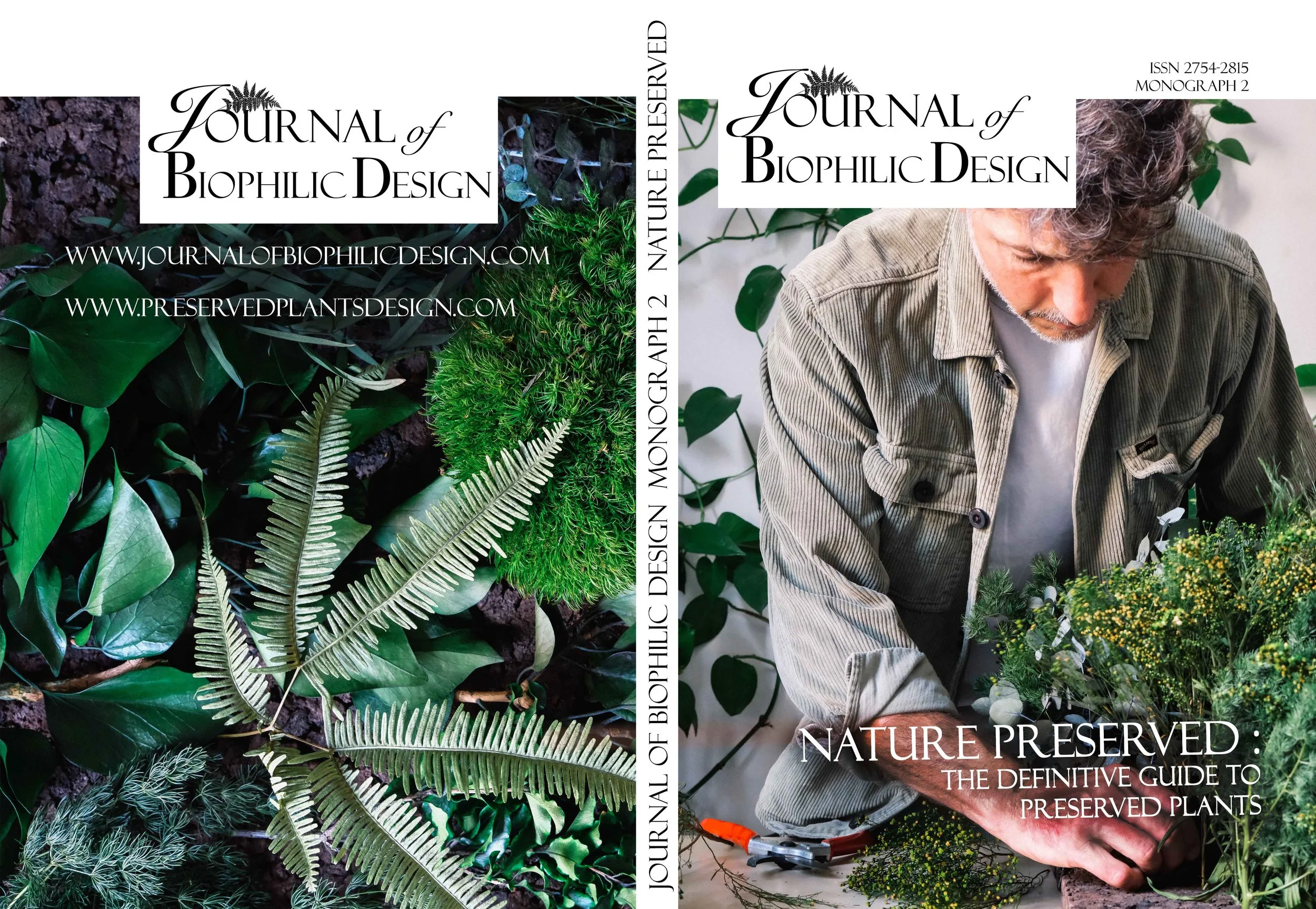
Nature Preserved - The Definitive Guide to Preserved Plants
Specification, Design and Best Practice for Biophilic Interiors
A practical guide to understanding preserved botanical materials and their role in contemporary Biophilic Design.
Read the flip book here or scroll down to download your own FREE PDF
Download your free copy here:

This book is a practical guide to using preserved plants as a serious indoor design medium and as one element within a wider approach to biophilic design. It explores where real botanical material can add value to interior spaces, particularly where living plants would be difficult, wasteful or operationally demanding to sustain. Rather than treating preserved plants as decoration, it provides a clear framework for making better decisions about typology, placement, ownership, materiality, performance and long-term care.
The book distinguishes living, preserved and artificial vegetation, while arguing for coexistence rather than ideology: living plants where conditions genuinely support them, preserved plants where living systems would be forced, and other biophilic strategies where greenery is not the right answer.
It also addresses the practical realities behind successful projects, from light, heat and airflow to cleaning, ageing, refresh, documentation and assembly. Central to this is material honesty: understanding not only what people see, but what sits behind it. The result is a clearer, more responsible approach to specifying real botanical material indoors.
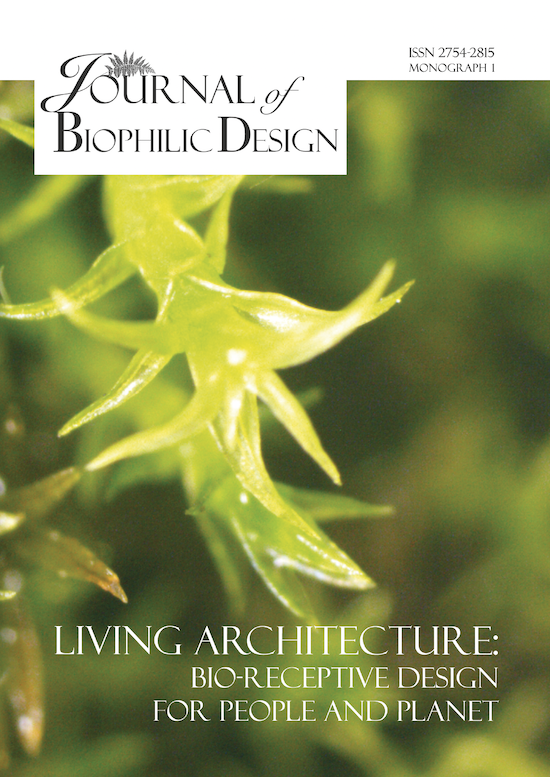
Monograph 1
Living Architecture: Bioreceptive Design for People and Planet
An exploration of bioreceptive architecture and how buildings can be designed to support biodiversity while creating healthier, more regenerative places for people. READ USING THE LINKS BELOW
Monograph 2
Nature Preserved - The Definitive Guide to Preserved Plants
Specification, Design and Best Practice for Biophilic Interiors
A practical guide to understanding preserved botanical materials and their role in contemporary Biophilic Design.
Looking ahead
Future editions will explore pioneering materials, influential designers and architects, scientific discoveries, environmental psychology, historic photographic archives, innovative products and projects that are changing the way we think about nature and the built environment.
Every publication has one purpose: to move the conversation forward.
Have an idea?
We're always looking for subjects that deserve a deeper conversation.
If you're developing an innovative material, leading important research, creating exemplary projects or championing new thinking that could advance Biophilic Design, we'd love to hear from you.
Together we can build a free global library of knowledge that inspires better design and helps accelerate a healthier, more nature-connected future.
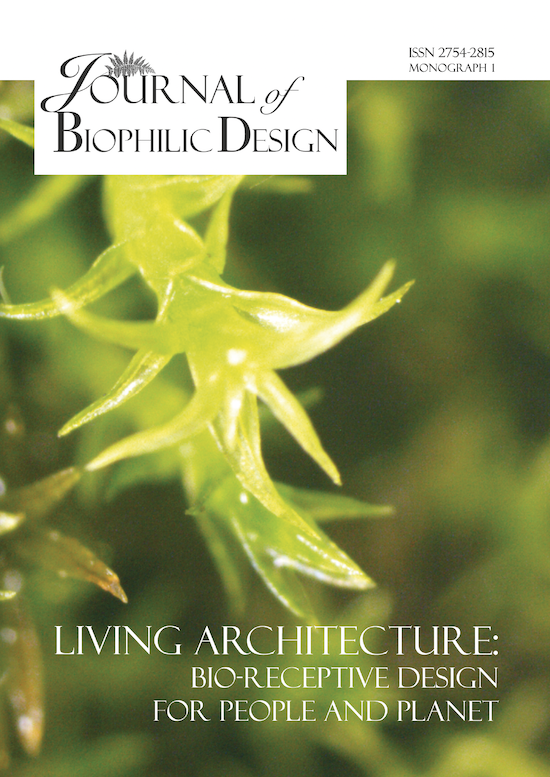
Monograph 1 - Living Architecture: Bioreceptive Design for People and Planet
Living Architecture: Bioreceptive Design for People and Planet was the inaugural publication in the Journal of Biophilic Design Monograph Series. It explores how buildings can be designed not simply to minimise environmental impact, but to actively support biodiversity through bioreceptive architecture. Combining science, material innovation and visionary design thinking, the monograph demonstrates how our buildings can become living participants in healthier, more regenerative ecosystems.
Read the Monograph here online, click on the little square to the left of the “volume” icon to read it full page:
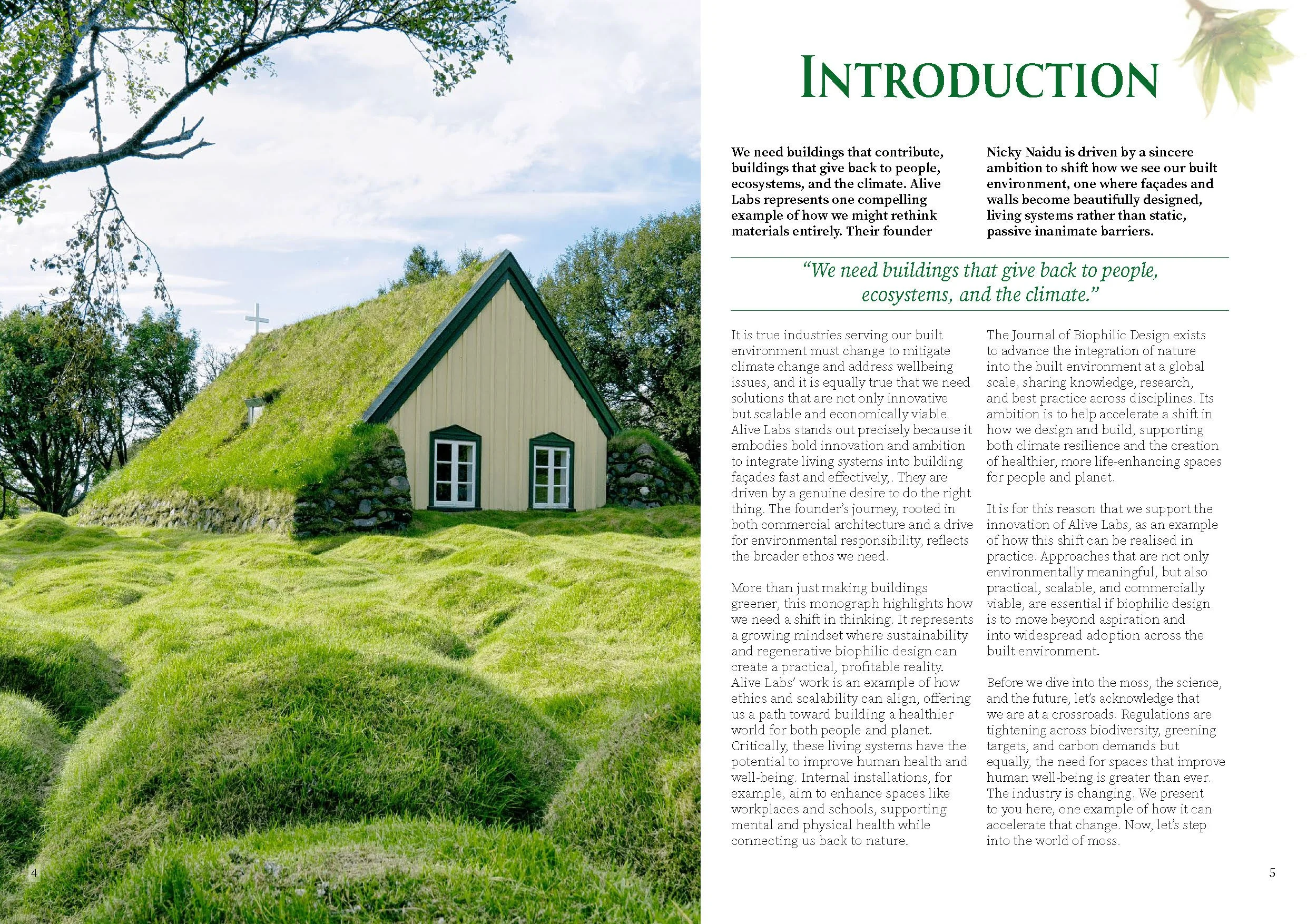
We need buildings that contribute, buildings that give back to people, ecosystems, and the climate. Alive Labs represents one compelling example of how we might rethink materials entirely. Their founder Nicky Naidu is driven by a sincere ambition to shift how we see our built environment, one where façades and walls become beautifully designed, living systems rather than static, passive inanimate barriers.
It is true industries serving our built environment must change to mitigate climate change and address wellbeing issues, and it is equally true that we need solutions that are not only innovative but scalable and economically viable. Alive Labs stands out precisely because it embodies bold innovation and ambition to integrate living systems into building façades fast and effectively,. They are driven by a genuine desire to do the right thing. The founder’s journey, rooted in both commercial architecture and a drive for environmental responsibility, reflects the broader ethos we need.
More than just making buildings greener, this monograph highlights how we need a shift in thinking. It represents a growing mindset where sustainability and regenerative biophilic design can create a practical, profitable reality. Alive Labs’ work is an example of how ethics and scalability can align, offering us a path toward building a healthier world for both people and planet. Critically, these living systems have the potential to improve human health and well-being. Internal installations, for example, aim to enhance spaces like workplaces and schools, supporting mental and physical health while connecting us back to nature.
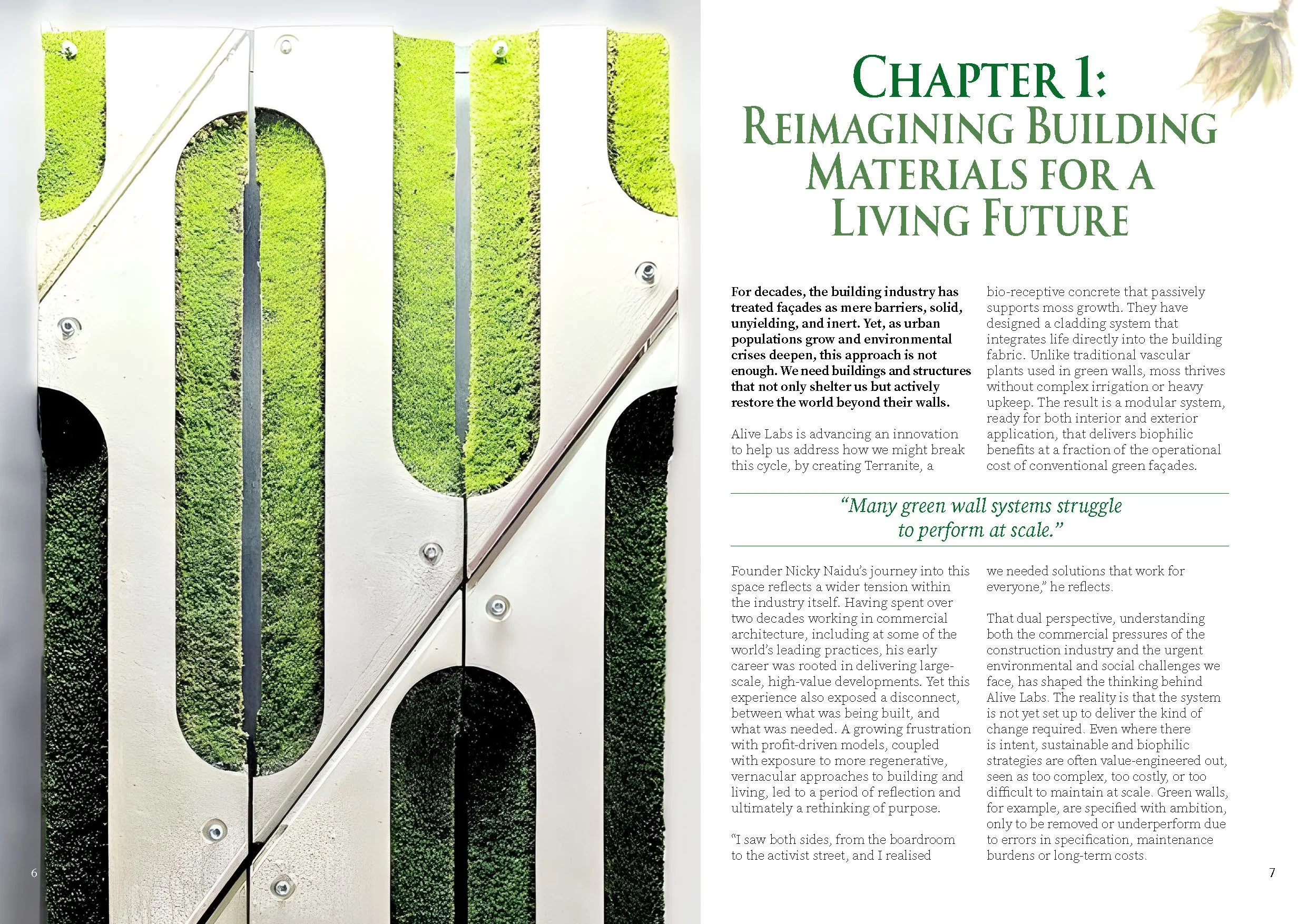
For decades, the building industry has treated façades as mere barriers, solid, unyielding, and inert. Yet, as urban populations grow and environmental crises deepen, this approach is not enough. We need buildings and structures that not only shelter us but actively restore the world beyond their walls.
Alive Labs is advancing an innovation to help us address how we might break this cycle, by creating Terranite, a bio-receptive concrete that passively supports moss growth. They have designed a cladding system that integrates life directly into the building fabric. Unlike traditional vascular plants used in green walls, moss thrives without complex irrigation or heavy upkeep. The result is a modular system, ready for both interior and exterior application, that delivers biophilic benefits at a fraction of the operational cost of conventional green façades.
Living Architecture explores how buildings can be designed not simply to minimise environmental impact, but to actively support biodiversity through bioreceptive architecture. Combining science, material innovation and visionary design thinking, the monograph demonstrates how our buildings can become living participants in healthier, more regenerative ecosystems.
Monograph 2 - Nature Preserved: The Definitive Guide to Preserved Plants
Nature Preserved - The Definitive Guide to Preserved Plants
Specification, Design and Best Practice for Biophilic Interiors
A practical guide to understanding preserved botanical materials and their role in contemporary Biophilic Design.
Read the Flipbook here: