How can our buildings become active contributors to healthier lives rather than passive consumers of resources? Our cities are grappling with climate change, biodiversity loss, employee wellbeing and the changing role of the workplace, for Patrick Dumas, Founder and CEO of Square Mile Farms, the answer begins with growing food.
His concept has evolved into one of the UK's largest networks of indoor urban farms, with more than 120 installations and over 75,000 plants growing inside workplaces and residential developments. Yet the plants, herbs and vegetables are only part of the story.
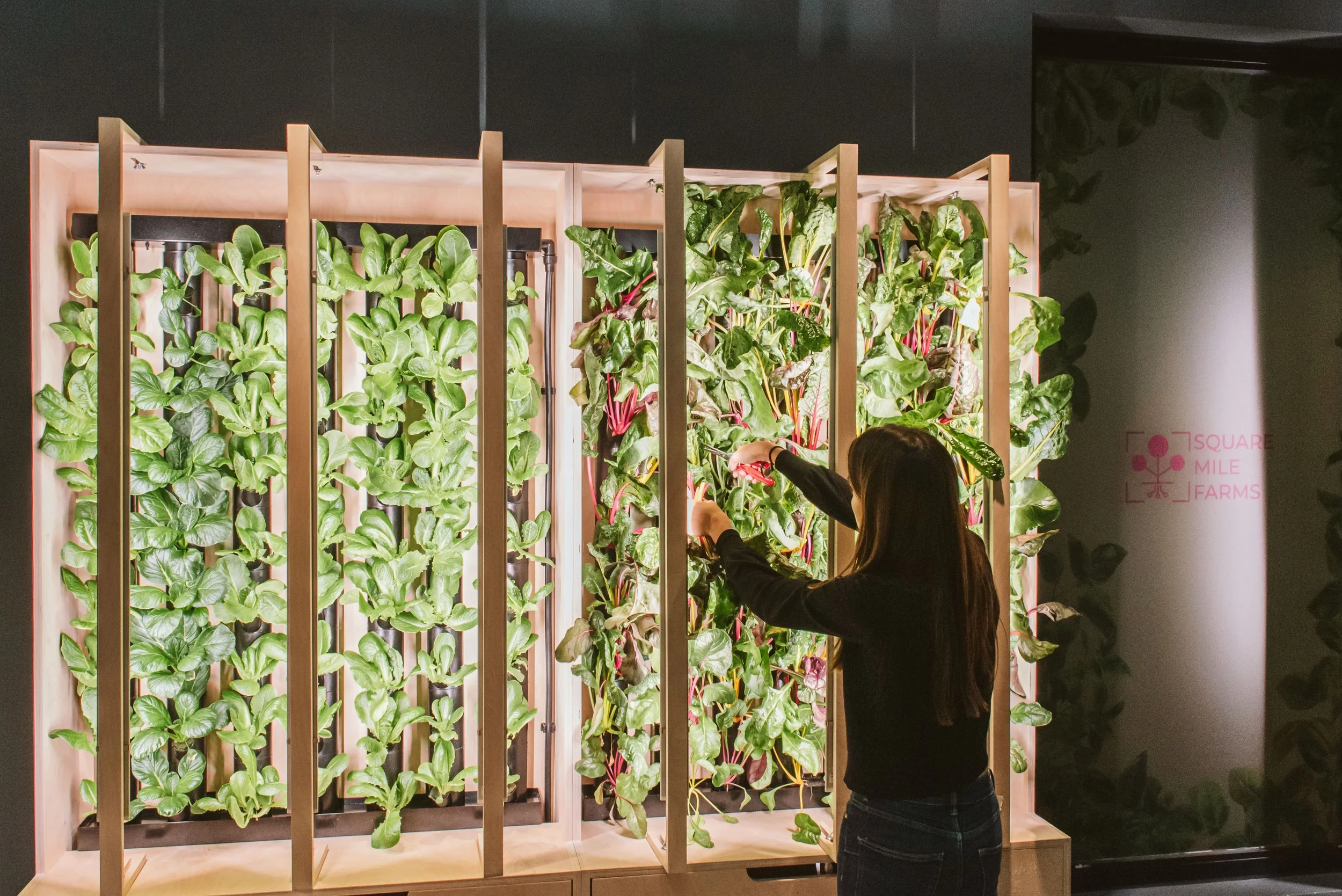
Wharf Farm, Canary Wharf
"We reconnect people with one another, with nature and with their own wellbeing," explains Patrick. "Food is simply the medium through which we do that."
Biophilic Design that People can taste
Biophilic design has long focused on bringing nature into buildings through plants, natural materials, daylight and views. Square Mile Farms extends this concept into something immersive.
Instead of greenery becoming passive decoration, employees become active participants. They watch herbs mature, vote on what will be grown next, harvest fresh produce together and swap recipes over lunch. The result is a multi-sensory experience that engages sight, smell, touch and taste simultaneously.
"The experience of biophilia is much richer," says Patrick. "It looks good, smells good, tastes good and you're using your hands. You're getting up close with nature before eating what you've grown."
This aligns closely with many of biophilic design's recognised patterns, including direct experience of nature, sensory richness, connection with natural systems and seasonal change. Watching food grow over weeks reconnects people with rhythms that many urban lives have lost.
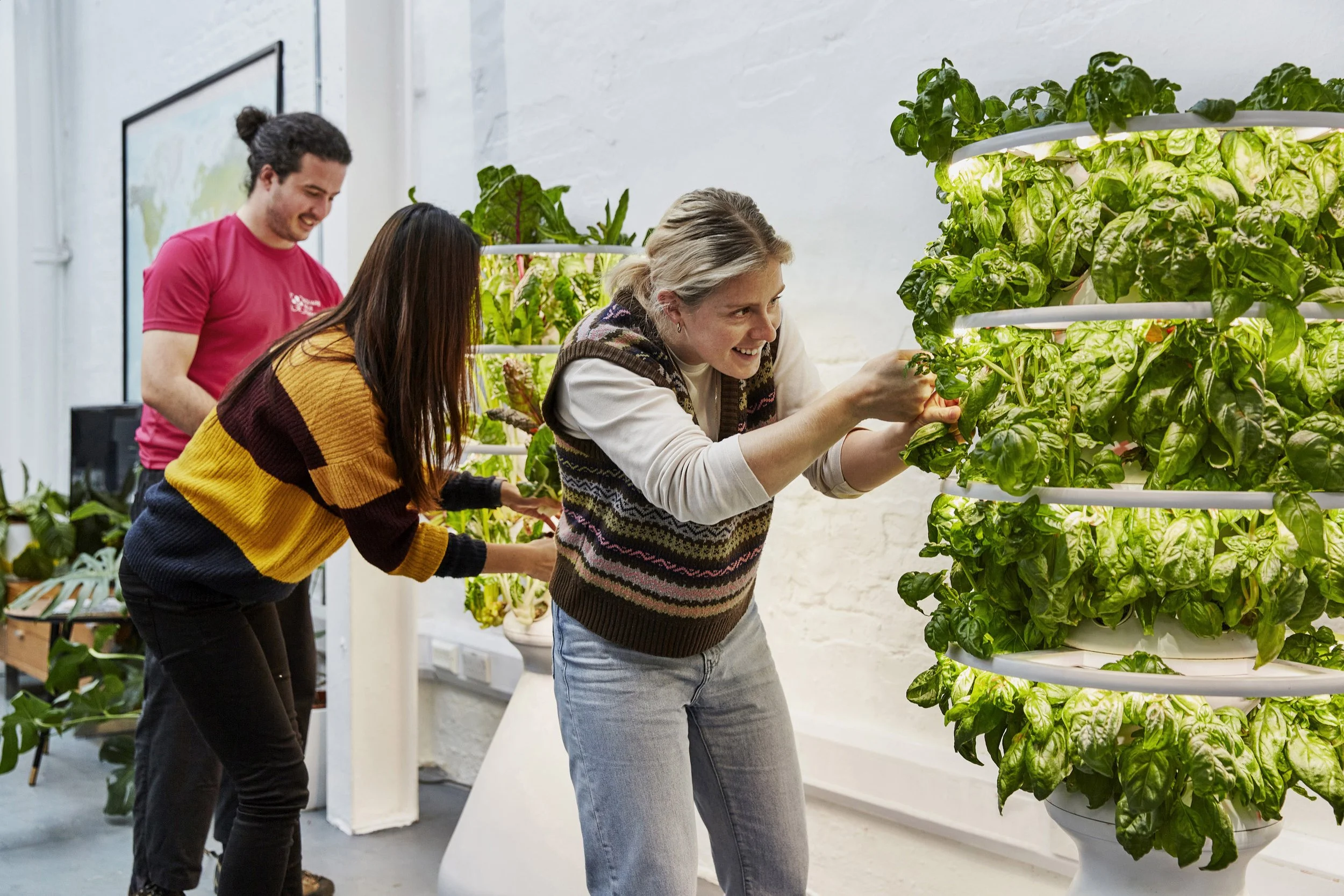
Farmstand, image credit Olivia Photography
Growing Community alongside Vegetables
Perhaps the greatest surprise has been that the farms' most valuable harvest isn't basil or salad leaves—it's human connection.
Harvest days have become social events. Employees queue to collect herbs, learn growing techniques from on-site farmers and exchange ideas about cooking and sustainability. Rather than another workplace amenity, the farms become magnets that naturally draw people together.
"We have people saying they come into the office because it's harvest day," he explains. "People stop buying basil from the supermarket because they know they can harvest it themselves."
Square Mile Farms' team are highly visible within each building. Their farmers don't just maintain installations behind the scenes—they actively engage with occupants, teaching growing skills, discussing recipes and nurturing relationships alongside the plants themselves.
Reimagining Forgotten Spaces
One of the most exciting aspects of the model is its ability to transform overlooked parts of buildings.
Disused basements, redundant plant rooms, underused lobbies and vacant corners become productive landscapes that contribute to health, biodiversity awareness and workplace culture.
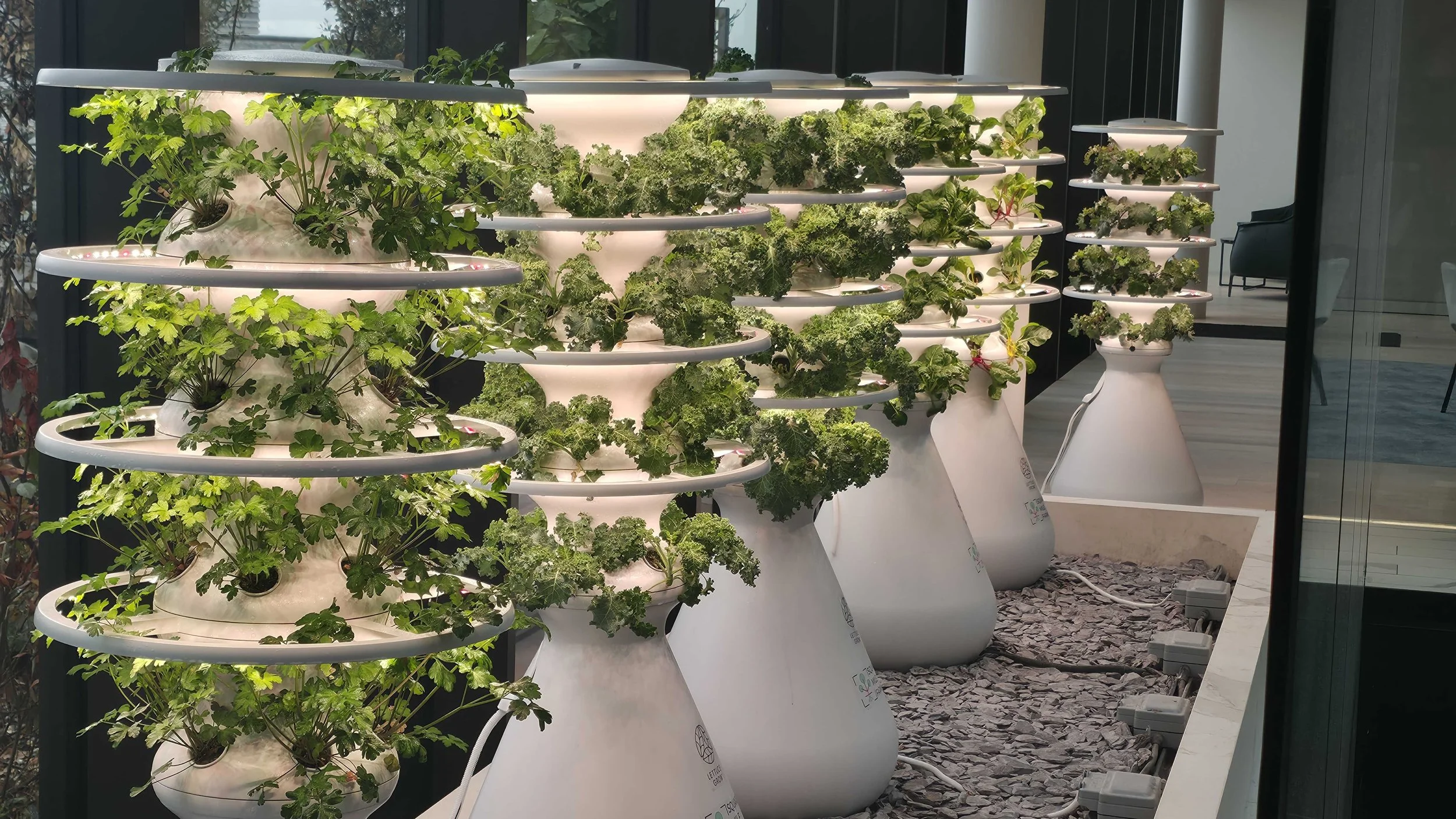
One installation now grows around 25,000 plants beneath the headquarters of a major global company, supplying fresh produce directly to its catering operation. Suddenly, the most interesting part of the building isn't the executive floor—it's the basement.
As retrofit becomes central to sustainable architecture, these interventions demonstrate that regeneration doesn't always require rebuilding. Sometimes it requires rethinking how existing space can support both people and nature.
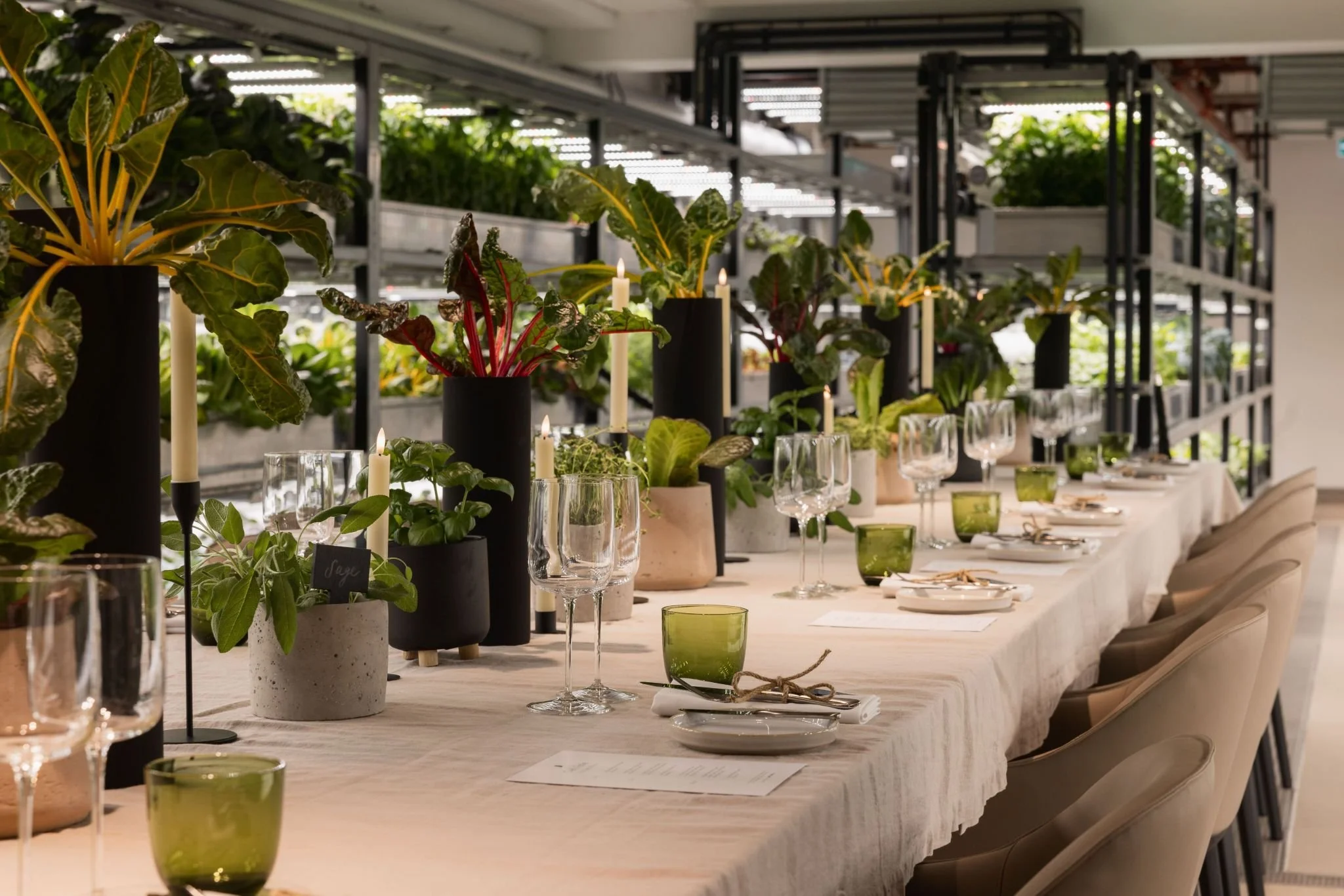
Basement farm and dining area which double up as a boardroom.
Food as Urban Infrastructure
Looking ahead, Patrick believes cities should begin thinking about urban farming in the same way they now think about cycle infrastructure.
Just as many buildings are expected to provide bike storage or electric vehicle charging, why shouldn't they also provide space for growing food?
"If every building had provision for growing some food," he suggests, "collectively that capacity becomes quite substantial."
His vision is ambitious but practical. He sees a distributed network of productive landscapes woven throughout our commercial buildings, creating healthier workplaces while reducing food miles, reconnecting people with natural systems and strengthening community resilience.
It is, fundamentally, biophilic design operating at city scale.
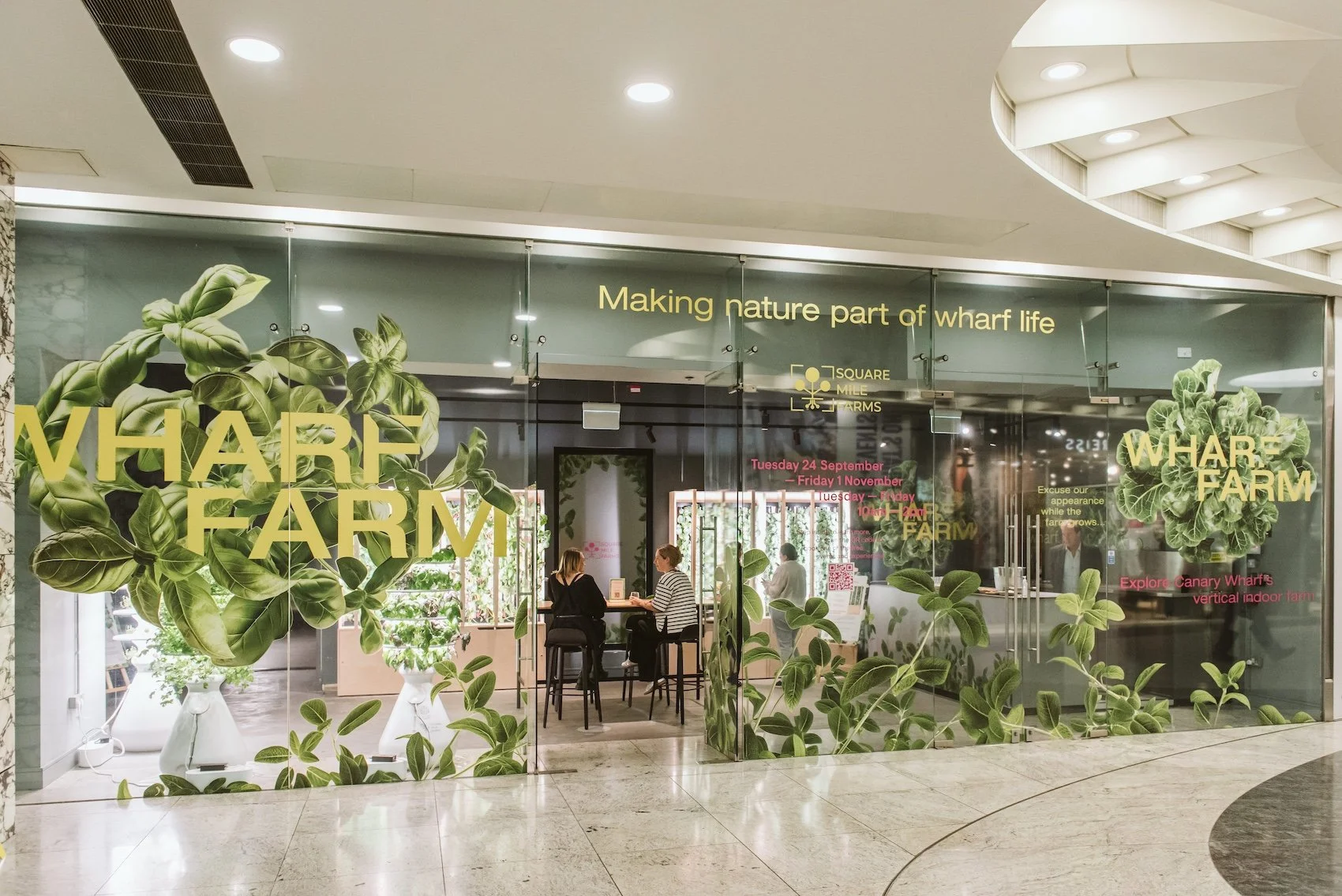
Canary Wharf, Wharf Farm
Invitation - Join us and see for yourself
The Journal of Biophilic Design is delighted to announce that we will soon be partnering with Square Mile Farms for a special event exploring these ideas in person.
We're planning an event in the Square Mile, concluding at one of London's most remarkable indoor urban farms, where thousands of edible plants are grown beneath a commercial building to supply its occupants with fresh produce.
If you'd like to hear more about this event, make sure you're subscribed to the Journal of Biophilic Design newsletter. We'll be announcing dates and booking details very soon.
Next time you are specifying the planting, also look at the multi sensory aspect, and see how you can weave beautiful edibles into the design to reconnect us with food, nature, one another and the living systems that sustain us all.
To find out more about Square Mile Farms visit www.squaremilefarms.com
The Orangery: https://www.orangerytcr.com/.
Have you got a copy of the Journal? You can now subscribe as a member of the Journal of Biophilic Design or purchase a gorgeous coffee table reference copy or PDF download of the Journal journalofbiophilicdesign.comor Amazon and Kindle.
Credits: with thanks to George Harvey Audio Production for the calming biophilic soundscape that backs all of our podcasts.
Listen to our podcast on Audible, Amazon Music, Spotify, iTunes, YouTube and all the RSS feeds.
https://www.facebook.com/journalofbiophilicdesign/
https://www.linkedin.com/company/journalofbiophilicdesign/
https://www.instagram.com/journalofbiophilicdesign
If you like this,please subscribe!