retail

Mindful Designing - Freyja Sewell on Biophilia, Neurodiversity and Positive Futures

 Mindful Designing  - Freyja Sewell on Biophilia, Neurodiversity and Positive Futures

There are many places where we can feel an overwhelm, for some of us, the overwhelm can be, well, overwhelming and trying to find somewhere to recalibrate can be difficult. 

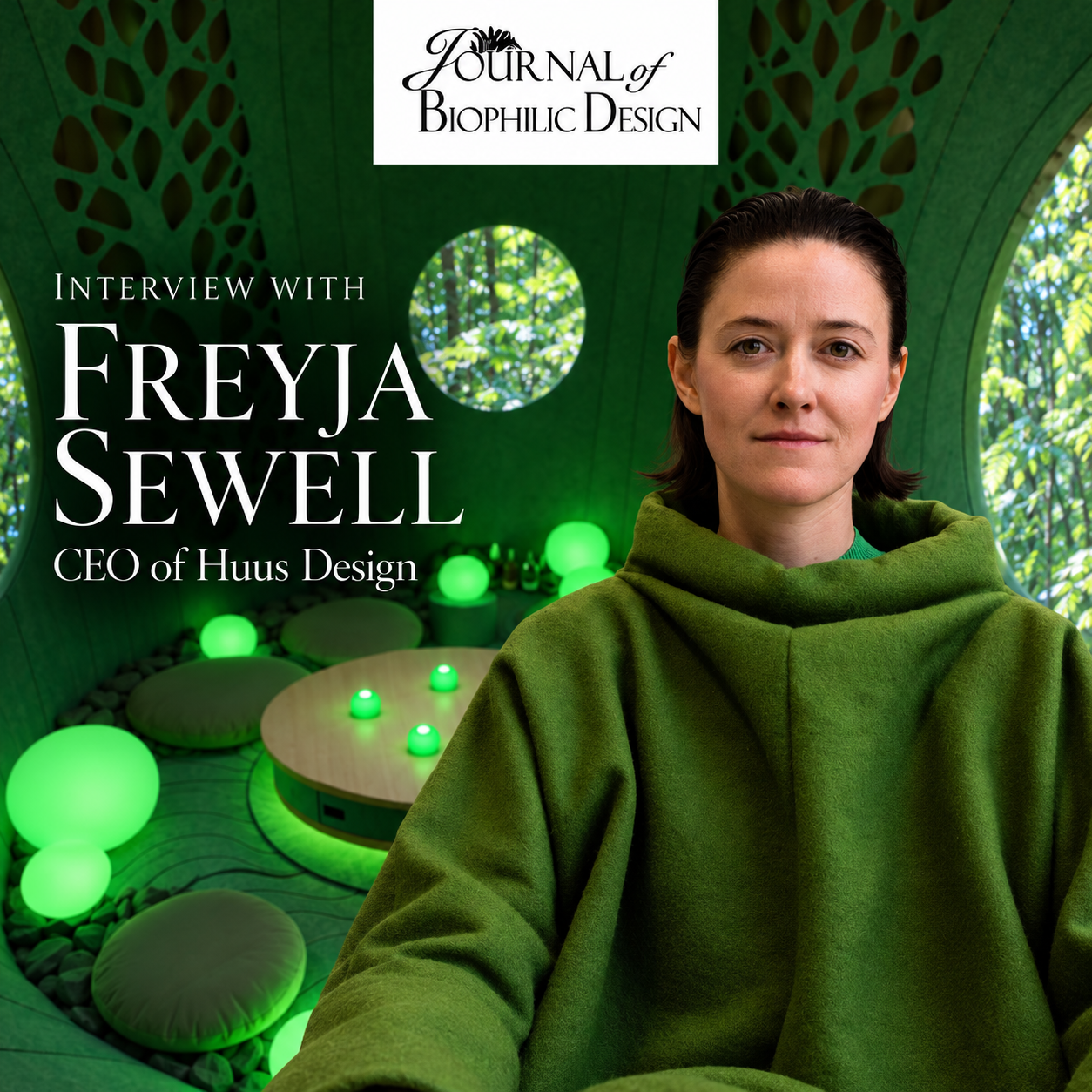
So how can design help us feel safe, connected and able to participate in the world? Designer and interdisciplinary artist Freyja Sewell begins with nature, sensory experience and a willingness to imagine things differently.

As a neurodivergent designer herself, Freyja is founder of HUUS Design, where she brings together art, technology, nature and sensory design to create gorgeous woven soft felt pods and other products including digital capability to help create environments that support human experience better. Her work is also woven by an ambition to make positive futures tangible.

Dare to Dream - Why Stone is calling us back to Nature

 Dare to Dream - Why Stone is calling us back to Nature

There is something deeply timeless about holding a piece of natural stone. Perhaps it is the cool surface beneath our fingertips. Perhaps it is the intricate mineral patterns that could never be replicated twice. Or perhaps it is something much older than conscious thought—a recognition that for almost all of human history, stone has been our shelter, our monuments, our meeting places and our memories.

While we are searching for healthier, more sustainable ways to design our buildings, natural stone deserves to be part of the Biophilic Design conversation once again.

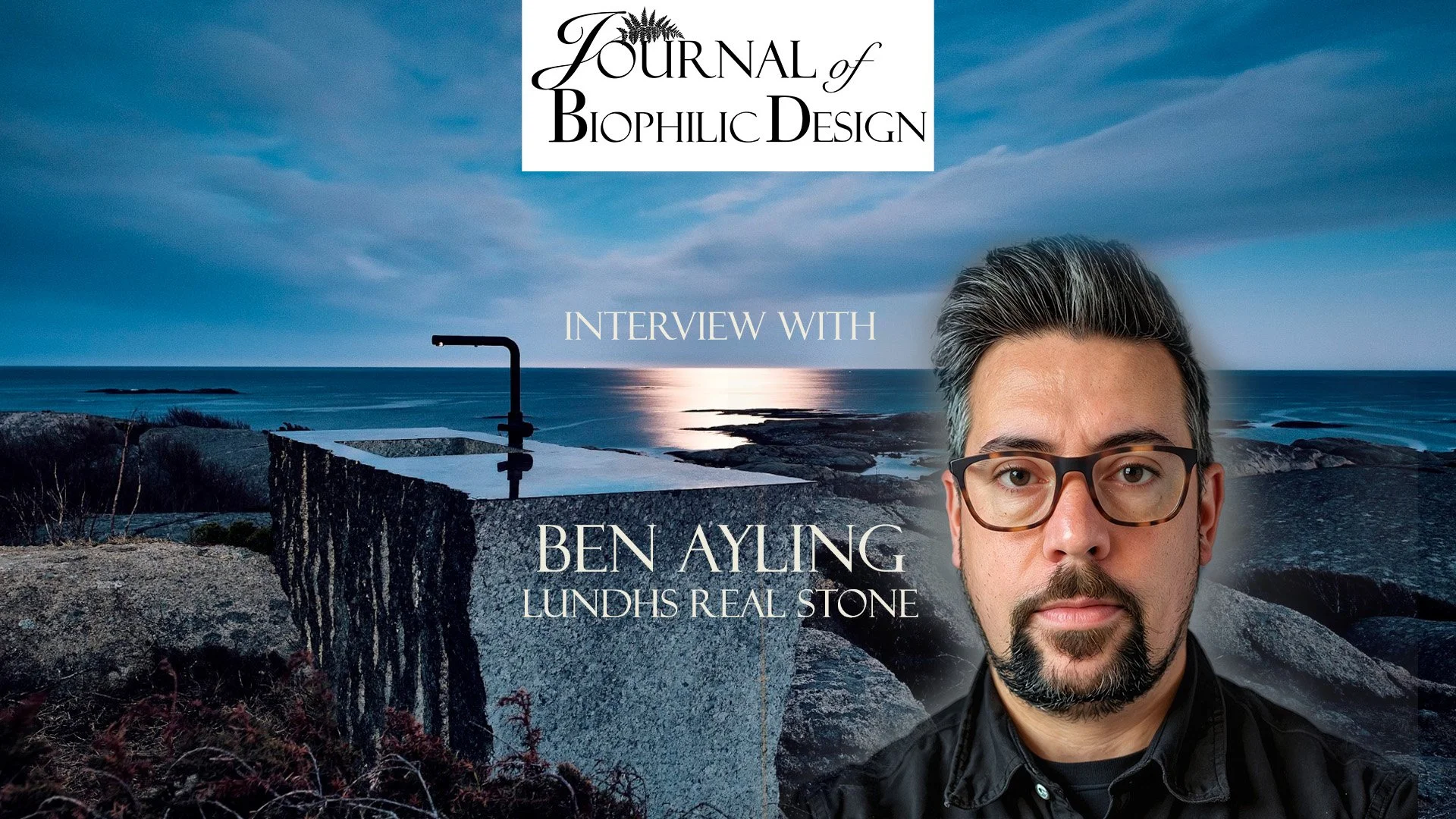
During this conversation on The Journal of Biophilic Design Podcast, Benjamin Ayling, UK Business Development Manager for Lundhs and founding member of the Stone Collective, reflected on why this ancient material still resonates so deeply today.

Biophilic Design and Retail spaces

Biophilic Design and Retail spaces

In this podcast, Lyn Falk describes herself as a long-term preacher and educator in the sphere of biophilic design.  To her, "Everything is energy, even this brick building I'm in is made from molecules and atoms and energy.” Different materials like glass, wood, and brick vibrate differently, affecting our senses and well-being.  Her designs always include the immediate benefits of incorporating natural elements like plants, natural light, and fresh air into design and as many other elements the brief allows and she emphasises the importance of natural materials like wood, which have not undergone extensive processing and retain their original energy.   

Lyn's design philosophy is rooted in the understanding that we are fundamentally part of nature, not separate from it. "We cannot exist without abiding by the laws of nature," she says. "We've perhaps been forced into built environments that pull that out of the environment, but we're now seeing the results of that." Those results, according to Lyn, are all too apparent in the retail and hospitality sectors, where a focus on maximizing profits has often come at the expense of human needs.

Lyn believes that by reintegrating nature into our built spaces through elements like natural light, plants, and natural materials, we can not only improve the customer experience, but also the wellbeing of employees. "I always say if I had to work in a cubicle, just shoot me," she laughs. “We are living nature, and we've been put in buildings that are static and not necessarily living, breathing buildings.”