green

Why we need nature inside our buildings - The Future of Healthy Buildings with Biophilic Design

Why we need nature inside our buildings - The Future of Healthy Buildings with Biophilic Design

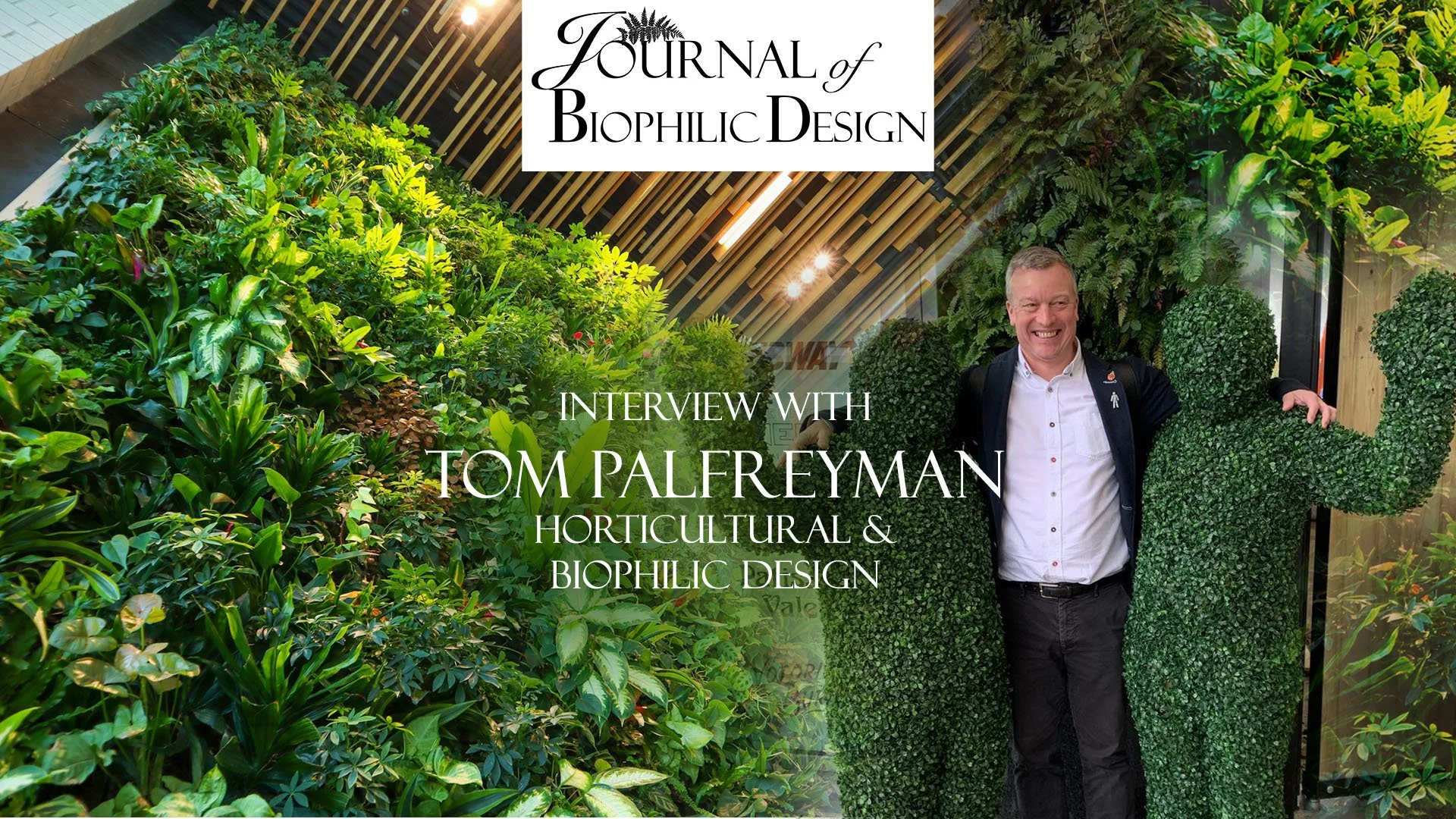
In this episode of the Journal of Biophilic Design podcast, we speak with landscape specialist Tom Palfreyman, whose work across commercial, hospitality, retail and workplace environments has focused on the principle that plants fundamentally change how people experience space. With more than twenty years’ involvement in interior and exterior landscaping, Tom has spent his career exploring how nature can improve the places where we work, rest and play,  and why maintenance, care and long-term thinking are just as important as the initial design itself.


As Tom reflects during the conversation, “Plants have transitioned from a nice-to-have decoration in the corner of the building to being an intrinsic essential part of any building.” It is a shift many designers are now recognising. The conversation around biophilic design has matured significantly over the past decade. What was once dismissed as aesthetic enhancement is increasingly understood as part of a much wider discussion around health, wellbeing, productivity, ecology and human resilience.


The heart of biophilic design beats out that human beings are not separate from nature, we are an intrinsic part of it. “We evolved to live outside,” Tom says. “That connection with nature, sadly, I believe, has been lost.”


Modern life has created increasingly artificial environments - sealed buildings, screen-based working, urban density and spaces designed more for efficiency than human experience. Yet our biology has not changed at the same pace as our architecture. Research across neuroscience, environmental psychology and workplace wellbeing continues to show that exposure to nature can reduce stress, restore attention, support cognitive performance and improve emotional wellbeing.

 READ ON….

The Urgent Need for Urban Trees

The Urgent Need for Urban Trees

Cities face unprecedented environmental challenges, and it’s no secret that trees offer multiple solutions: reducing urban temperatures, mitigating noise pollution, improving air quality, and supporting mental and physical health. So why then aren’t we planting trees wherever there’s opportunity?

As Biophilic Design practitioners, we can help hold this door open to help explain why we need them and how to do it. Sue James is the Convenor for the Trees and Design Action Group (TDAG), which brings together individuals, professionals, academics and organisations from wide ranging disciplines in both the public and private sectors to improve knowledge and good practice to support the role of urban trees through better collaboration in the planning, design, construction and management and maintenance of our urban places. We chat through the challenges, the opportunities and also how Biophilic Designers can get involved and help transform society, health and ultimately our planet.

One of the primary obstacles to widespread urban tree planting, according to Sue, is the perceived maintenance burden. Councils and developers often view trees as costly and complicated. However, TDAG research demonstrates that with strategic planning, tree maintenance can be minimal and cost-effective.

"If you plant the right tree in the right place, with proper initial care, maintenance becomes remarkably simple.” Do have a look at the practical guides TDAG have developed to help communities and professionals navigate tree planting challenges.

If you are wanting to share the benefits of urban trees, which extend far beyond environmental considerations, learn a bit more about how tree-lined streets can benefit society. For instance they increase property values, reduce urban temperatures by up to 4 degrees, potentially save the NHS money through improved public health and of course the obvious one, create more attractive, liveable and desirable urban spaces.

READ ON and Listen to the Interview

The Walls are Alive! The Beauty of Greening our Cities - inside and out.

The Walls are Alive! The Beauty of Greening our Cities - inside and out.

From designing a detailed picture of the New York Skyline in moss to how we need to design with biophilia to help mitigate climate change this great podcast with Lily Turner explores how we are just starting to realise the very real benefits that Living walls can bring to our cities, and our work and healing spaces.

 Lily Turner is an environmentalist, biophilic designer and living wall specialist. She's also the director of green walls at Urban Strong, the design-build maintenance firm offering services for green building technology solutions. In 2013, she co-founded Urban Blooms a non-profit to bring large-scale, publicly accessible living walls to dense urban environments. It was after Hurricane Katrina she was rebuilding homes, restoring landscapes, repairing drip irrigation systems and fields and got to do a lot of great community projects which inspired her to launch Urban Blooms, which aims to bring greenery back into the built environment to benefit people in the community.