technology

The Bath, the Bins and the Biology of Light

The Bath, the Bins and the Biology of Light

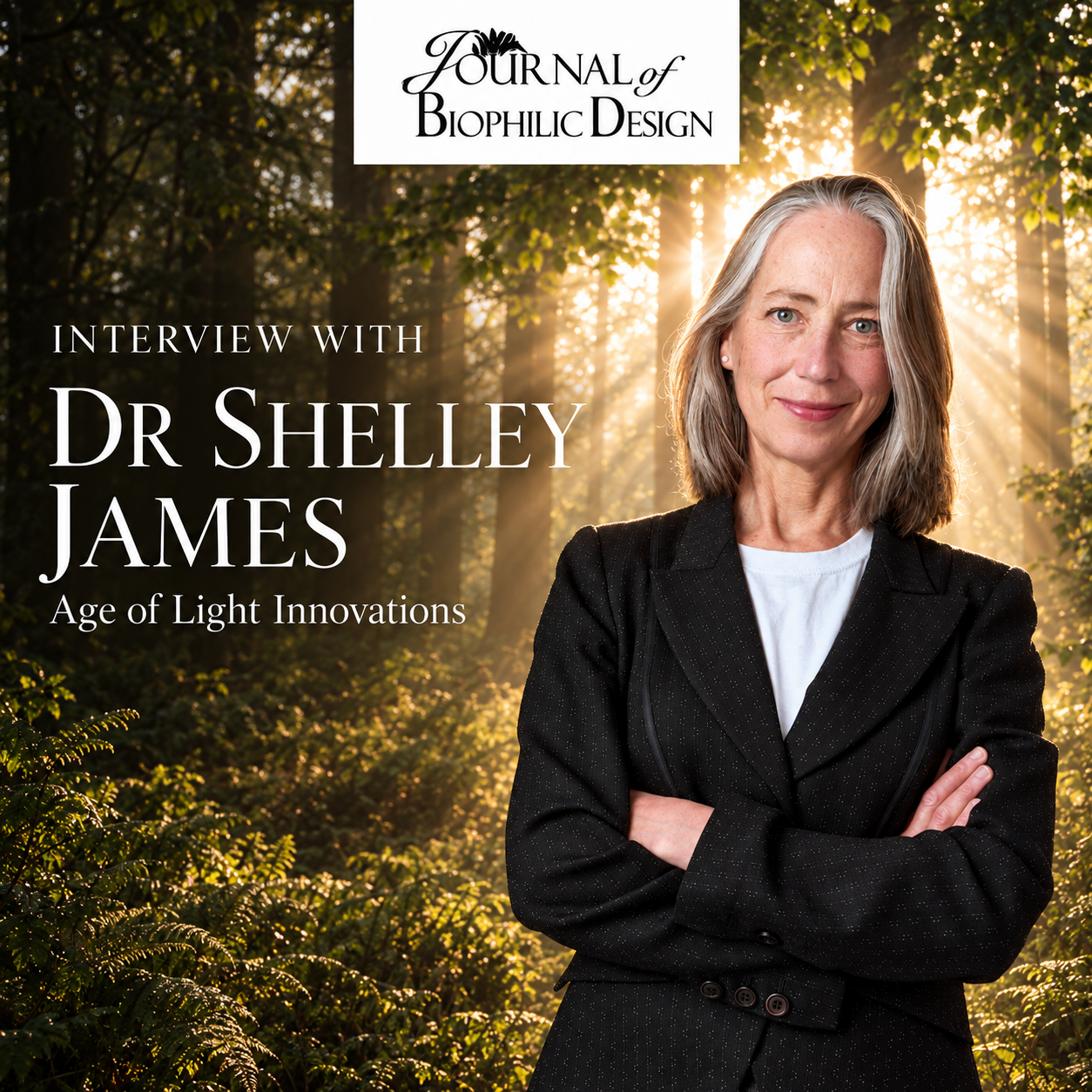
Light: The Missing Element in Biophilic Design

Light is far more than something that allows us to see. It is a powerful biological signal, influencing our body clocks, mood, alertness, sleep and sense of wellbeing. In this fascinating conversation, Dr Shelley James, “The Light Lady”, explores how our brains and bodies respond to light — and why biophilic designers need to pay much closer attention to it.

From the difference between Kelvin and colour rendering to the restorative rhythms of daylight, Shelley reveals how thoughtful lighting can help us create spaces that work more naturally with our biology. She also explores prospect and refuge, moving shadows, contrast and even the remarkable ways our brains interpret light as a signal of the natural world.

Discover why good biophilic design begins not just with bringing nature into a space, but with understanding the light that makes us feel at home in it.

Natural environments contain variation, contrast, shadow, movement and changing horizons. Light filters through leaves, reflects from water, changes with clouds and seasons, and gradually shifts from morning to evening.

Our visual systems evolved within this complexity.

Shelley describes the brain as looking for patterns that are familiar from the natural world — an appropriate balance of order and complexity, rather than either complete uniformity or overwhelming contrast. Even something as simple as dappled light and moving shadows can provide the kind of non-rhythmic visual stimulus associated with nature….

Digital Nature. Is your smartphone your Secret Weapon for Mental Health and Healing?

Digital Nature.  Is your smartphone your Secret Weapon for Mental Health and Healing?

Did you know 10 million people watched the first episode of Planet Earth III – the same number who visit the Peak District annually? We're hungry for nature, even if we can't always access it directly.

Imagine escaping the concrete jungle without leaving your desk. What if your smartphone could transport you to a misty bluebell woodland or the thundering heart of an Icelandic volcano? Welcome to the future of nature connection – where technology becomes your gateway to mental restoration. We speak with environmental psychologist Dr Alex Smalley about his research on virtual nature and Tim Daniels co-founder of Portal, both are names to watch in this beautiful revolution in how we experience the natural world.

"We've always tried to bring nature indoors," explains Dr. Alex Smalley. From ancient cave paintings, ancient Roman wall paintings right through to modern digital experiences, humans have always craved a connection to the natural world.

But this isn't about replacing real nature. It's about expanding our understanding of how we can experience it.

For the stressed-out healthcare worker pulling a double shift, the burned-out student cramming for exams, or the city dweller trapped in a windowless office, digital nature offers a lifeline. Scientific research shows these experiences aren't just pretty pictures – they're powerful mental health tools. 

Alex’s research is proving that digital nature can actually change how our brains process pain and stress. In clinical studies, people experiencing virtual natural environments reported reduced pain perception and lower stress levels. It's like a mini-vacation for your brain, available at the touch of a button.

READ on and WATCH THE VIDEO….

Technobiophilia - Life, Nature and Technology

Technobiophilia - Life, Nature and Technology

There are many metaphors of nature in cyber space which we use without even thinking about it: clouds, streams, webs, and so on. Dr Sue Thomas has conducted research on how we can use technology to enhance our connection with nature. In this podcast we talk about how the huge amount of research and environmental science data has shown the benefits of nature on our wellbeing, including reducing blood pressure and other measurable benefits. Sue has also studied research on the effects of engaging with nature on devices, through technology, such as watching wildlife shows and even playing video games. She shares her concept of Technobiophilia. We talk about a real mix of things, ideas you can do on your commute or at your office desk, from plants, to stones, alpacas on Instagram, Farmville, live streams from eagles nests, fixed nature webcams, and lots more...