Thankfully… walk into almost any contemporary office and you are likely to find a few strategically positioned plants, a moss wall in reception or perhaps another biophilic feature intended to soften an otherwise corporate environment. Over the past decade, introducing greenery into workplaces has become almost synonymous with employee wellbeing. Yet according to workplace and environmental psychologist Dr Craig Knight, if organisations believe that adding a few plants alone will transform productivity, they have misunderstood the research.
Craig's work at the University of Exeter, challenged one of the most enduring assumptions in workplace design, namely that the most productive offices are those that are minimalist and stripped back to their essentials. These highly controlled environments were long thought to minimise distraction and maximise concentration. His research demonstrated precisely the opposite.
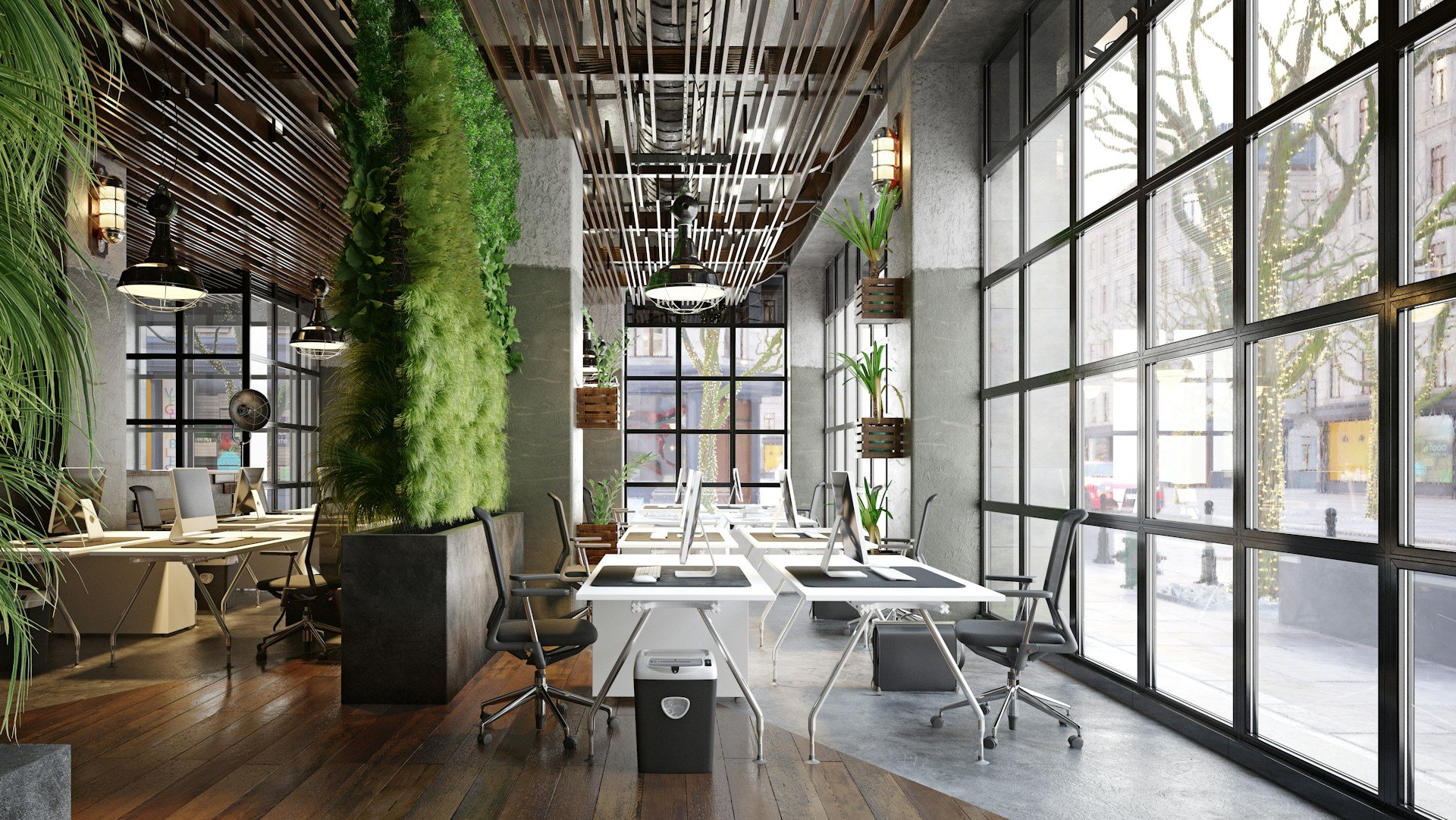
Employees working in enriched environments containing plants, artwork and opportunities for personalisation consistently performed better than those working in lean, standardised offices.
“Wellbeing improved, stress reduced and productivity increased by as much as 15%.”
Although plants became the headline of many reports about the research, Craig is keen to put them into context. They are not magical objects capable of transforming a workplace by themselves. Rather, they are one of the simplest and most affordable ways of enriching an environment.
This is important for designers, facilities managers and employers to remember. Environmental enrichment can take many forms, including artwork, light, texture and even scent. Plants have proved particularly effective because they are relatively inexpensive, flexible and easy to introduce into existing buildings. Unlike a major refurbishment, they can transform a space almost immediately.

The psychology behind their success is equally compelling. Rather than distracting employees from their work, enriched environments provide opportunities for brief moments of cognitive recovery. Looking away from a screen towards a plant or another visually engaging feature gives the brain the chance to reset before returning to the task at hand. These small interruptions help sustain attention rather than diminish it. As Craig puts it, people are happier and more productive when their surroundings offer something meaningful to engage with.
Yet as our conversation developed, it became clear that the plants themselves were not the most significant finding from decades of workplace research.
The real story is choice.
People perform better when they have some control over the environment in which they work. The ability to personalise a desk, influence the layout of a workspace or decide where plants should be positioned may appear insignificant, but psychologically these decisions communicate something much larger. They demonstrate trust.
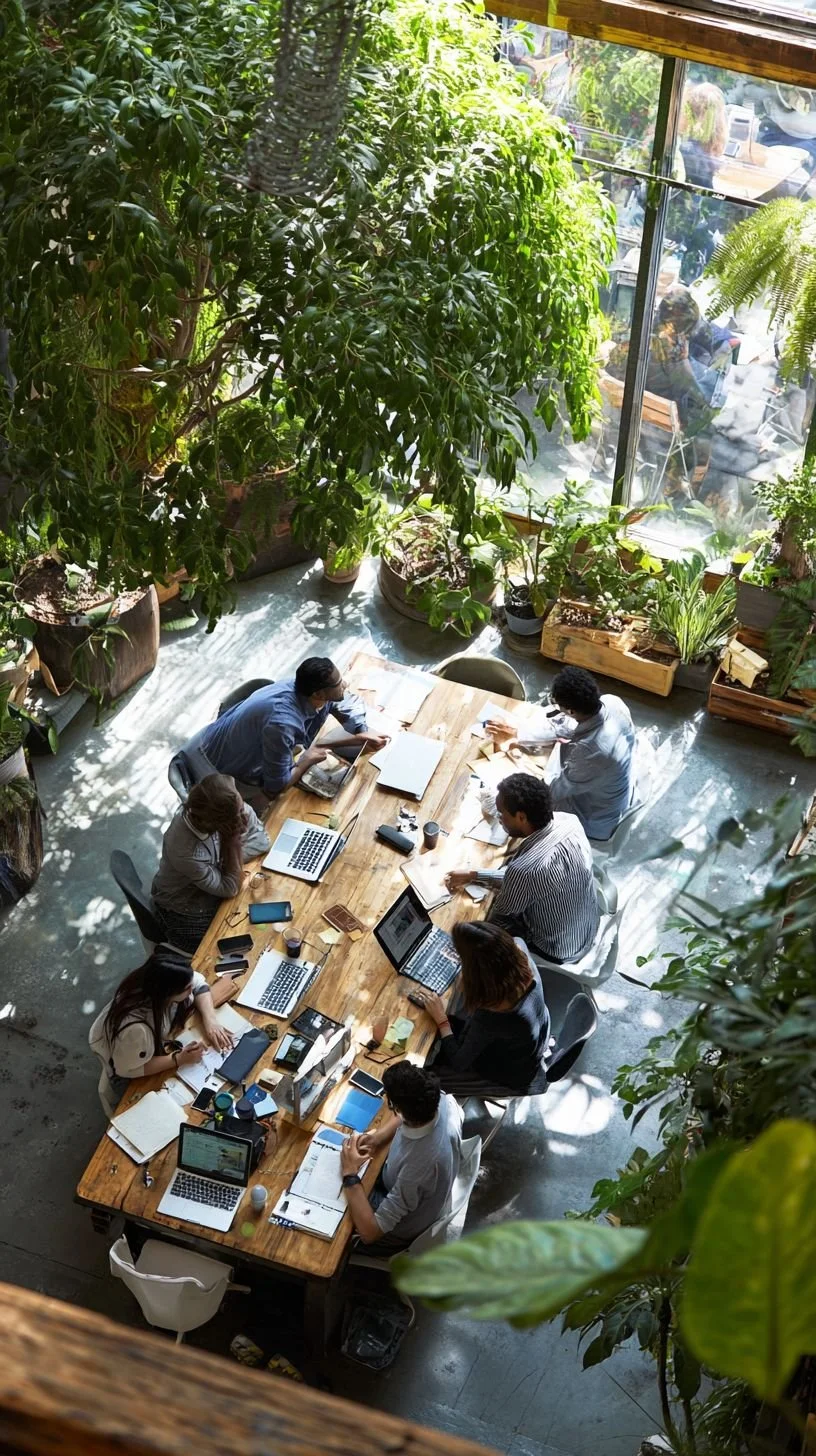
One of the most interesting examples he describes comes from a company in Paris that invited staff to shape their own working environment. Employees created artwork, rearranged spaces, introduced planting and developed breakout areas that reflected their own personalities. There was no substantial design budget. Instead, the organisation trusted its employees to create an environment that suited the way they worked. Productivity increased, but equally important was the sense of ownership people developed towards the workplace. It became somewhere they wanted to be rather than somewhere they were required to attend.
This idea of ownership runs through much of his research. Organisations often invest heavily in beautifully designed offices only to prevent employees from moving furniture, repositioning plants or displaying personal objects. In doing so, they unintentionally undermine many of the psychological benefits the design was intended to create.
Craig argues that even the best designers cannot predict what will make every individual feel comfortable. A workplace should not simply reflect a corporate identity; it should also allow the identities of the people working there to emerge. "The more you can realise your own identity in your space," he says, "the better that space is."
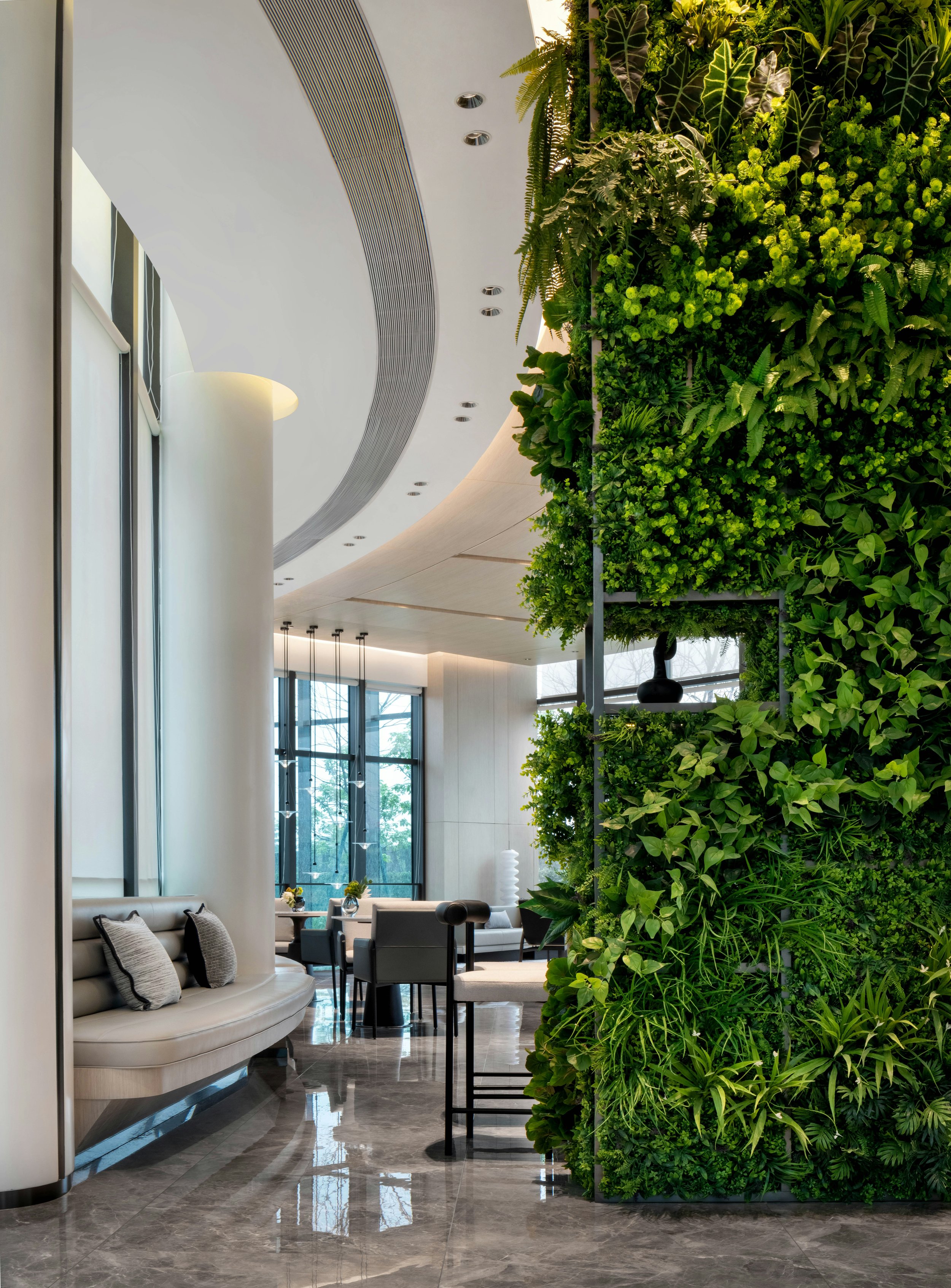
This presents an interesting challenge for architects and interior designers. Design excellence has often been measured by visual consistency and aesthetic control. Yet workplace psychology suggests that highly curated environments are not always the most successful places to work. The role of design may be less about creating a finished solution and more about creating a framework within which people can adapt spaces to suit their own needs.
That philosophy extends well beyond office furniture or planting schemes. Craig is equally critical of workplace cultures that attempt to monitor every aspect of employee behaviour. Surveillance software, keystroke monitoring and rigid management structures all communicate a lack of trust, and his research consistently shows that these approaches reduce engagement rather than improve it. Organisations frequently speak about wellbeing while simultaneously removing autonomy from their workforce. The contradiction is difficult to ignore.
For those working in Biophilic Design, there is another interesting lesson. The discussion around nature in buildings often focuses on the physiological benefits of plants, daylight or natural materials. Craig does not dismiss those benefits, but he repeatedly brings the conversation back to the social environment. Plants become valuable not simply because they are living organisms, but because they represent care, enrichment and, when employees are involved in choosing and looking after them, shared ownership.
It is no coincidence that people often name the plants they care for in the workplace. They become part of the social fabric of an office, small but tangible reminders that the environment is alive and that someone has invested in it. Even preserved planting, increasingly common where living plants are impractical, reflects a desire to introduce texture, colour and references to nature into spaces that might otherwise feel sterile.
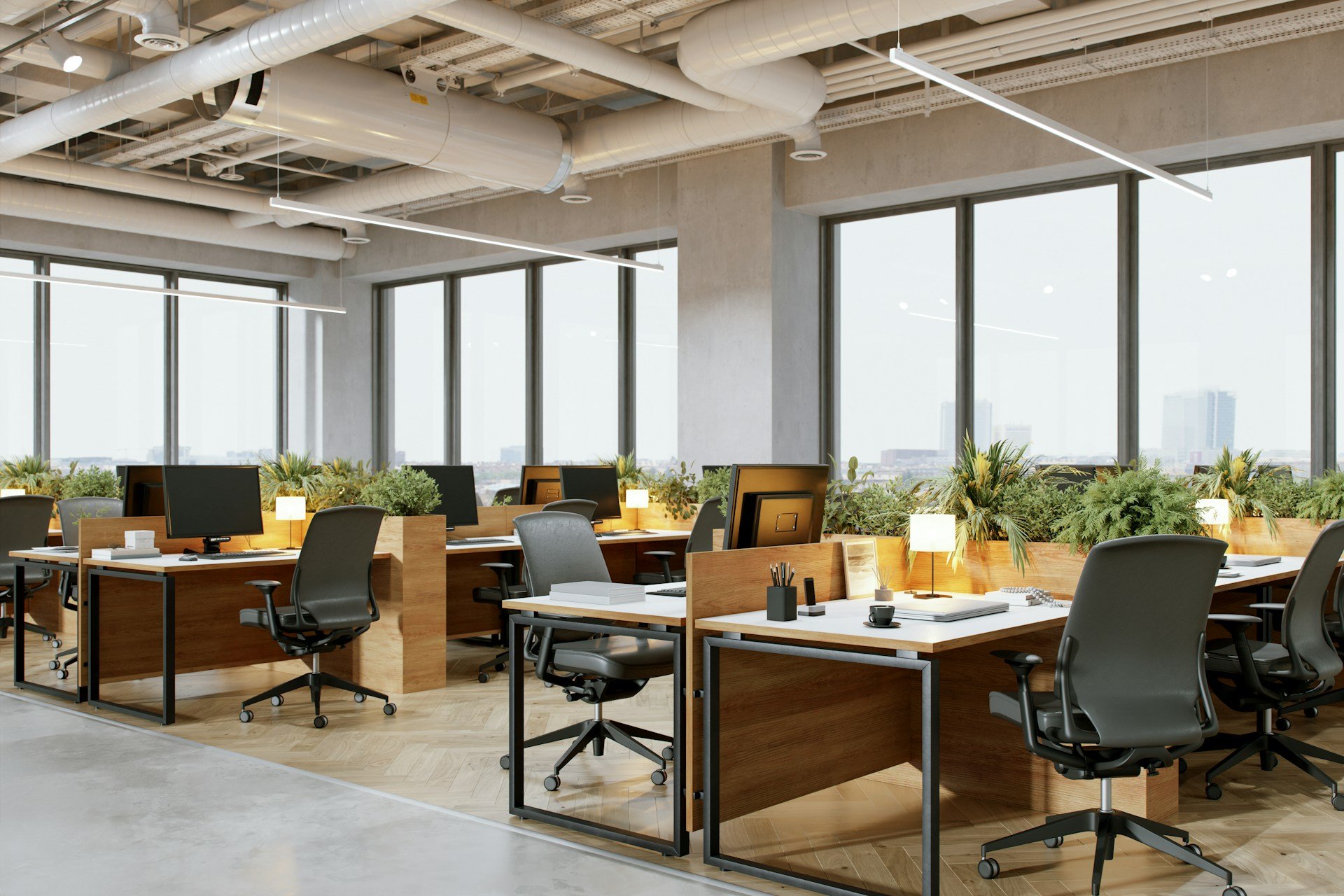
As organisations continue to rethink hybrid working and the purpose of the office, Knight believes there is an opportunity to move beyond designing attractive workplaces only. The challenge is to create environments where people feel respected, trusted and able to contribute to the spaces they inhabit.
His advice to designers:
"People first. Design second."
It is a principle that sits comfortably alongside Biophilic Design. Creating healthier workplaces has never been solely about filling buildings with plants. It is about designing environments that support human flourishing. Plants remain one of the most effective tools available, but they are most powerful when they become part of a wider culture that values participation, autonomy and wellbeing. In the end, the greenest workplace is not necessarily the one with the most planting. It is the one where people genuinely feel that they belong.
To follow or contact Dr Craig Kight visit his Linkedin profile:
linkedin.com/in/craigknightidr
https://www.identityrealization.com
His now-famous paper, The Relative Benefits of Green Versus Lean Office Space: Three Field Experiments, co-authored alongside Nieuwenhuis, M., Postmes, T., and Haslam, S., found that introducing plants into office environments could improve workplace productivity by up to 15%. Nieuwenhuis, Marlon & Knight, Craig & Postmes, Tom & Haslam, S.. (2014). The Relative Benefits of Green Versus Lean Office Space: Three Field Experiments. Journal of Experimental Psychology: Applied. 20. 199-214. 10.1037/xap0000024. https://www.researchgate.net/publication/264395358_The_Relative_Benefits_of_Green_Versus_Lean_Office_Space_Three_Field_Experiments
What is Biophilic Design? (click this link)
Have you got a copy of the Journal? You can now subscribe as a member of the Journal of Biophilic Design or purchase a gorgeous coffee table reference copy or PDF download of the Journal journalofbiophilicdesign.com or Amazon and Kindle.
Credits: with thanks to George Harvey Audio Production for the calming biophilic soundscape that backs all of our podcasts.
Listen to our podcast on Audible, Amazon Music, Spotify, iTunes, YouTube and all the RSS feeds.
https://www.facebook.com/journalofbiophilicdesign/
https://www.linkedin.com/company/journalofbiophilicdesign/
https://www.instagram.com/journalofbiophilicdesign
If you like this,please subscribe!