For artist Jaime Jackson, creativity is more than a way of making things. What happens when we stop seeing ourselves as separate from nature and begin to recognise that we are nature? For artist Jaime Jackson, the answer lies in creativity, collaboration and the simple act of paying attention. It is a way of rediscovering our place in the living world, bringing communities together and imagining a more hopeful future.
Through his socially engaged art practice, Jaime brings together children, communities, scientists and fellow artists to explore our relationship with the living world. His work offers a refreshing perspective on the ecological crisis: rather than beginning with fear, guilt or a list of things we must change, it starts with our innate capacity for wonder, empathy and connection.
Jaime describes himself as a relational artist. His practice is rooted in the idea that we are all related, not only to one another but to the plants, animals and wider living systems around us. It is Biophilia embodied. Drawing, painting, animation and collaborative workshops become ways of exploring those relationships, giving people the opportunity to express what nature means to them in their own words and images.
We do not have to be professional artists to benefit from making art. Nor do we need to produce something beautiful or technically accomplished. The value lies in the experience itself.
Nature connection and broadcasting
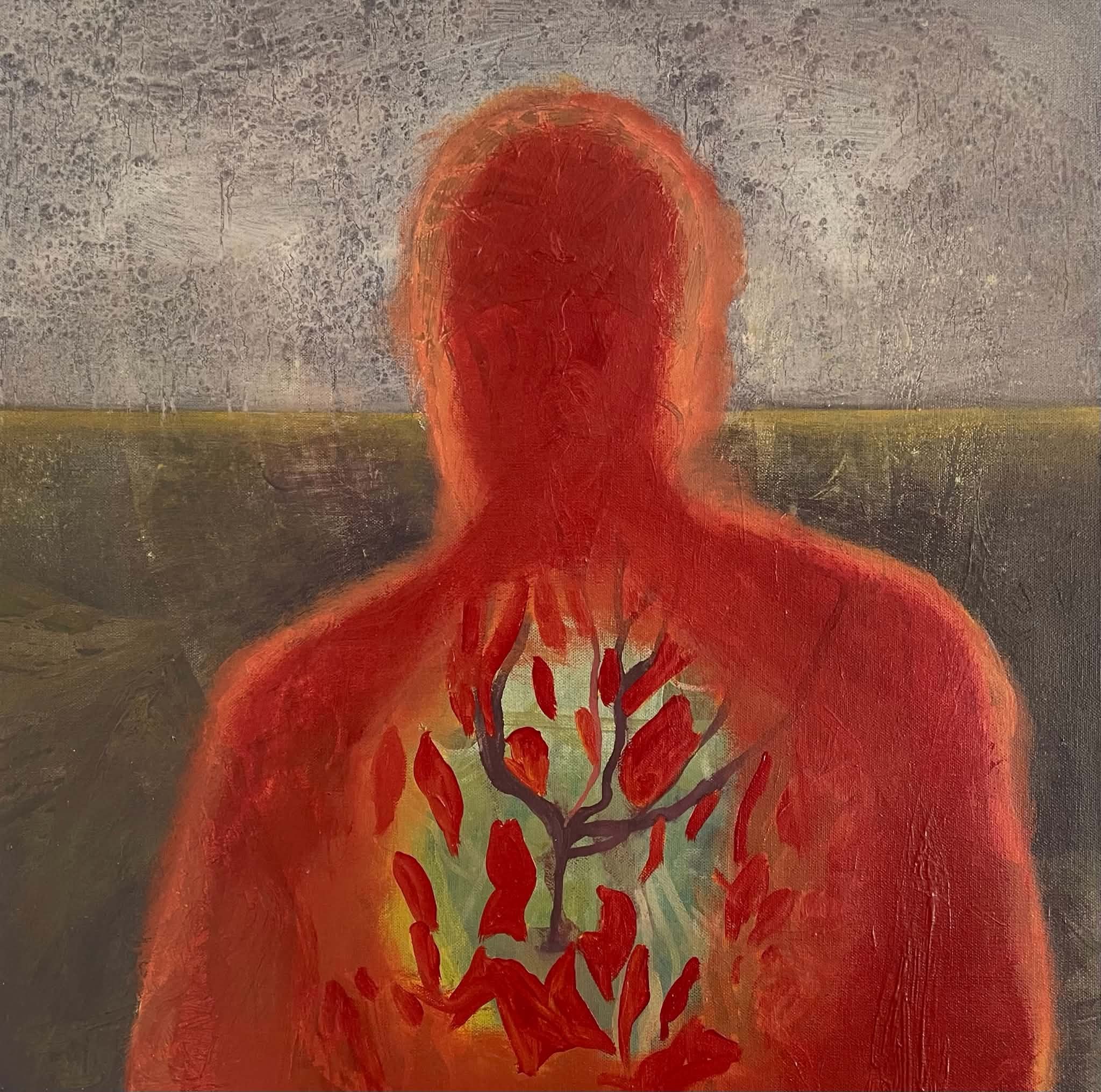
“On the Last Day”. Oil on Canvas, Jaime Jackson. 60cmx60cm
Jaime's relationship with nature began early. As a child, he joined Nature Trail, a local radio programme exploring the natural world with experts. Those formative experiences gave him the opportunity to encounter nature with curiosity, openness and a child's eye view.
That sense of wonder remains central to his work today. He believes that our connection with nature never really disappears; it can simply become buried beneath the habits, expectations and pressures of everyday life.
Art offers a way back to nature and to ourselves.
When we slow down to draw a leaf, observe a tree or explore the patterns of the natural world, we become more present. We engage our senses and make space for a different kind of awareness — one that is felt as much as understood intellectually.
Jaime suggests that creative practice can help us move beyond the assumptions we carry about ourselves and the world. Instead of being told what to think about climate change, we are invited to explore our own feelings and experiences, discovering connections through the act of making something together.
This matters particularly when working with young people. Discussions about the climate and ecological crisis can provoke anxiety or leave children feeling powerless. A collaborative creative process offers another possibility: the chance to imagine solutions, exercise agency and experience the satisfaction of making something meaningful with others. The result can be a sense of wellbeing, belonging and, crucially, hope.
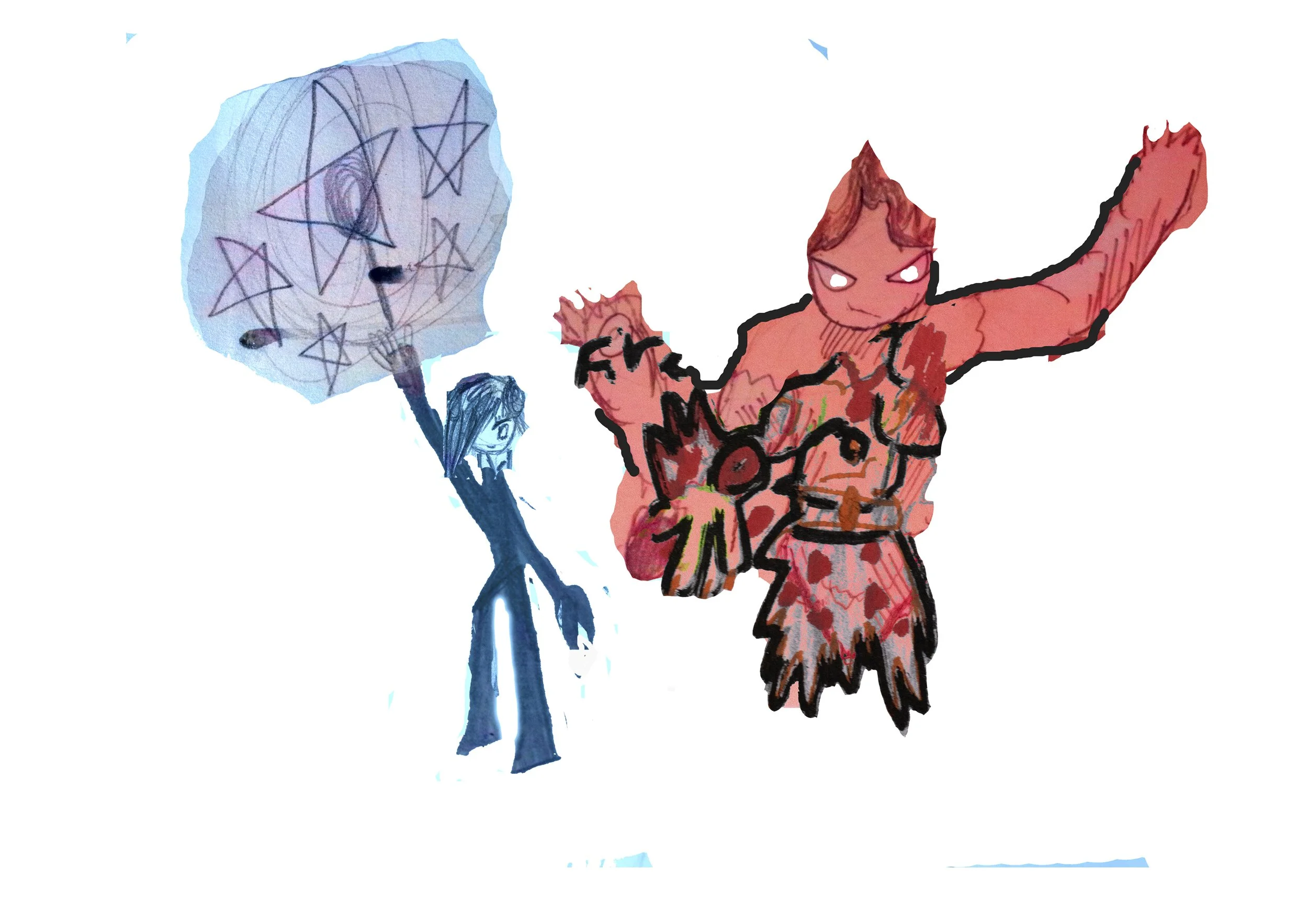
Page 14 from the Thornton School comic/ animation still 'Hope Springs conjuring the Fire Element to Transform Mr Smoke'
A comic created by children, for children
One of Jaime 's most inspiring projects began when he took a group of children to a park and asked them what they wanted to create as a way of exploring climate change.
Their response – let’s make a comic.
Working over several months, Jaime helped the children turn their ideas into a story, using their own words, drawings and imagination. The result was a comic and animation featuring an extraordinary cast of characters, all conceived by the children themselves.
The story follows a girl called Hope Spring, who wakes to the sound of a bird warning her of an emergency. As she begins to understand what is happening, she confronts a polluting factory run by the aptly named Mr Smoke. When she is dismissed for challenging him, the bird directs her towards a different kind of factory, where she meets Mr Breeze Carbon Cutter.
There, she encounters characters inspired by the elements of nature — earth, wind, water and fire. These are not distant superheroes who arrive to solve everyone's problems. Their powers are innate in each of them and connected to nature itself, and to qualities that the children recognise within themselves.
The children were not imagining that somebody else would rescue the world. They were exploring how transformation might begin within us and how we might work together to bring it about.
Through a process involving around a hundred drawings, collage, storytelling and animation, the children built a world in which pollution could be challenged, wisdom could emerge, and change was possible. Their story moves towards resolution through awareness, action and the possibility of redemption.
The response was deeply moving. When the animation was shown to the school's headteacher, she began to cry. For Jaime, the children's excitement and their feeling that the work genuinely represented their voices were equally significant.
The project was subsequently featured by The Nature of Cities Festival, demonstrating how children's creative ideas can travel beyond the classroom and contribute to wider conversations about our shared future.
Most importantly, the children had not just been fed information about an environmental problem, they had created their own story about it, populated it with characters they cared about and imagined a different outcome. That is the power of art and creativity. A reimagining of how life and our world can be.

Mums, careers and preschool art workshop group MOtion project for Leominster CUltural Consortium's Our Place program
The power of creating together
Jaime's work with communities, including through Salt Road and his collaborations with The Great Imagining, reflects his belief that creativity can help us rediscover our interconnectedness.
Art can also open doors for people who might not feel that galleries, museums or the conventional art world are places for them. A shared drawing session asks very little of us. We only need to turn up, look, explore and have a go. In return, there is the opportunity to meet others, share perspectives and discover something unexpected about ourselves. This is biophilic in process. Nature does not exist as a collection of isolated parts; living systems depend upon relationships, exchanges and interdependencies. When people create together, they can experience a similar sense of connection.
Art allows us to move from anxiety towards possibility, from isolation towards community, and from feeling overwhelmed by the scale of the ecological crisis towards recognising the small but meaningful changes we can make together. Jaime calls this radical hope: the belief that things can be different, even when the future feels uncertain.
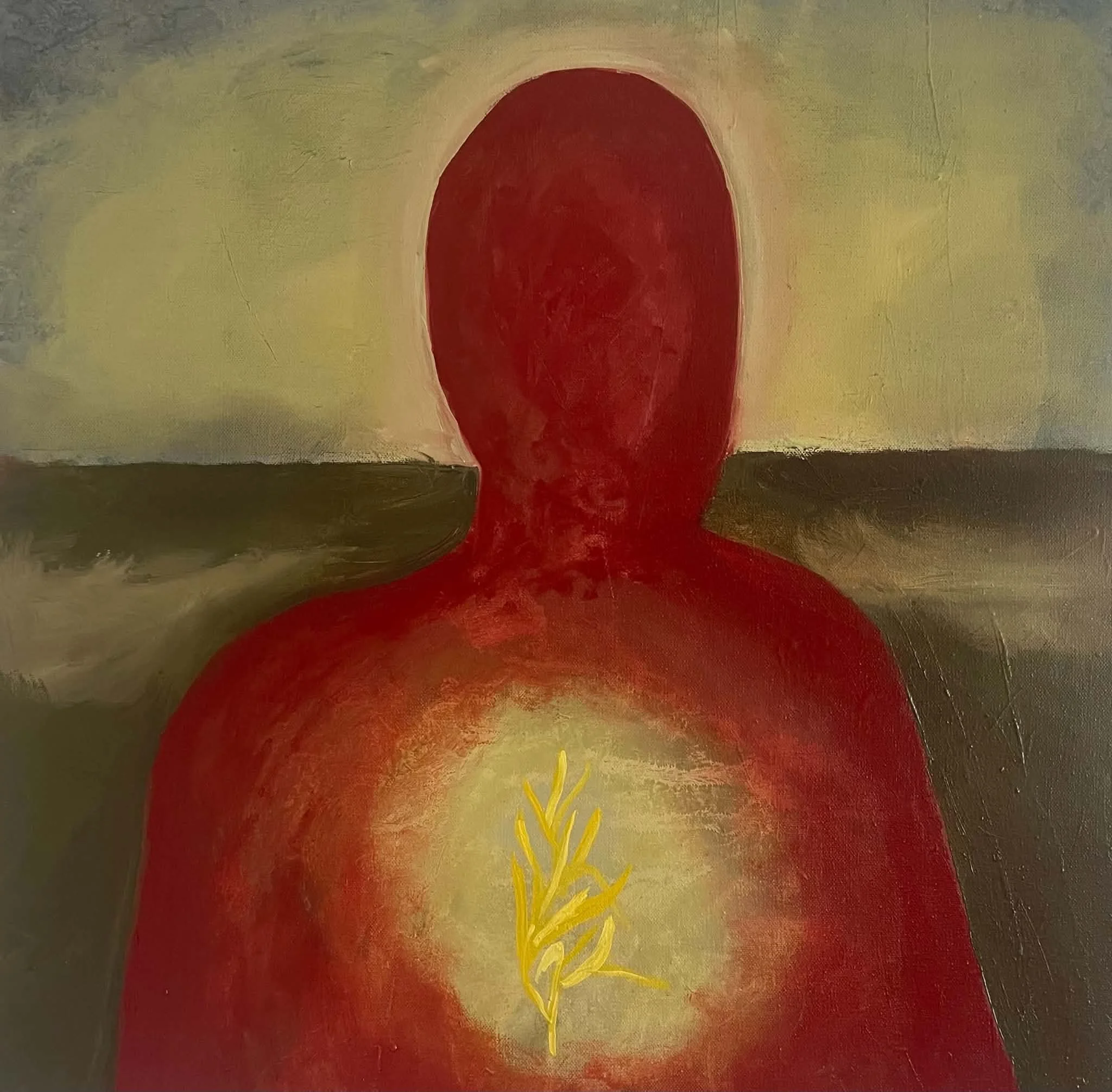
‘This Life' Jaime Jackson, Oil on Canvas, 2026. 60cm x 60cm
We are nature
So where might we begin? Jaime offers a simple suggestion: try making a biophilic self-portrait. Draw yourself in relation to the natural world, or express that relationship through writing, movement or another creative form. Repeat it daily or weekly, if you wish, and notice how your response changes. There is no need to show anyone the result. It does not have to look like a tree, a flower or even a recognisable portrait. What matters is how it feels to you.
This small invitation captures the spirit of his wider practice. Reconnecting with nature need not always begin with a major project, a new building or a grand environmental initiative. It can start with attention, curiosity and the willingness to create. Jaime reminds us that our capacity for imagination has not disappeared. Our empathy is still there. So is our ability to wonder, to collaborate and to care. By bringing art, nature and community together, we can make those qualities visible, and begin to imagine a future in which people and the living world flourish together.
To find out more about Jaime visit: https://www.jaimejackson.org
https://www.thegreatimagining.earth/gallery
Get involved and “declare”!: https://www.culturedeclares.org
What is Biophilic Design? https://journalofbiophilicdesign.com/what-is-biophilic-design
Want a free copy of the Journal? Visit: https://journalofbiophilicdesign.com/free-materials-issue
Find out how Biophilic Design is positively impacting Climate Change and how you can get involved treat yourself to a coffee priced ebook on Biophilic Design and Climage Change: https://journalofbiophilicdesign.com/shop/biophilicdesign-climate-change-r88jm
The world of biophilic design delivered to you – join us: https://mailchi.mp/journalofbiophilicdesign.com/50-free-subscription-promotion
Credits: with thanks to George Harvey Audio Production for the calming biophilic soundscape that backs all of our podcasts.
Listen to our podcast on Audible, Amazon Music, Spotify, iTunes, YouTube and all the RSS feeds.
https://www.facebook.com/journalofbiophilicdesign/
https://www.linkedin.com/company/journalofbiophilicdesign/
https://www.instagram.com/journalofbiophilicdesign
If you like this, please subscribe!