There is something deeply timeless about holding a piece of natural stone. Perhaps it is the cool surface beneath our fingertips. Perhaps it is the intricate mineral patterns that could never be replicated twice. Or perhaps it is something much older than conscious thought—a recognition that for almost all of human history, stone has been our shelter, our monuments, our meeting places and our memories.
While we are searching for healthier, more sustainable ways to design our buildings, natural stone deserves to be part of the Biophilic Design conversation once again.
During this conversation on The Journal of Biophilic Design Podcast, Benjamin Ayling, UK Business Development Manager for Lundhs and founding member of the Stone Collective, reflected on why this ancient material still resonates so deeply today.
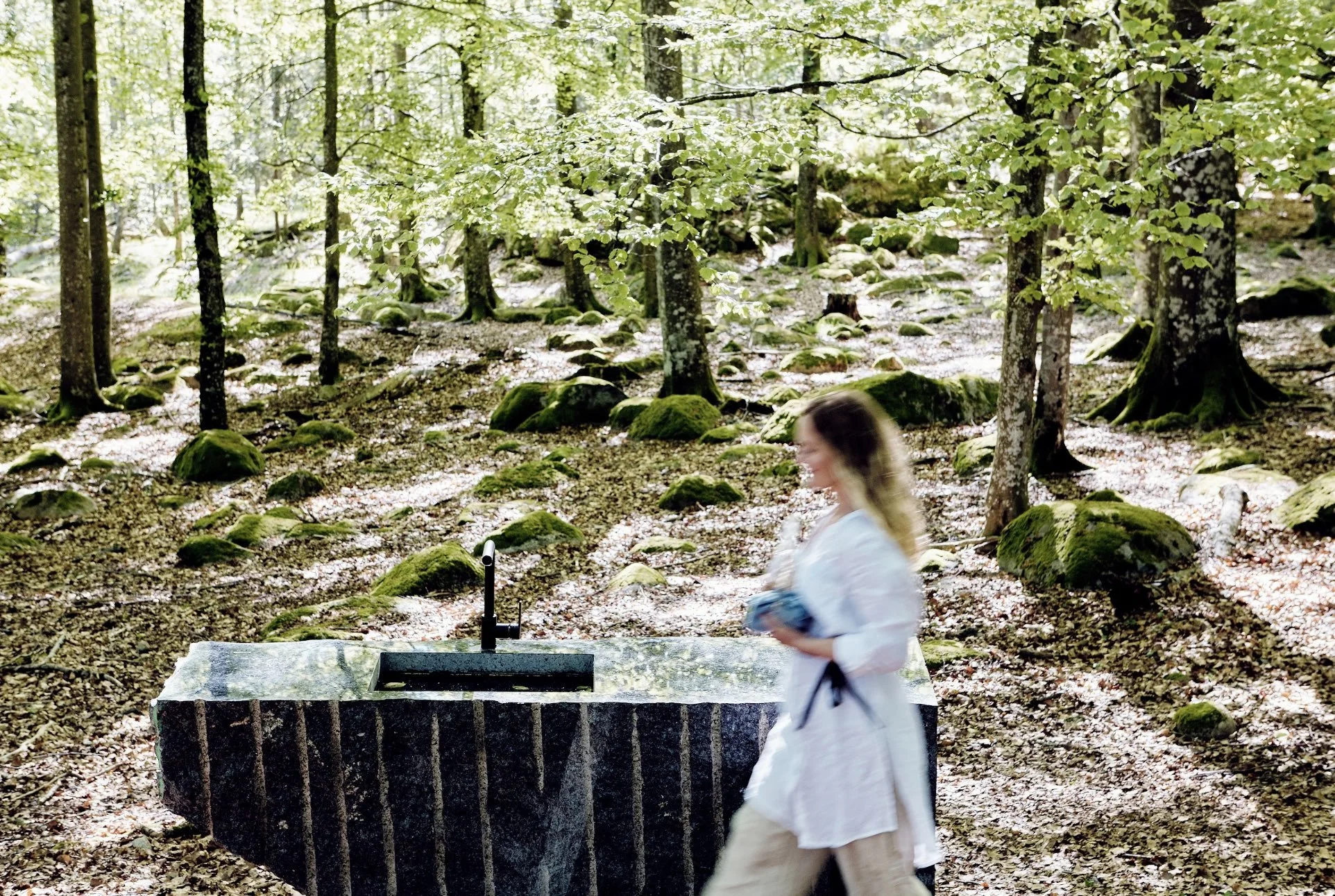
"It's not just a material, it's a geological process," Ben explains.
Every slab tells the story of immense natural forces—volcanoes, minerals, pressure and time. Lundhs' Larvikite, quarried in Norway, is around 300 million years old, while its anorthosite dates back almost one billion years. That perspective alone shifts the way we think about specification.
Rather than seeing stone as another surface finish, we begin to understand it as a fragment of Earth's history. Every vein, crystal and fossil record tells a story that simply cannot be manufactured.
As biophilic designers, we often talk about our innate connection to nature. Stone reminds us that nature is not simply something outside the window—it can become part of the spaces we inhabit every day.
The memory of the cave
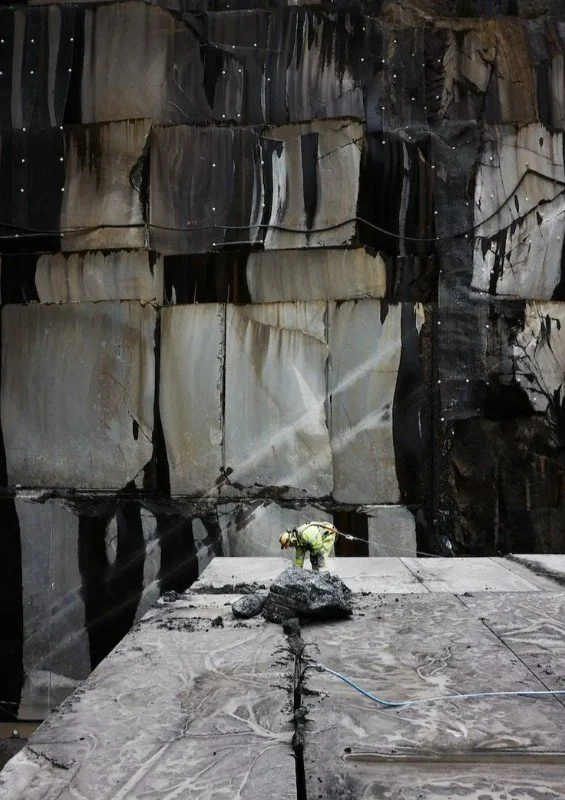
Biophilic Design is built upon our evolutionary relationship with the natural world.
Ben suggests that perhaps our attraction to stone runs even deeper than aesthetics.
"Humans have evolved around rock and timber and water."
Long before cities, our ancestors sought protection within caves and rocky landscapes. Stone provided shelter, thermal comfort and security. Those ancient associations may still influence how we experience space today.
Environmental psychologists have long recognised that our surroundings shape our behaviour and wellbeing. Ben believes natural stone communicates something increasingly rare in modern construction. "Natural stone has the ability to communicate permanence and care... it tells us that the place was built to last." That feeling matters, where permanence can itself become restorative.
Touching time
Anyone who has watched visitors encounter a large piece of natural stone will recognise the instinct. People reach out to touch it, children climb on it, we run our hands on it almost without thinking. Ben witnessed exactly this during a project at the Carbon Garden in Royal Botanic Gardens, Kew. "The first thing they do is make a beeline for it and they just put their hands on it."
Unlike synthetic materials, stone engages multiple senses simultaneously. It is cool before it is warm, it’s smooth in one place, but textured in another, it’s heavy, reassuring and utterly unique. No two pieces are ever identical.
This richness of sensory experience is central to Biophilic Design. We know that natural variation—the subtle imperfections, textures and complexity found in nature—helps reduce stress and maintain attention far more effectively than uniform, manufactured surfaces. Stone embodies that principle effortlessly.
Designing with honesty
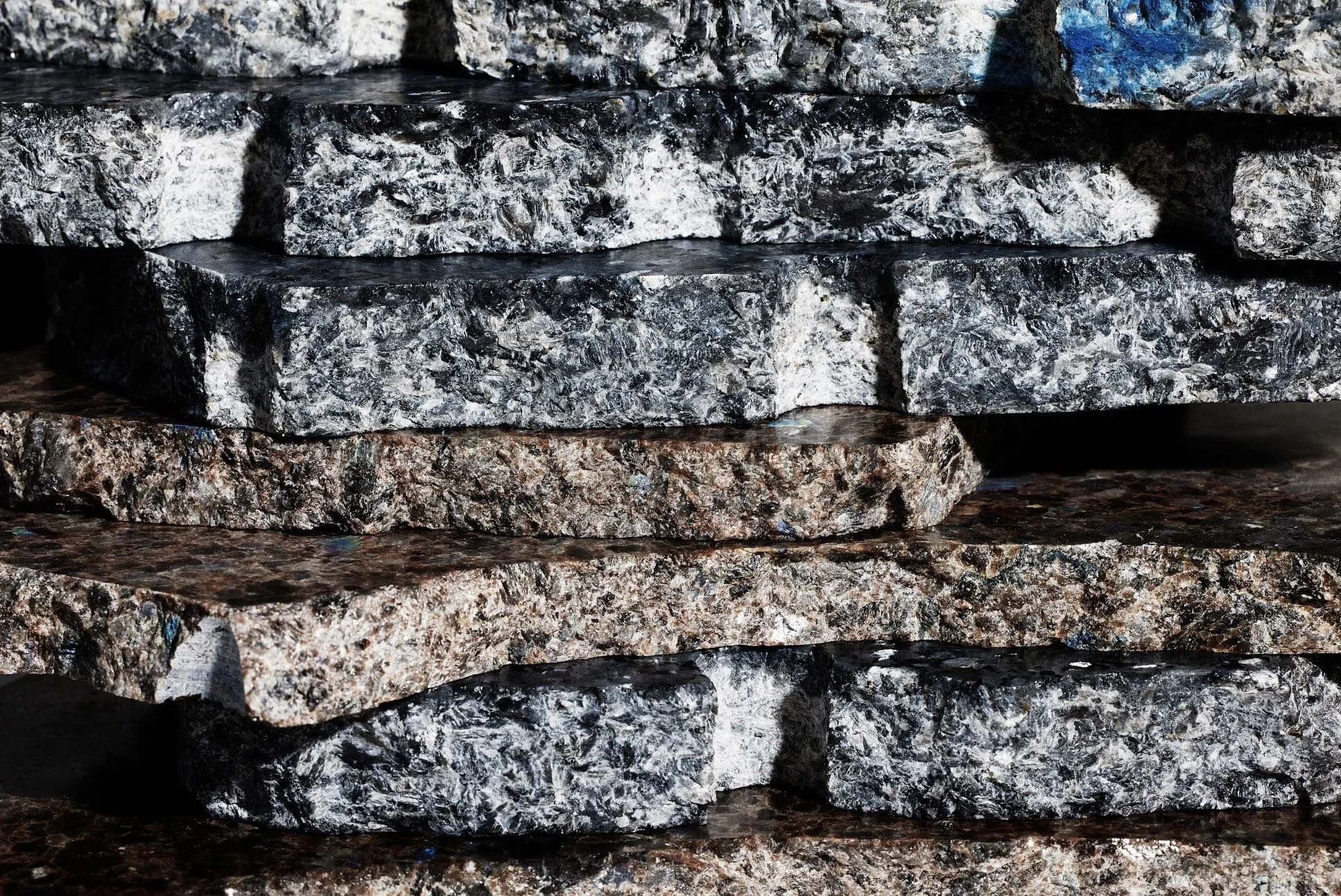
Perhaps one of the most thought-provoking moments in our conversation centred not around stone itself, but around our approach to design. We have become accustomed to engineering materials until they obey every specification perfectly. Ben questions whether that mindset has taken us too far. Instead of forcing natural materials to behave like manufactured ones, perhaps we should begin with the material itself. Look at it’s strength, its limitations, its character. "
There is ingenuity and beauty to be had by connecting with the material rather than dictating to it." This philosophy echoes many of the principles behind regenerative and biophilic design. Nature never produces perfect repetition. Variation is not a flaw. It is life. Rather than rejecting mineral markings, shell fossils or colour variation, perhaps these are exactly the qualities that make spaces feel authentic.
Buildings that become more beautiful with age
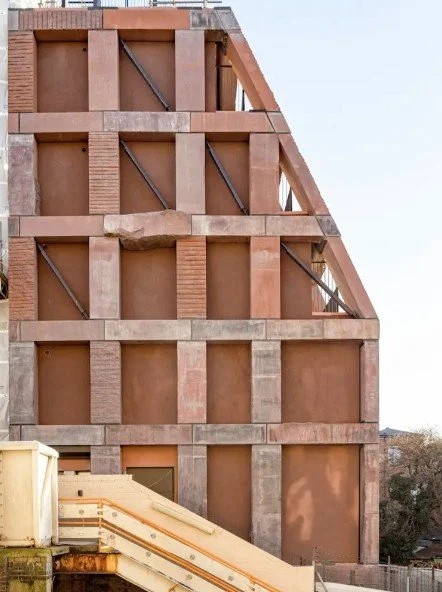
Photo credit Timothy Soar
Unlike many contemporary materials, stone does not begin ageing the moment it is installed.
It evolves, weather softens it, light changes it, time enriches it. Many of Britain's most loved buildings—from cathedrals to civic buildings—are admired precisely because they have matured gracefully over centuries. Stone tells the story of place. It develops a patina rather than deteriorating into obsolescence.
This is biophilic design AND long-term thinking, and this will be increasingly important as the built environment embraces circular economy principles.
Ben describes one pioneering project, 317 Finchley Road, where natural stone forms the building's load-bearing structure rather than simply its façade. Designed so components can eventually be dismantled and reused, it demonstrates how ancient construction principles can support the future of sustainable architecture.
As Ben puts it: "It's effectively the quarry of the future."
Learning from our ancestors
We are not the first to use stone, it’s been with us as a build material since time immemorial, we lived in caves, the Egyptians, the Greeks, the Romans used stone. It’s what Medieval cathedrals were built from. Communities understood that stone was not simply decoration but structure, designed to last generations.
Today, advances in digital modelling, precision manufacturing and circular construction mean those ideas are becoming relevant once again. Rather than replacing materials every few decades, we can begin designing buildings whose components may serve multiple lifetimes. Few materials are better suited to that ambition than natural stone.
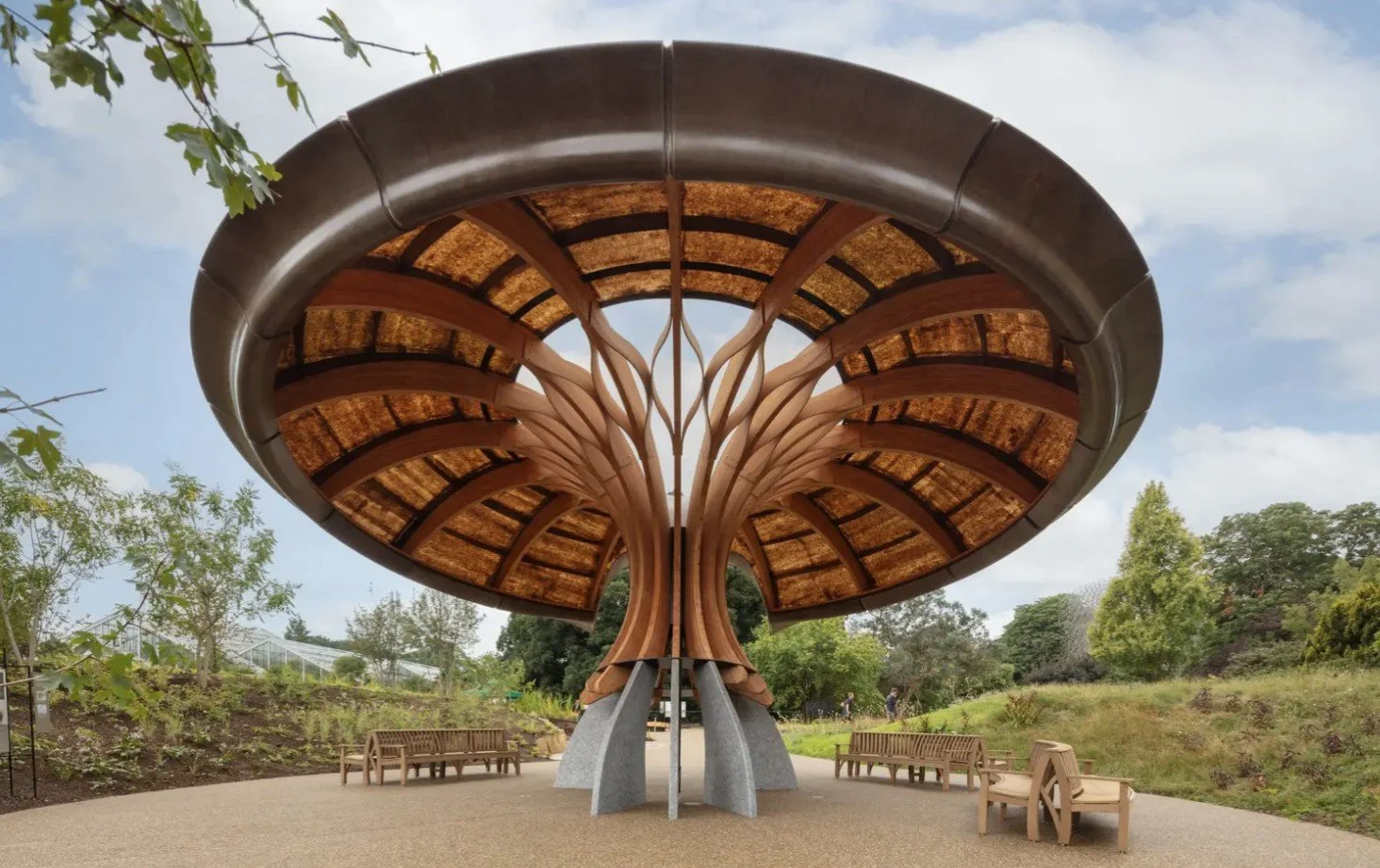
Kew Gardens “mushroom” image credit – Mizzi Studio
A different way of designing
Perhaps the most inspiring part of Ben's work is taking young architects to Norwegian quarries. Rather than presenting polished samples, he watches them rummage through what the quarry calls its "unloved stone”: the unexpected colours, irregular shapes, fragments others might overlook, those discarded pieces often become the greatest source of creative inspiration. It is a wonderful reminder that creativity often begins not with perfection but with possibility.
Dare to dream
The future of Biophilic Design also should be about remembering what has always mattered. Materials that connect us to nature, buildings that honour time rather than fight against it, spaces that age with grace, design that begins by listening. As Ben encourages designers: "Engage with the material... don't dictate. Let the material help dictate the design... and dare to dream."
Let’s rediscover a way of designing that works with nature rather than against it—creating places rooted in permanence, craftsmanship, beauty and belonging. Because when we design with the Earth, rather than merely upon it, our buildings become more than structures. They become stories.
Have you got a copy of the Journal? You can now subscribe as a member of the Journal of Biophilic Design or purchase a gorgeous coffee table reference copy or PDF download of the Journal journalofbiophilicdesign.comor Amazon and Kindle.
Credits: with thanks to George Harvey Audio Production for the calming biophilic soundscape that backs all of our podcasts.
Listen to our podcast on Audible, Amazon Music, Spotify, iTunes, YouTube and all the RSS feeds.
https://www.facebook.com/journalofbiophilicdesign/
https://www.linkedin.com/company/journalofbiophilicdesign/
https://www.instagram.com/journalofbiophilicdesign
If you like this,please subscribe!