The Bath, the Bins and the Biology of Light

The Bath, the Bins and the Biology of Light

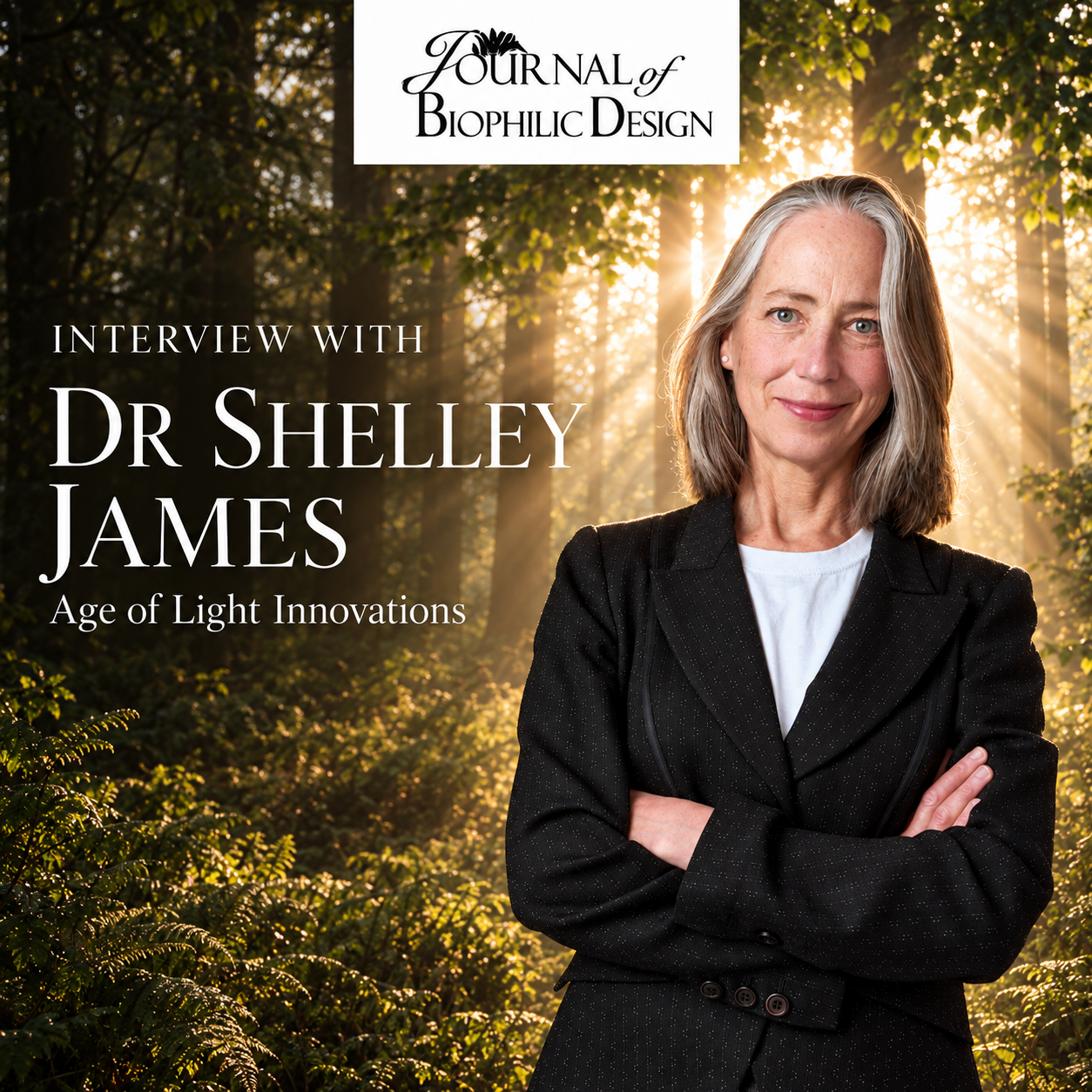
Light: The Missing Element in Biophilic Design

Light is far more than something that allows us to see. It is a powerful biological signal, influencing our body clocks, mood, alertness, sleep and sense of wellbeing. In this fascinating conversation, Dr Shelley James, “The Light Lady”, explores how our brains and bodies respond to light — and why biophilic designers need to pay much closer attention to it.

From the difference between Kelvin and colour rendering to the restorative rhythms of daylight, Shelley reveals how thoughtful lighting can help us create spaces that work more naturally with our biology. She also explores prospect and refuge, moving shadows, contrast and even the remarkable ways our brains interpret light as a signal of the natural world.

Discover why good biophilic design begins not just with bringing nature into a space, but with understanding the light that makes us feel at home in it.

Natural environments contain variation, contrast, shadow, movement and changing horizons. Light filters through leaves, reflects from water, changes with clouds and seasons, and gradually shifts from morning to evening.

Our visual systems evolved within this complexity.

Shelley describes the brain as looking for patterns that are familiar from the natural world — an appropriate balance of order and complexity, rather than either complete uniformity or overwhelming contrast. Even something as simple as dappled light and moving shadows can provide the kind of non-rhythmic visual stimulus associated with nature….

Nature Preserved - The Ultimate Guide to Preserved Plants

Nature Preserved - The Ultimate Guide to Preserved Plants

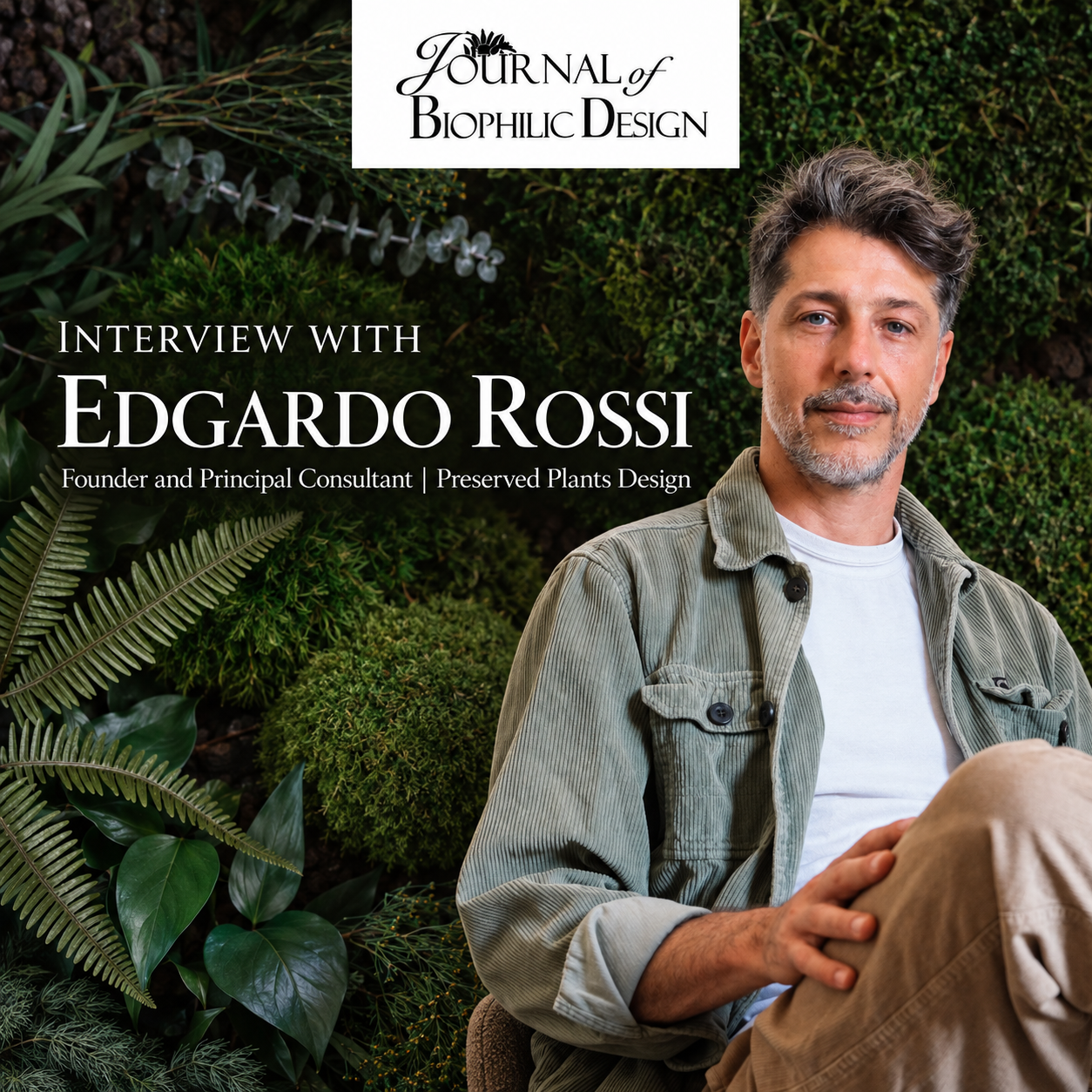
To coincide with the launch of our new monograph, Nature Preserved: The Definitive Guide to Preserved Plants, we talk to its author, Edgardo Rossi, known as The Green Man, about the thinking behind the book and his pioneering Green Lock System. What has years of working with preserved botanical material taught him about design, sustainability and the spaces we inhabit? We explore when living plants should come first, why designers need to walk the space before choosing the greenery, and how cork, bio-based materials and real preserved plants come together. We also challenge common misconceptions about longevity, maintenance and air quality—and ask why real nature should never be forced or faked.

Nature, Nervous Systems and the Places that help us heal

Nature, Nervous Systems and the Places that help us heal

What happens when we step away from the noise of everyday life and enter a space designed to help us restore, reconnect and simply breathe?

How do we create places for wellbeing? Light, temperature, air quality, acoustics, materials, smell and even silence are not merely aesthetic considerations. They form the sensory environment in which our bodies and minds operate. Ali points to natural light as particularly important, both for circadian rhythms and mood, while comfortable temperatures and fresh, clean air can help create an environment in which people can relax rather than remain on alert.

Designing for How We Feel - Robert Hopkins on Biophilic Architecture

 Designing for How We Feel -  Robert Hopkins on Biophilic Architecture

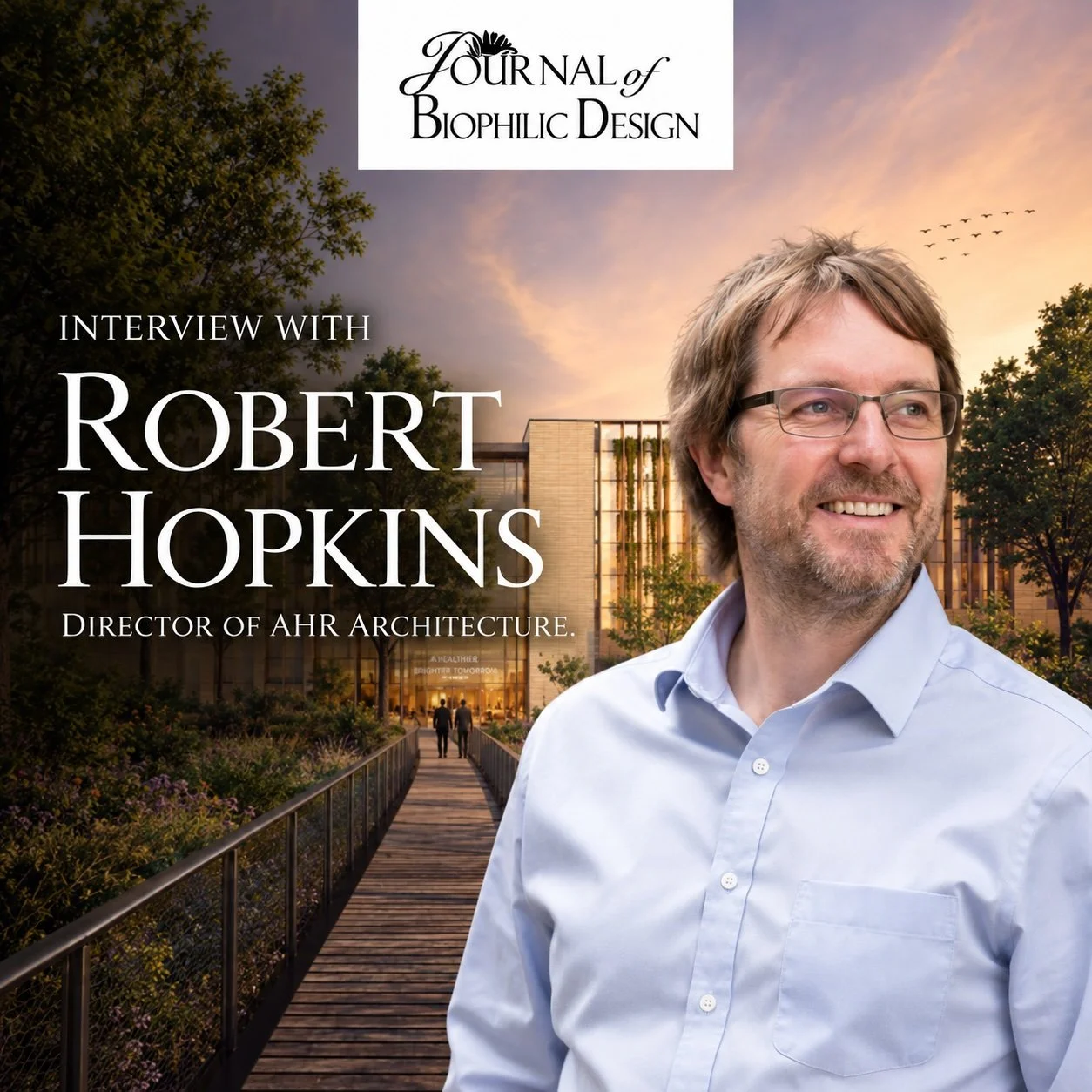
What happens when architecture is designed around how people feel, not simply how buildings perform? Robert Hopkins, architect and sustainability leader at AHR, joins the Journal of Biophilic Design podcast to explore the thinking behind landmark projects including The Spine, Thrive Health and Wellbeing Centre and the Daphne Steele Building. From trauma-informed design and evidence-based decision making to materials, air quality, nature, choice and collaboration, Robert shares how small decisions can transform how people experience a place. His advice? “Don’t chase points” — focus on the why. Listen to the conversation and discover why, for Robert, great architecture might ultimately be about helping people be nice to one another. WATCH THE INTERVIEW

How do we make our increasingly dense cities healthier, greener and more resilient?

How do we make our increasingly dense cities healthier, greener and more resilient?

As our cities grow, access to clean air, clean water, biodiversity and meaningful connections with nature will become ever more important.

In this conversation, we explore living architecture, green infrastructure, urban density, clean air and water — and how we can design cities that work better for both people and the planet.

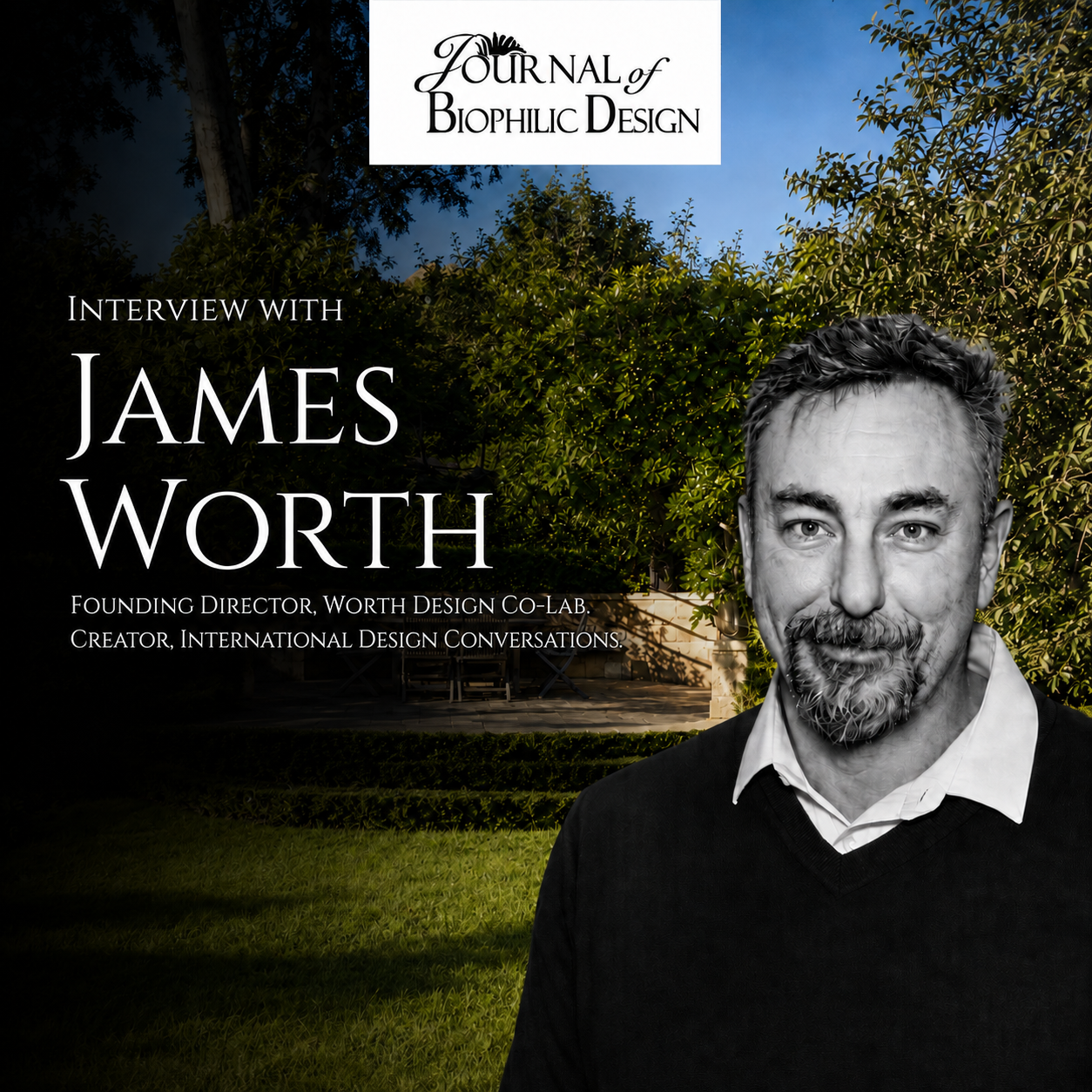
What happens when we stop thinking of nature as something we add to a building and start thinking about it as part of the infrastructure of the city itself? For landscape architect James Worth, the answer lies in bringing disciplines, ideas and people together — and fundamentally rethinking how we design our urban environments.

Living Architecture: Bioreceptive Design for People and Planet

Living Architecture: Bioreceptive Design for People and Planet

What if the buildings that help us tackle climate change were also the buildings that lift our spirits?

We talk a great deal about the performance of buildings: how to reduce carbon, manage heat, conserve energy, deal with water and increase biodiversity. But perhaps we need to ask another question. What should these buildings look and feel like?

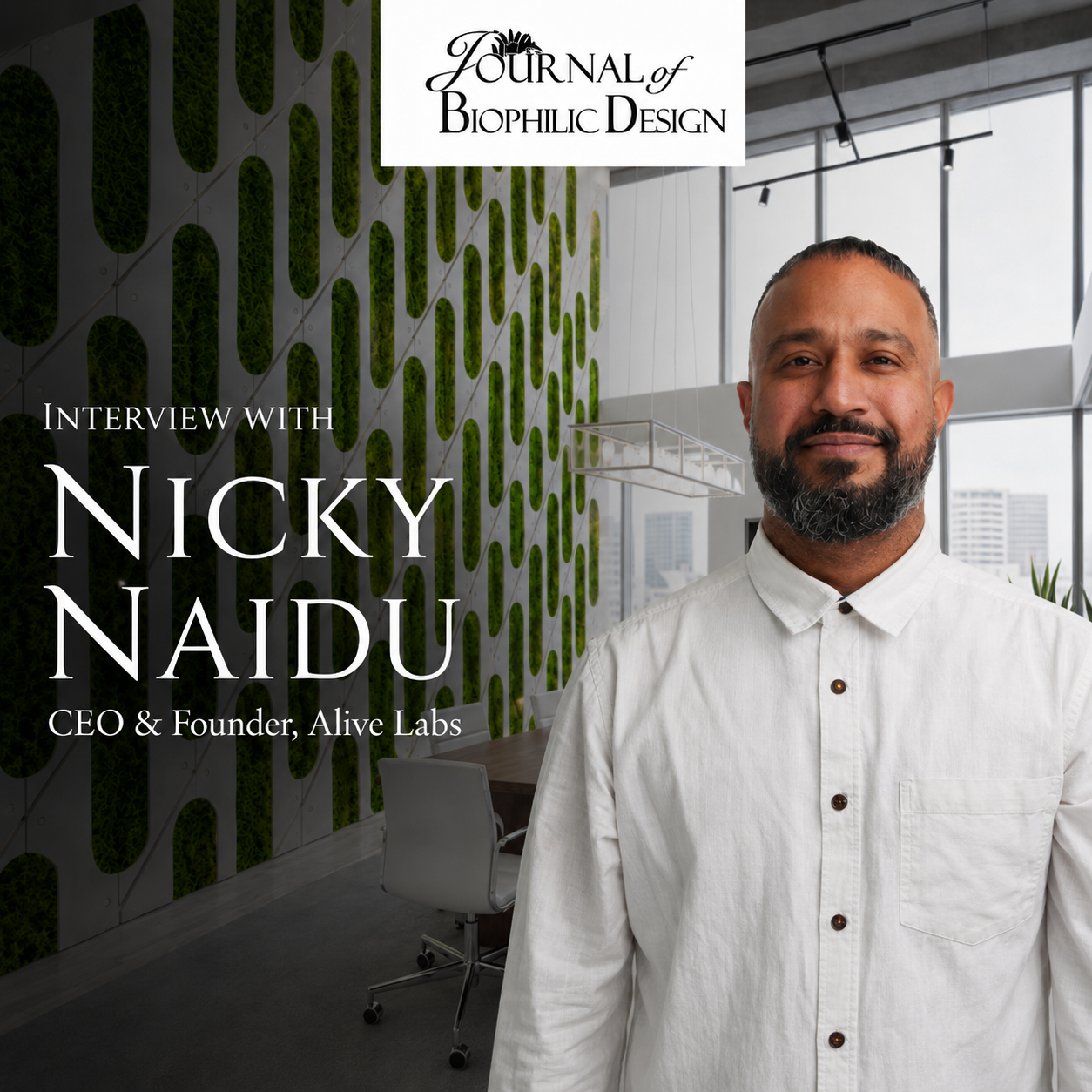
For architect and Alive Labs founder Nicky Naidu, the answer is not to choose between performance and beauty. We should expect both.

Eye of the Beholder: Frank Lloyd Wright, Photography, Biophilia and Awe

Eye of the Beholder: Frank Lloyd Wright, Photography, Biophilia and Awe

What happens when we stop looking at a building simply as a building?

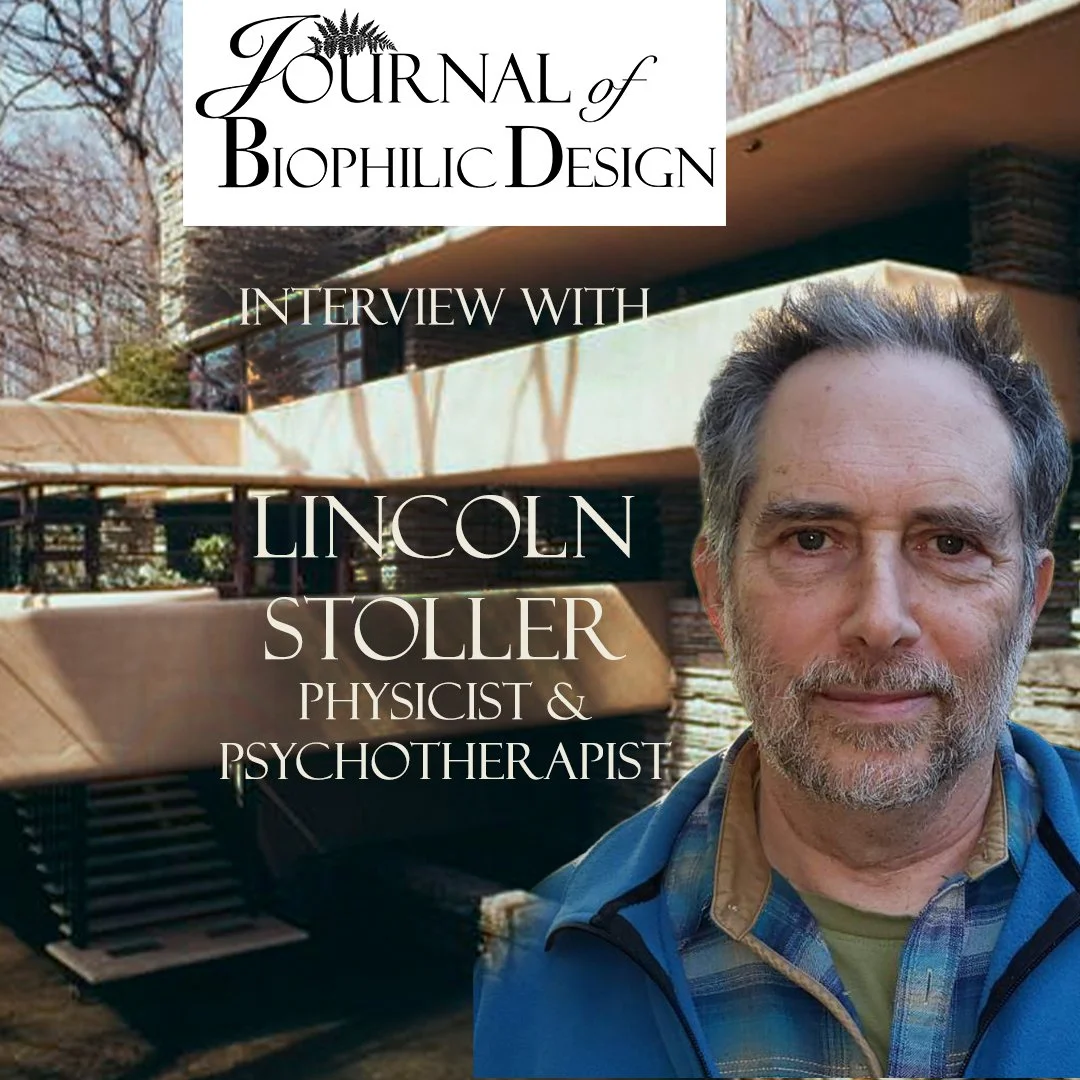
For Lincoln Stoller, physicist, psychotherapist and son of celebrated architectural photographer Ezra Stoller, the answer lies somewhere between architecture, psychology, nature, photography and the human capacity to experience something beyond the immediately visible.

Ezra Stoller was regarded as one of the pre-eminent architectural photographers of his generation. His extraordinary archive includes some of the most significant buildings of twentieth-century modernism, photographed not simply as objects, but as experiences. His approach was distinctive: rather than producing straightforward images designed to showcase a building, he sought something beyond it – what Lincoln describes as the “essential and ethereal.”

This is particularly fascinating when we consider Frank Lloyd Wright, whose architecture is now frequently discussed through the lens of Biophilic Design, despite Wright never using the term. Wright trusted Ezra to understand what he was trying to achieve without needing to explain it. Lincoln describes their relationship as almost a meeting of opposites: Wright the forceful creator, Ezra the sensitive and receptive observer. Together, they understood something difficult to put into words – the ineffable quality of space. READ ON and WATCH the VIDEO

3.8 Billion Years of Design Intelligence - Why the future of design begins by learning from living systems

3.8 Billion Years of Design Intelligence - Why the future of design begins by learning from living systems

Biophilic Design and biomimicry are often discussed as separate disciplines, yet they are deeply complementary. Biophilic Design reconnects people with nature, creating healthier places that nurture wellbeing and strengthen our relationship with the living world. Biomimicry asks a different, but equally important question: how can nature’s 3.8 billion years of evolution teach us to solve human challenges?

Together they offer a blueprint for creating buildings, products and systems that help all life flourish.

While architecture often looks inward for innovation, one of the most fascinating lessons for the built environment is currently emerging from an unexpected place: fashion.

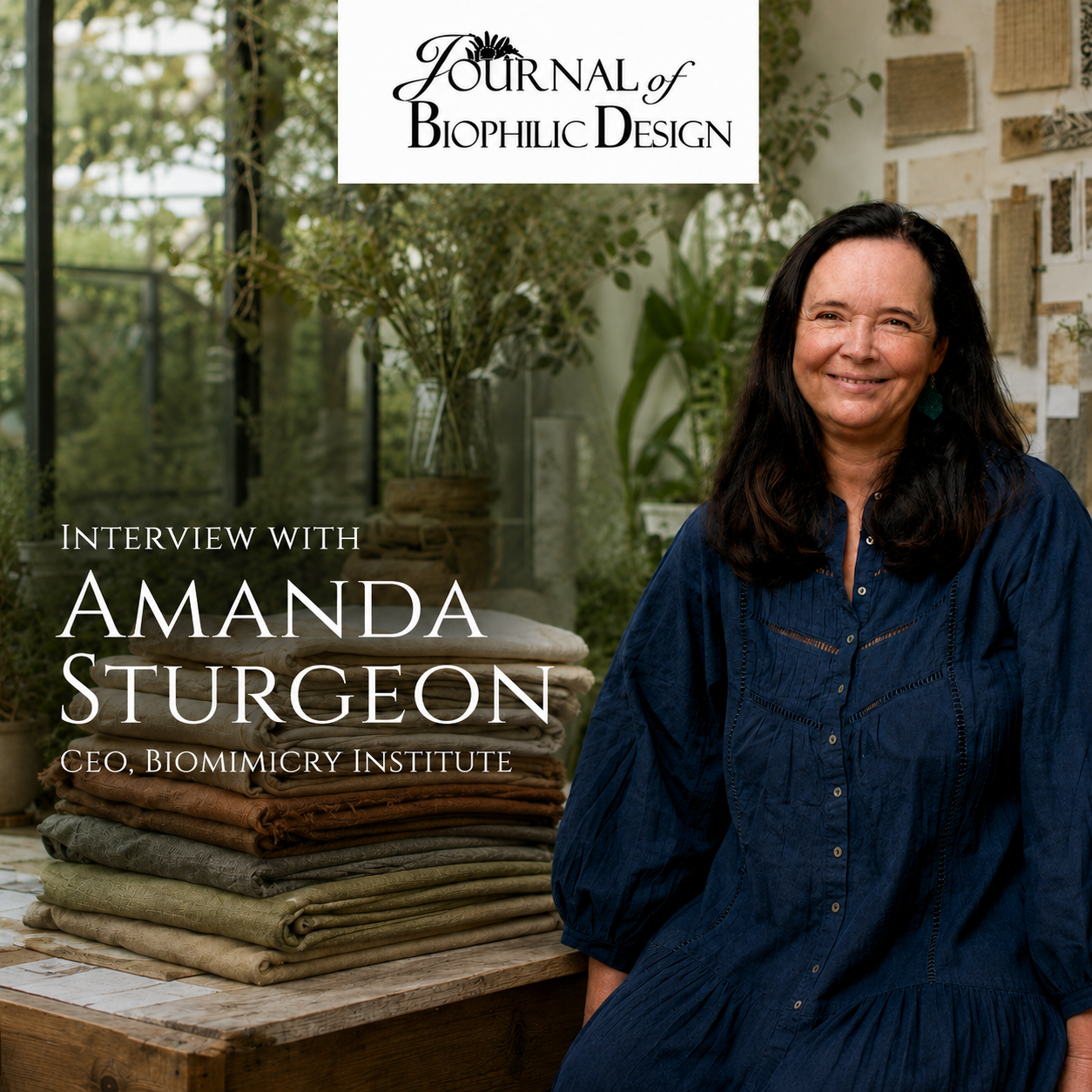
Amanda Sturgeon, CEO of the Biomimicry Institute, has been leading the Institute’s Nature of Fashion initiative, exploring how lessons from natural decomposition could help address one of the world’s fastest-growing environmental challenges—textile waste. Working alongside partners including The Or Foundation in Ghana, Circle Economy in the Netherlands and the Beneficial Design Institute in Germany, the project asks a deceptively simple question: what if the materials we create behaved more like nature?

Biophilia: Africa, Nature and Remembering What It Means to be Human

Biophilia: Africa, Nature and Remembering What It Means to be Human

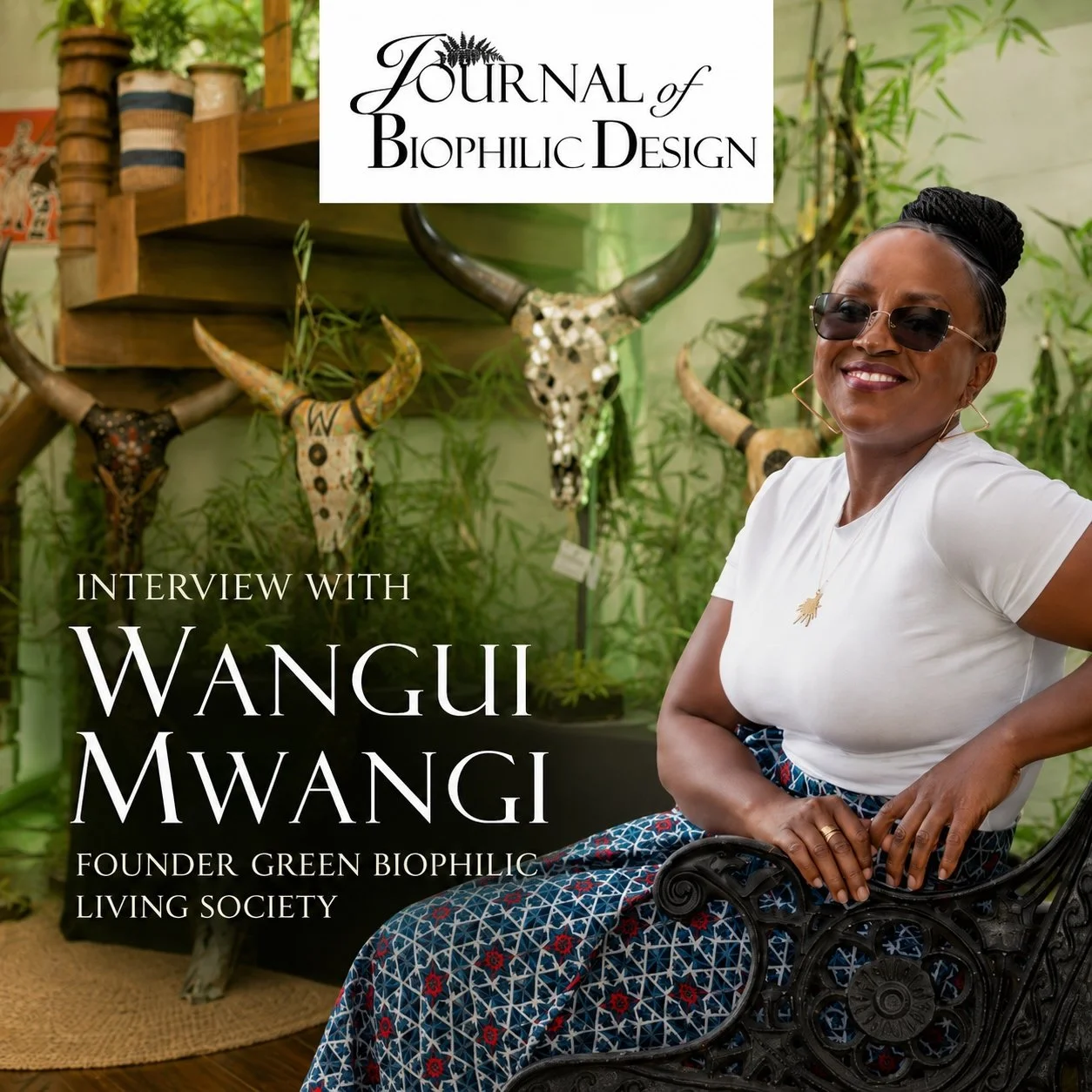
As Biophilic Design continues to gather momentum around the world, much of the conversation has centred on research emerging from Europe, North America and Australia. Yet one of the most powerful perspectives may come from a continent where living with nature has never been considered a design trend at all. For Wangui Mwangi, Founding Chair of the Green Biophilic Living Society and Convener of the Africa Biophilic Building Conference & Expo 2026, biophilia is less about innovation than remembering.

Speaking on the Journal of Biophilic Design podcast, she describes traditional African settlements where buildings were constructed using local materials, courtyards encouraged natural ventilation, communities lived outdoors, and architecture reflected both ecological intelligence and spiritual connection.

Watch the interview and read more…

Dare to Dream - Why Stone is calling us back to Nature

 Dare to Dream - Why Stone is calling us back to Nature

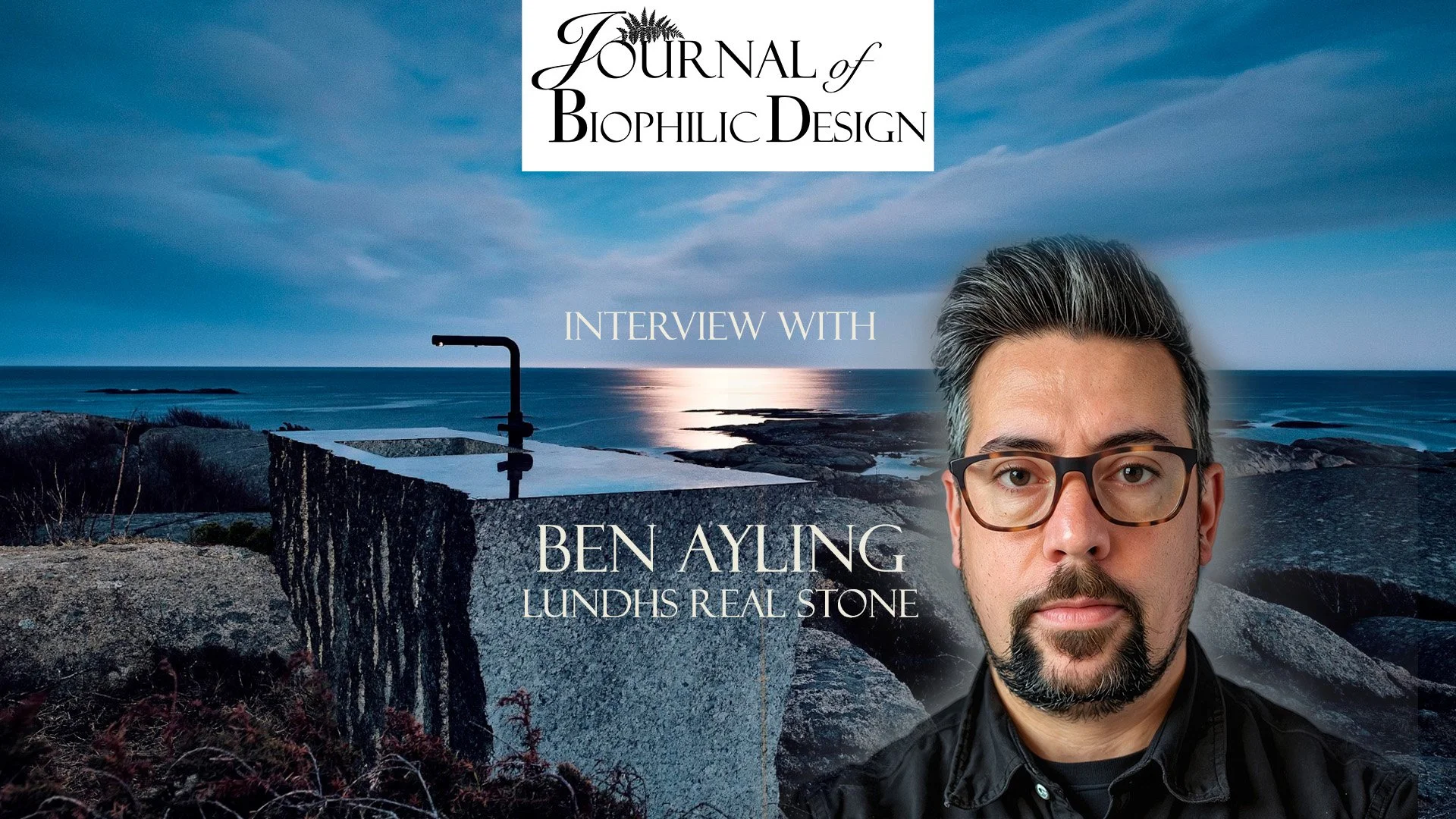
There is something deeply timeless about holding a piece of natural stone. Perhaps it is the cool surface beneath our fingertips. Perhaps it is the intricate mineral patterns that could never be replicated twice. Or perhaps it is something much older than conscious thought—a recognition that for almost all of human history, stone has been our shelter, our monuments, our meeting places and our memories.

While we are searching for healthier, more sustainable ways to design our buildings, natural stone deserves to be part of the Biophilic Design conversation once again.

During this conversation on The Journal of Biophilic Design Podcast, Benjamin Ayling, UK Business Development Manager for Lundhs and founding member of the Stone Collective, reflected on why this ancient material still resonates so deeply today.

Why we need nature inside our buildings - The Future of Healthy Buildings with Biophilic Design

Why we need nature inside our buildings - The Future of Healthy Buildings with Biophilic Design

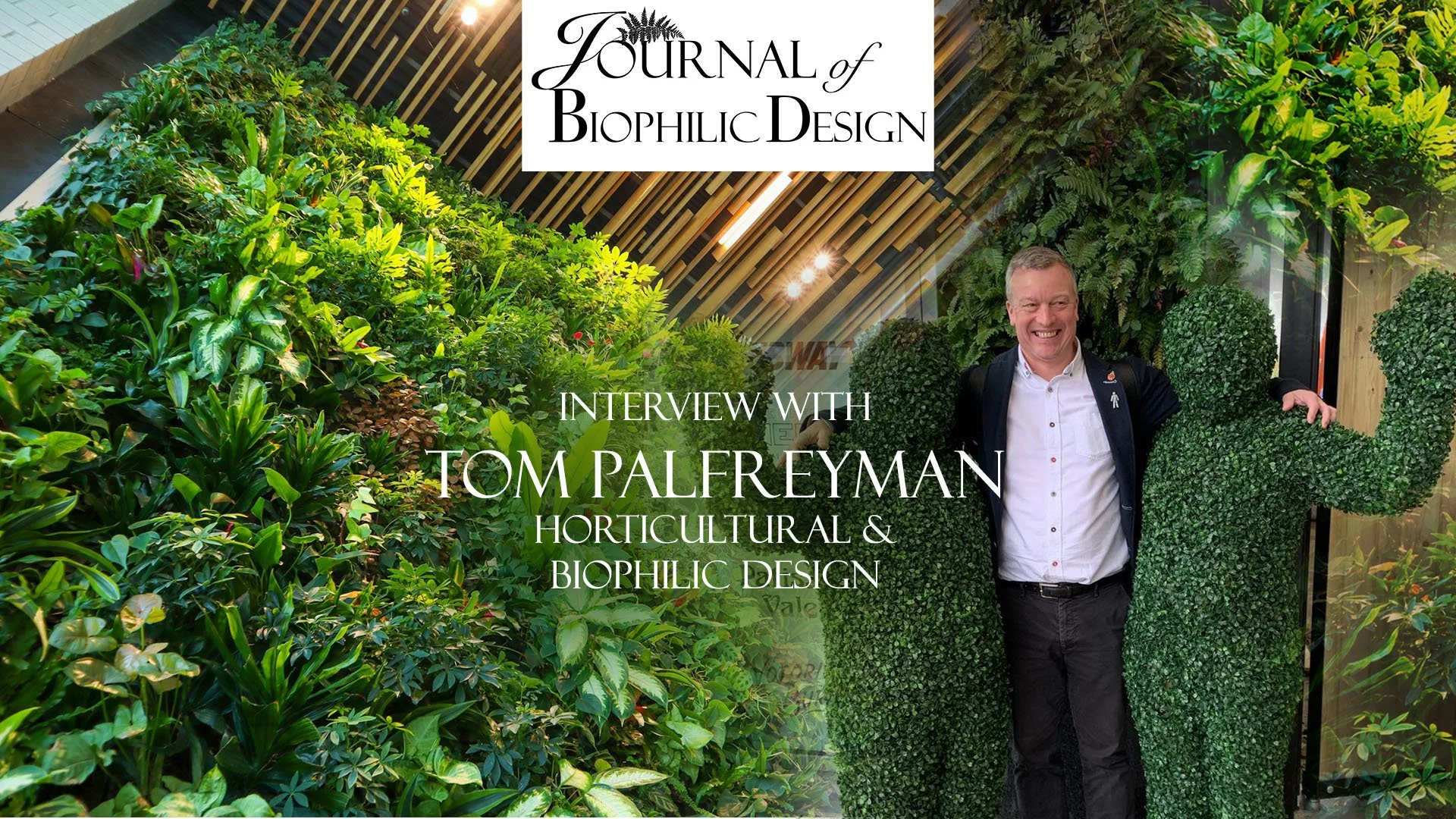
In this episode of the Journal of Biophilic Design podcast, we speak with landscape specialist Tom Palfreyman, whose work across commercial, hospitality, retail and workplace environments has focused on the principle that plants fundamentally change how people experience space. With more than twenty years’ involvement in interior and exterior landscaping, Tom has spent his career exploring how nature can improve the places where we work, rest and play,  and why maintenance, care and long-term thinking are just as important as the initial design itself.


As Tom reflects during the conversation, “Plants have transitioned from a nice-to-have decoration in the corner of the building to being an intrinsic essential part of any building.” It is a shift many designers are now recognising. The conversation around biophilic design has matured significantly over the past decade. What was once dismissed as aesthetic enhancement is increasingly understood as part of a much wider discussion around health, wellbeing, productivity, ecology and human resilience.


The heart of biophilic design beats out that human beings are not separate from nature, we are an intrinsic part of it. “We evolved to live outside,” Tom says. “That connection with nature, sadly, I believe, has been lost.”


Modern life has created increasingly artificial environments - sealed buildings, screen-based working, urban density and spaces designed more for efficiency than human experience. Yet our biology has not changed at the same pace as our architecture. Research across neuroscience, environmental psychology and workplace wellbeing continues to show that exposure to nature can reduce stress, restore attention, support cognitive performance and improve emotional wellbeing.

 READ ON….

The Biophilic Imperative - From Sustainability to Regeneration

The Biophilic Imperative -  From Sustainability to Regeneration

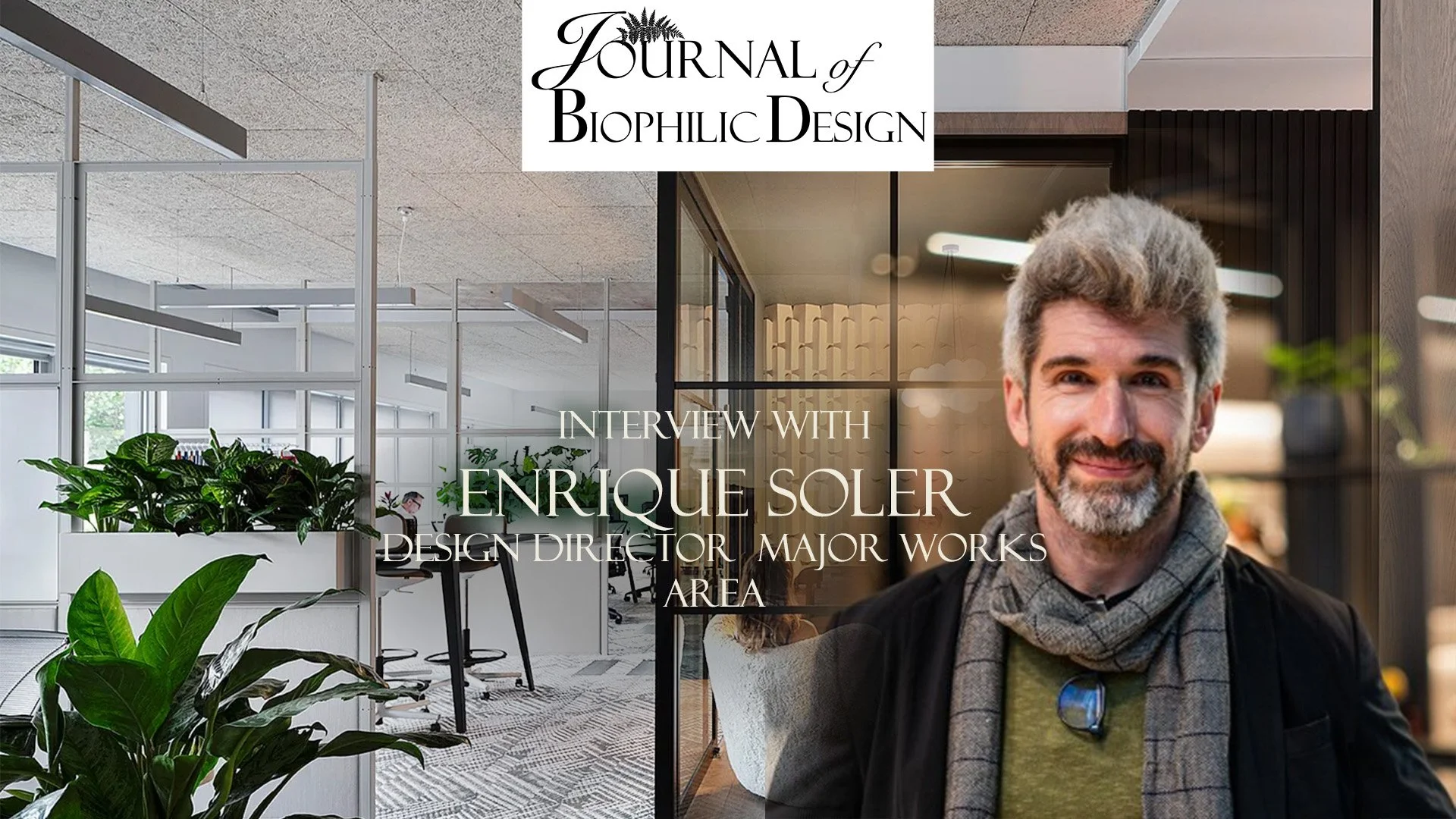
Is it Utopian thinking to imagine a world architected not just to sustain, but to regenerate. A space where every brick, every plant, every human interaction pushes us closer to harmony with nature?  Enrique Soler, is Design Director for Major Projects at Area, where he leads a multidisciplinary team of designers. Formerly Head of Design for Willmott Dixon Interiors, Enrique is a design visionary and passionate advocate of biophilic and regenerative spaces. In this podcast interview he takes us on a journey beyond eco-friendly clichés to uncover how biophilic design can fundamentally transform our relationship with the planet and each other.

Sustainability alone is no longer enough. It’s become a hollow badge; a marketing tab on products. We have to be specifying with regeneration as a fundamental baseline. We have to aim to be net positive, to give back to the earth, and nurture all life through design. If we want to thrive, we must shift from mere mitigation to conscious creation of spaces that actively enhance biodiversity, air quality, and human well-being.

Enrique’s practice extends deep into the core of biophilic philosophy. "It’s not about just having a plant here or there, it’s systems thinking, connecting everything: natural materials, community involvement, local art, and the web of life. Design must be holistic." He illustrates that interior environments capable of reducing noise, improving sleep, and fostering healthy ecosystems are essential.

He shares the surprising outcome of how circadian lighting actually also reduced the sound levels in an office environment, as people were calmer. It’s amazing how biophilic elements can have a far-ranging effect on human health and productivity.

 We also discuss urgency. Without Biophilic Design, we're simply continuing a path of destruction.

The New Stone Age

The New Stone Age

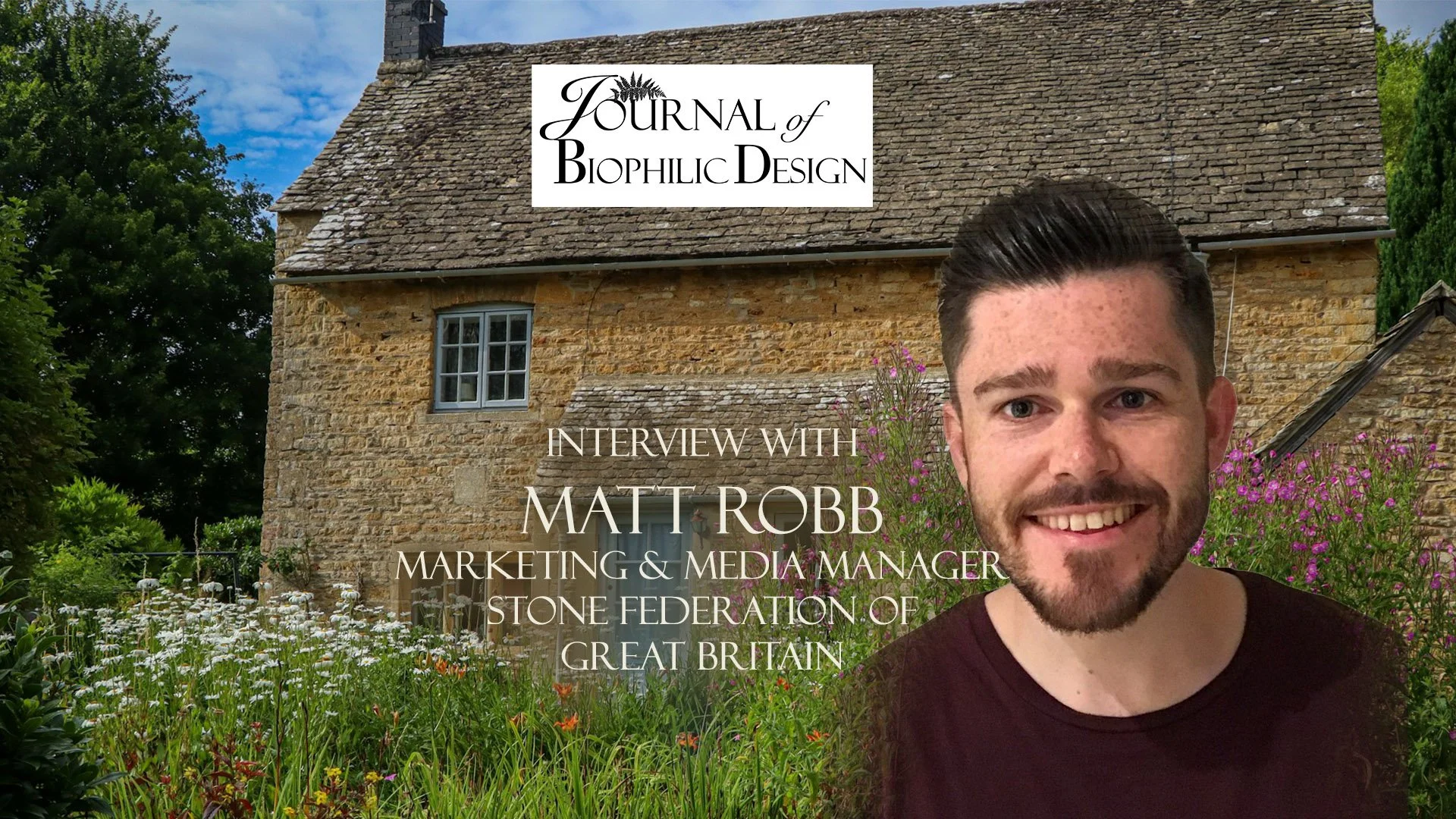
Imagine furniture, cities and buildings that tell stories rooted in local geology, where the materials and forms echo the unique landscapes of their region. Imagine a design language spoken with local stones and traditions, elevating cultural identity.  Beyond its primal beauty and ancient aura, STONE is a material that embodies sustainability, resilience, and storytelling. If you’ve ever danced barefoot on marble floors or admired the stone facades adorning historic cities, you’ve felt that deep, almost breathing connection to the earth’s history.


But how often do we truly understand this miracle of nature and see its potential to transform our built environment? Today, we dive into the heart of biophilic design and explore how embracing natural stone could upscale our approach to architecture, sustainability, and beauty with Matt Robb, Marketing and Media Manager for the Stone Federation of Great Britain. I think you’ll enjoy this interview where we celebrate our relationship with one of the earth’s oldest, most remarkable gifts.


Matt shares with us how the story starts deep beneath our feet, formed over millions of years by geological forces, sedimentary layers, thermal metamorphosis, and the slow crystallization of minerals. From limestone and marble to granite and sandstone, each type tells a story of time, place, and process. There's no such thing as a bad stone, only badly used stone. When we understand the qualities of each material we can allow them to inform your design, not constrain it. Think Right Stone, Right Place.


Architects like Amin Taha are leading this movement utilising full-range stone blocks, drastically reducing carbon footprints, and proving that sustainability and innovative design are not mutually exclusive. The key? Embrace the narrative of each stone, respect its natural essence, and allow it to shape your architecture—timeless, responsible, and inherently beautiful. When you learn how stone is formed which Matt shares brilliantly  where it comes from, and what it can do, your designs become richer, more authentic, and more sustainable. READ ON and LISTEN TO THE PODCAST..

How to Fast-track a Regenerative Future

How to Fast-track a Regenerative Future

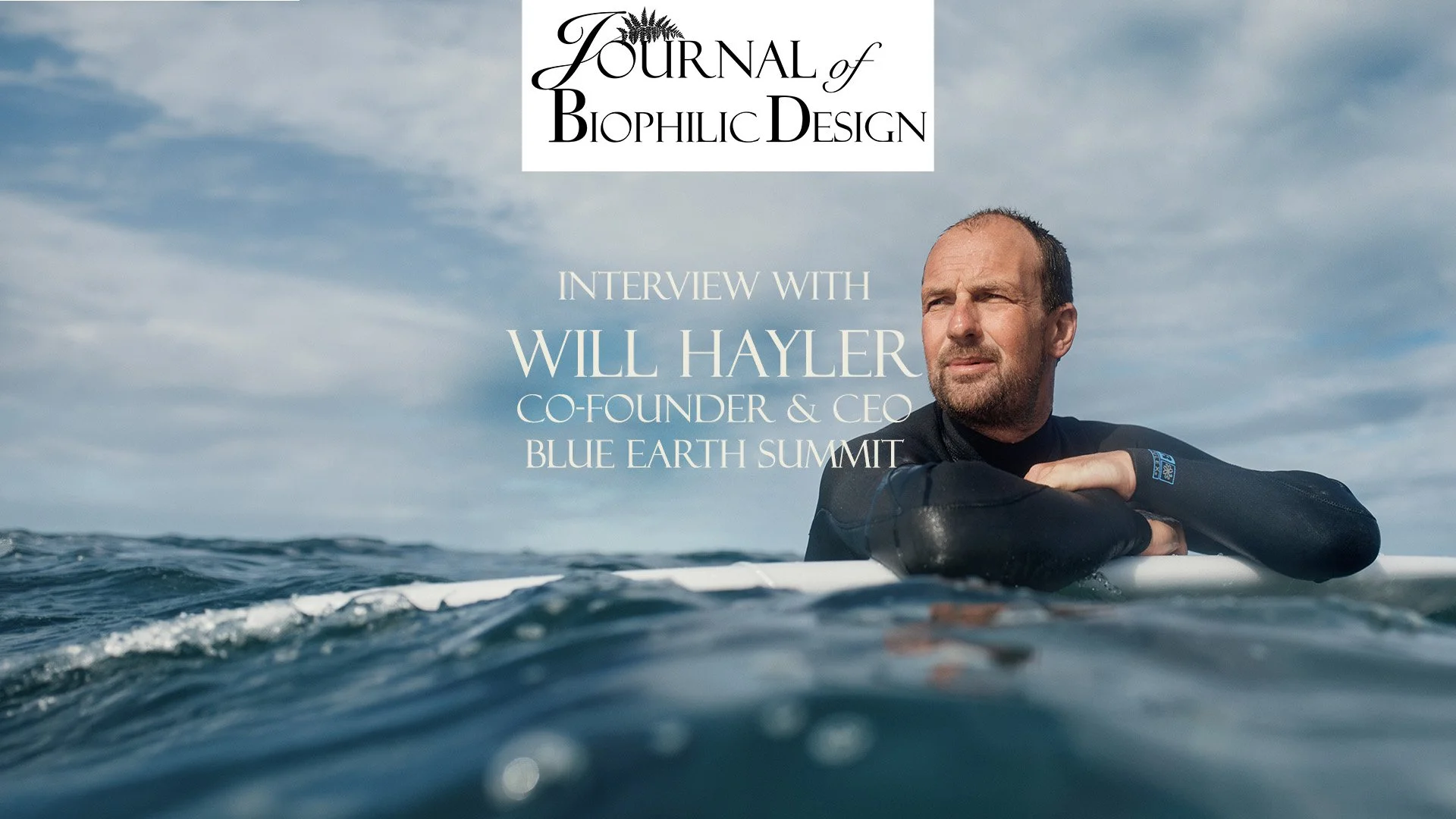
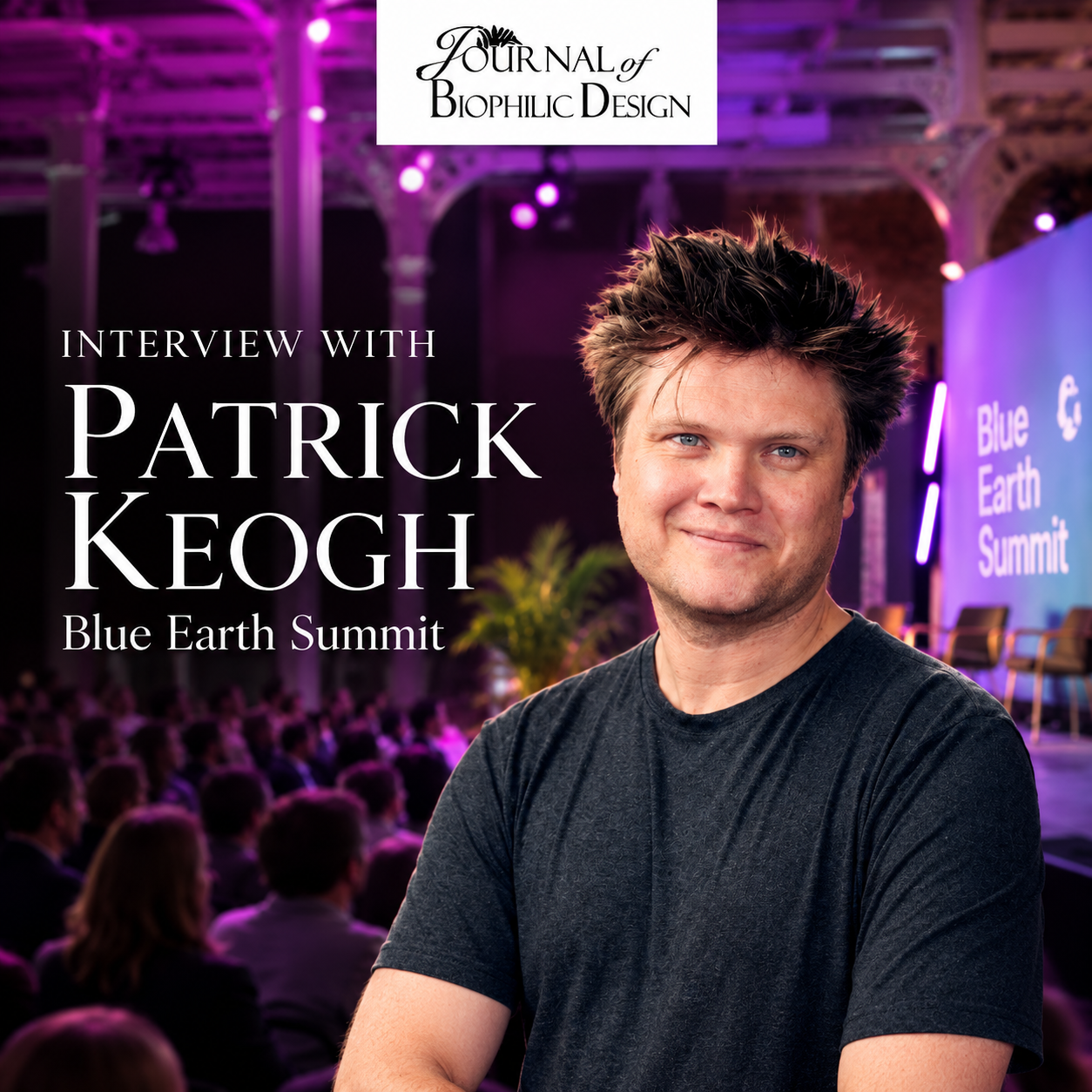
Efforts to tackle the climate and nature crisis often focus on policy, science and activism. But according to Will Hayler, founder and CEO of The Blue Earth Summit, real transformation will only happen when entrepreneurs and investors are fully part of the conversation.


Speaking about the philosophy behind the Blue Earth Summit, Will argues that innovation and enterprise are essential if environmental solutions are to move beyond ideas and into the real economy. “If you're really serious about solving problems, you need entrepreneurs in the room,” he says.

We spend 90% of our time indoors. Here’s how Biophilic Design can make that healthier.

We spend 90% of our time indoors. Here’s how Biophilic Design can make that healthier.

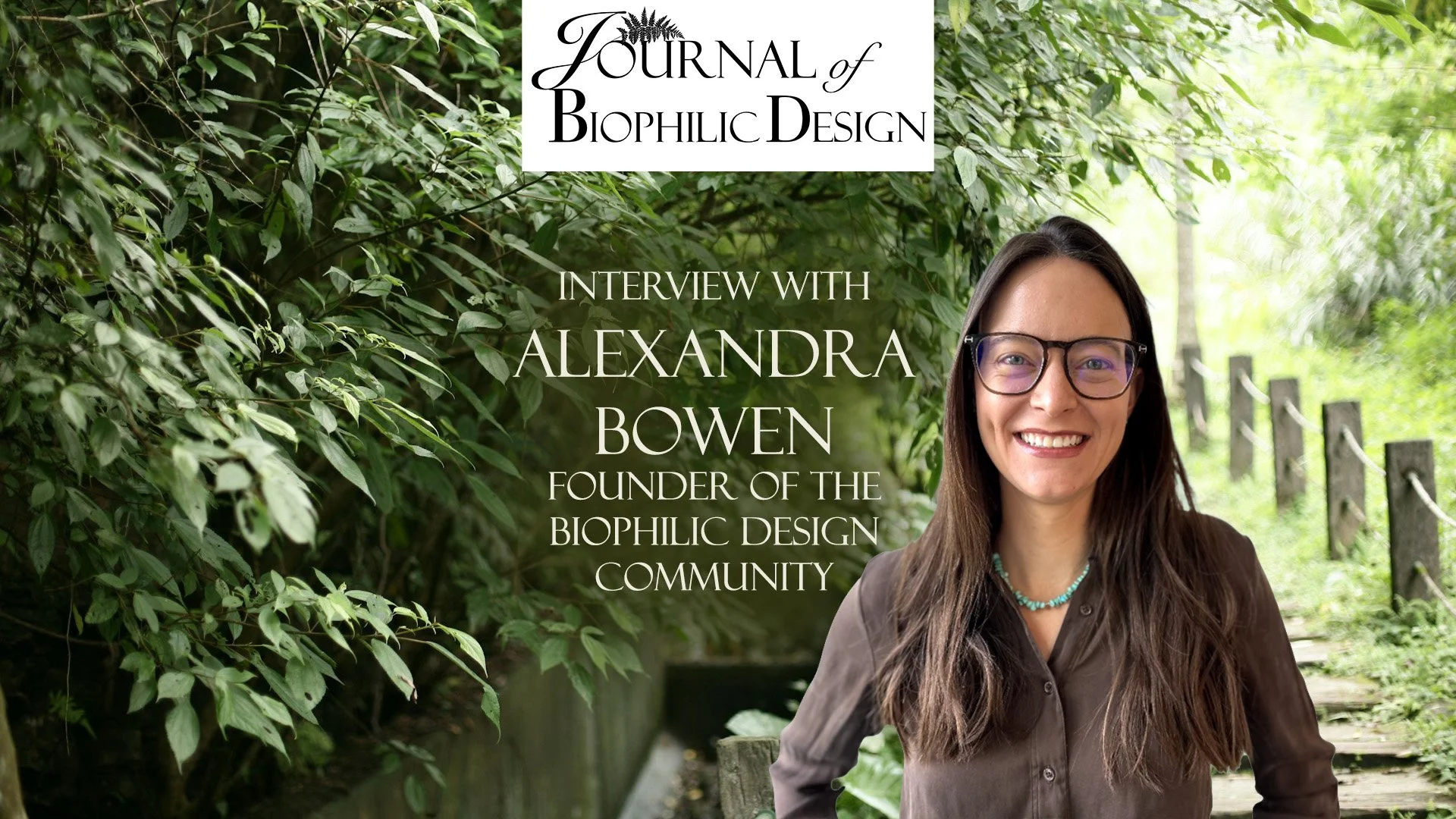
We spend about 90% of our lives indoors, yet our cities, offices and homes are rarely designed with the biological reality of that fact in mind. That disconnect between humans and the natural systems we evolved within is becoming harder to ignore. Biophilic Design is a growing movement in architecture and planning, which argues that bringing nature back into the built environment is not a luxury or aesthetic flourish but a public-health, economic and social necessity.


Alexandra Bowen, founder of the Biophilic Design Community on LinkedIn, puts it bluntly: “Our minds and bodies evolved over thousands of years to thrive in nature. If we’re indoors almost all the time, we have to be deliberate about reconnecting with it.”

Her argument echoes a growing body of research suggesting that the benefits are measurable. Studies cited by designers show that access to daylight and views of nature can improve cognitive performance and memory recall by around 15%, while hospitals with natural light have reported 41% shorter patient stays. In schools, improved ventilation has been linked to 14% better maths scores and significantly reduced sickness absence.

Collect 2026: Metamorphosis and the Polish Design Connection

Collect 2026: Metamorphosis and the Polish Design Connection

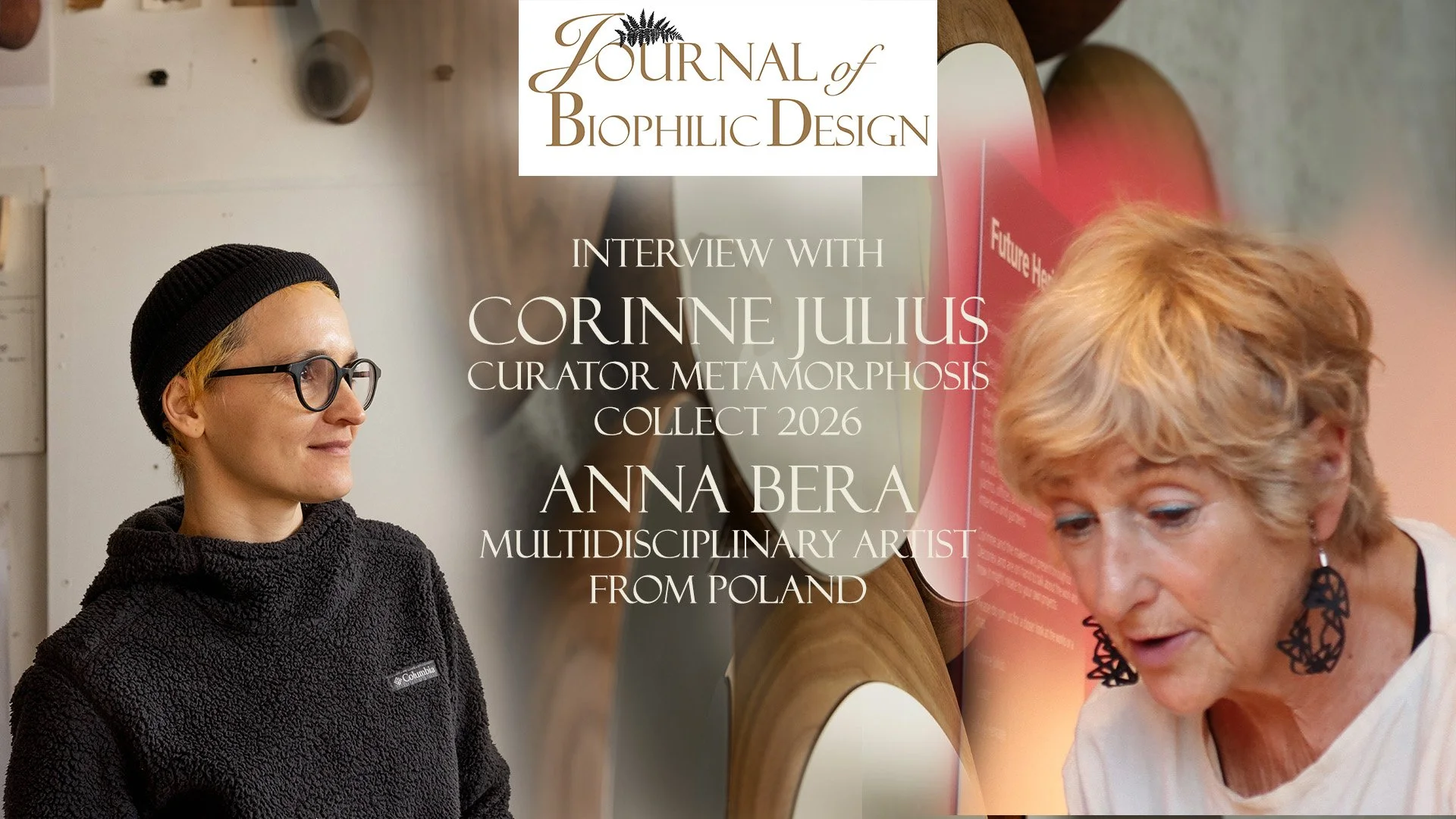
Polish craft and innovation is going to take centre stage at Collect 2026 which opens in London on 25 February this year 2026. Nature connection, craft and design is taking centre stage.  Biophilic Design helps people reconnect with nature. I am also a maker and artist (I sculpt, weave, sketch, etc), and for me, creating things with natural materials gives me a direct connection to nature and our planet. In this podcast we speak with the curator of this year’s Collect Corinne Julius and one of the Polish artists featured during the show. We explore the significance of biophilic design, the metamorphosis of Polish craft, and the role of materiality in art. The conversation also touches on the challenges of the craft industry in the context of climate change and the importance of tactile experiences in our lives. Can slow craft be the antidote to the disconnection and environmental crisis we face today?

One minute to breathe. How images of nature can help save our A&E staff

One minute to breathe. How images of nature can help save our A&E staff

Emergency departments are some of the most punishing workplaces in healthcare. Clinicians move in seconds from breaking catastrophic news to families, to resuscitating a dying patient, to reassuring a parent whose child has a simple fever. We rightly talk a lot about patient experience. We talk far less about what these relentless environments do to the people who work in them.

New research published in Issue 18 of the Journal of Biophilic Design, proves that after just one minute of viewing nature imagery, clinicians felt less anxious, less gloomy and calmer and at ease, in a way that is extremely unlikely to be explained by random fluctuation.

If a single minute in front of one picture can move the needle, what might a genuinely biophilic emergency department achieve? READ on and listen to the interview.

Biophilic Design and Innovative Place Typologies for a new Generation of Developers

Biophilic Design and Innovative Place Typologies for a new Generation of Developers

We have a climate crisis, housing shortages, and increasing urban disconnection, we need a pioneering radical approach to development that puts nature and human flourishing at its core. Human Nature, led by Joanna Yarrow, are creating living, breathing ecosystems that challenge how we normally go about urban design.

"We've boxed ourselves into a corner by having the starting point that we are separate from nature," Joanna explains. Places should not just exist alongside nature, they should be fundamentally integrated with it.

Human Nature has identified three critical place typologies that could transform how we live. These are urban neighbourhoods, rural clusters, and new settlements. Their flagship project, the Phoenix in Lewes, East Sussex, demonstrates what's possible when we reimagine development.

Can a Biophilic Strategy redefine our Urban Future?

Can a Biophilic Strategy redefine our Urban Future?

"The way we've conceived cities for the past 100 years has been far too extractive, far too one-dimensional. We need cities that are more productive, multi-dimensional, and adaptable." Ludo Pittie leads WSP’s 75-strong UK landscape and urban design team, guiding  the company’s landscape strategy and design thinking, and is also driving a global WSP exploration of ‘the Future Ready Landscape’ which strives to anticipate future needs, and embed adaptable design practices to create sustainable places that are ready for today and tomorrow.

Urban spaces should be biophilic interconnected systems that prioritise human and ecological wellbeing. This goes beyond traditional sustainability, we need regenerative design, an approach that doesn't just minimise harm, but actively restores and enhances natural systems.

The 15-minute city concept reimagines urban living. "It's about providing essential social needs locally," Ludo explains. "Access to schools, food production, healthcare – all within a 15-minute radius. It's about creating communities that can truly thrive."

READ ON… and watch the interview…

Urban Biophilia - SUGi’s Pocket Forests Are Rewilding City Life

Urban Biophilia - SUGi’s Pocket Forests Are Rewilding City Life

SUGi creates pocket forests that breathe life into urban spaces. Founded in London and now operating in over 50 cities worldwide, SUGi uses the innovative Miyawaki method to transform small urban areas into thriving, biodiverse ecosystems.

In a space the size of a tennis court, they can plant approximately 600 trees that grow rapidly, creating a mature forest in just a fraction of the time nature would typically require. Adrian Wong, UK Forest Lead, explains, "If nature did it naturally, it usually takes 150 to 500 years for a forest to mature. We supercharge that process."

At the heart of SUGi's success is soil restoration. "Without a living, healthy soil, we can't do what we're doing," Adrian emphasises. They meticulously prepare urban sites by aerating the ground, introducing beneficial organisms like mycelium and worms, and creating a nutrient-rich environment that supports rapid growth and biodiversity. For me, as Adrian was telling us this, I felt this emphasis on creating a healthy environment for life to thrive, is similar to what we are trying to do with Biophilic Design inside our homes, hospitals, workplaces, creating healthy environments that enable all life to flourish.

The impact is remarkable. Even in seemingly inhospitable urban locations, these micro forests attract diverse wildlife. At their South Bank forest, they've recorded an incredible range of species, including blue tits, green finches, and surprisingly, even tawny owls and peregrine falcons.

Watch the video…