In this episode of the Journal of Biophilic Design podcast, we speak with landscape specialist Tom Palfreyman, whose work across commercial, hospitality, retail and workplace environments has focused on the principle that plants fundamentally change how people experience space. With more than twenty years’ involvement in interior and exterior landscaping, Tom has spent his career exploring how nature can improve the places where we work, rest and play, and why maintenance, care and long-term thinking are just as important as the initial design itself.
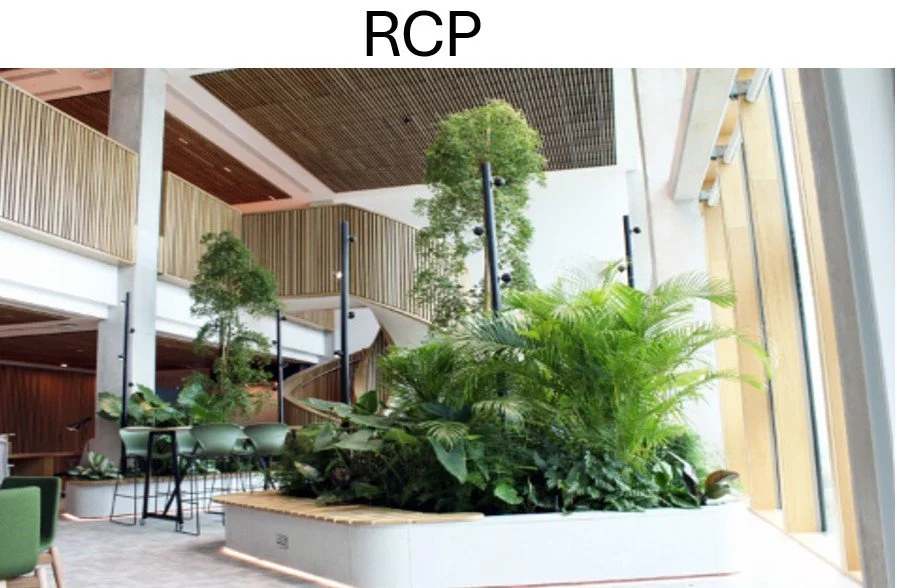
As Tom reflects during the conversation, “Plants have transitioned from a nice-to-have decoration in the corner of the building to being an intrinsic essential part of any building.” It is a shift many designers are now recognising. The conversation around biophilic design has matured significantly over the past decade. What was once dismissed as aesthetic enhancement is increasingly understood as part of a much wider discussion around health, wellbeing, productivity, ecology and human resilience.
The heart of biophilic design beats out that human beings are not separate from nature, we are an intrinsic part of it. “We evolved to live outside,” Tom says. “That connection with nature, sadly, I believe, has been lost.”
Modern life has created increasingly artificial environments - sealed buildings, screen-based working, urban density and spaces designed more for efficiency than human experience. Yet our biology has not changed at the same pace as our architecture. Research across neuroscience, environmental psychology and workplace wellbeing continues to show that exposure to nature can reduce stress, restore attention, support cognitive performance and improve emotional wellbeing.
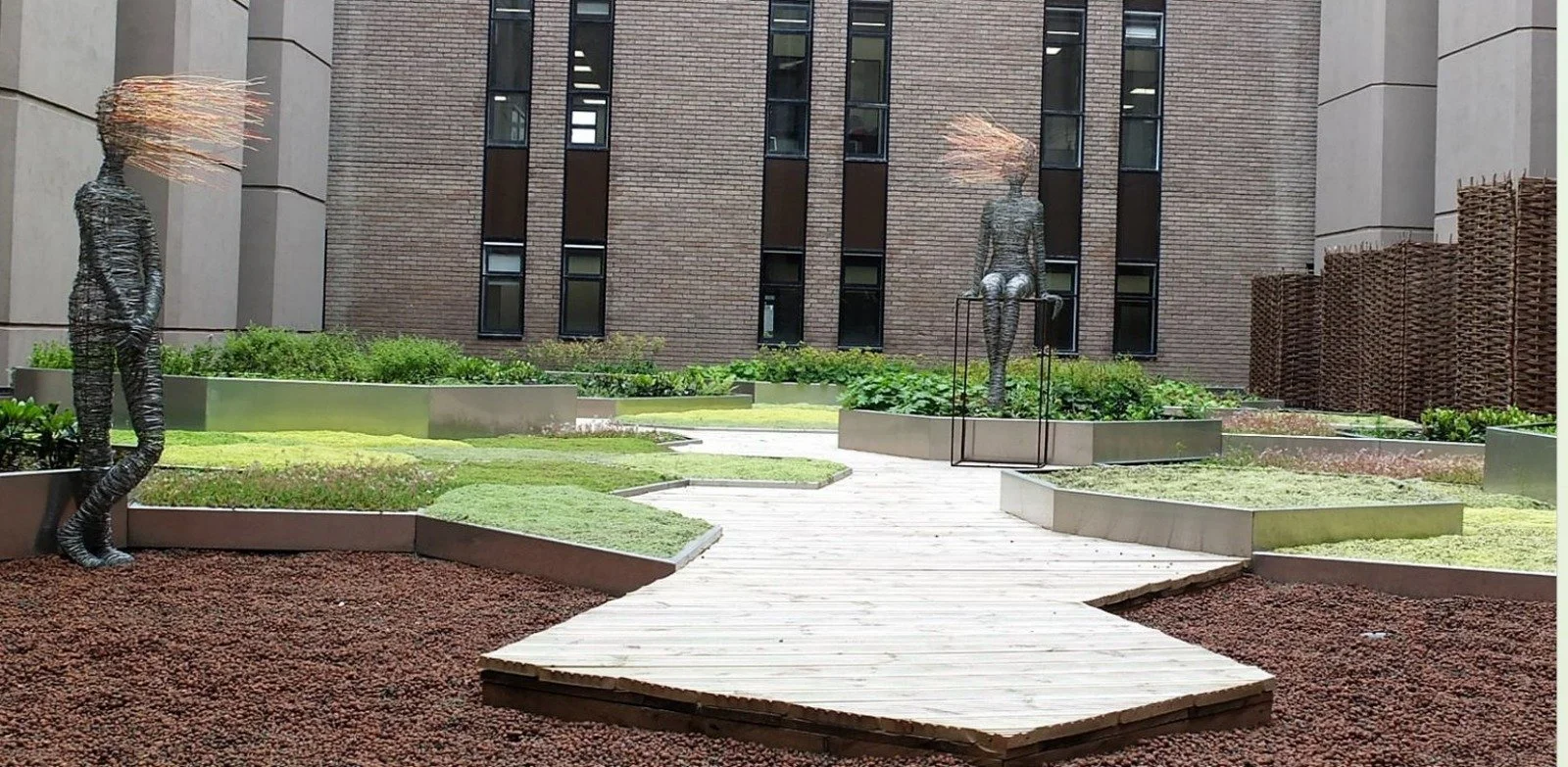
What is clear in this discussion is that successful biophilic design is never simply about adding greenery into a room. It is about creating meaningful and lasting relationships between people and living systems.
For Tom, this begins with understanding plants properly. “Putting the right plant in the right place so it’s happy, healthy, survives,” he explains. There is something important in that statement. Too often, planting schemes are treated as visual afterthoughts rather than living ecosystems requiring expertise, maintenance and long-term stewardship.
The strongest biophilic projects understand that planting design is not decoration. It is infrastructure for wellbeing.
Tom highlights his collaboration with Dr. Craig Knight, emphasising the benefits of biophilic ‘enrichment’, a word maybe more commonly associated with ecology or animal wellbeing than commercial interiors. “Enrichment is a very, very strong part of what we do, putting the right plants in the right place,” he says. “If we can have engaged enrichment, then that is far more powerful.” Tom shares an example of a project with a pharmaceutical company where biophilic enrichment was introduced, leading to significant improvements in the work environment and prompting the company to adopt a global biophilic strategy.
This notion of engaged enrichment feels particularly relevant in workplaces today. Many office environments continue to struggle with issues of stress, disengagement and sensory fatigue. In contrast, spaces designed with visible natural systems, daylight, planting and moments of restoration often feel fundamentally different. They soften the intensity of modern working life and reintroduce cues of life, seasonality and care into daily experience.
Even relatively small interventions can have measurable impact. “Just one plant per four square meters can make a difference,” Tom notes, pointing to research that demonstrates improvements in wellbeing and engagement through relatively modest levels of planting integration.
Importantly, the placement of greenery matters as much as quantity. Tom speaks about focusing on “main areas of circulation, so entrance and exit points of the buildings, communal spaces, places where people are going to perhaps take a moment to recuperate.” These transitional spaces are psychologically significant. They shape first impressions, influence behaviour and provide opportunities for pause and recovery within otherwise fast-paced environments.
Biophilic design, at its best, works subtly in the background. A staircase wrapped in planting encourages movement differently. A naturally lit communal area changes how people gather. A view towards greenery can lower stress responses almost instantaneously. These are not superficial gestures; they alter the emotional atmosphere of buildings.
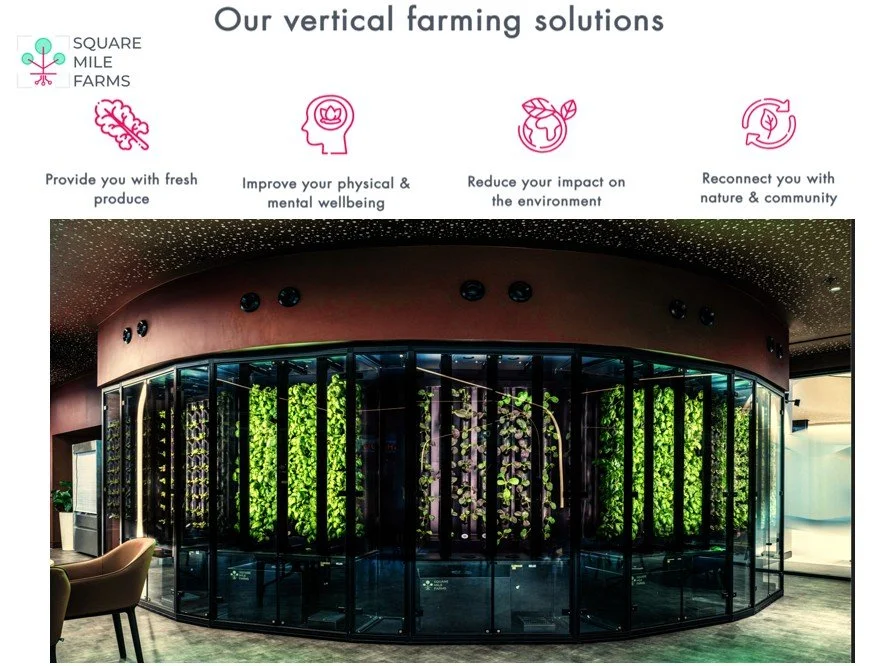
Tom shares the inspiring work that Square Mile Farms are doing, introducing edibles into the working environment, focusing on education, engagement, and community building. They create gardening clubs where people can harvest plants like basil, replant, and take home produce to make recipes like pesto. This initiative rekindles lost skills and encourages communication and interaction among people.
The conversation also raises an important challenge for the industry itself. As demand for biophilic design increases, so too does the need for skilled horticultural knowledge and maintenance expertise. “We need more people to see this industry as a career,” Tom says — a point that often receives too little attention within design discussions. Living systems require ongoing care, and the future of biophilic cities will depend not only on visionary designers, but also on the people who understand how to sustain and nurture these environments over time.
What Tom would like to see is a society where “plants in, on and around every building, in every location, all being looked after in the right way.”
It is a vision that speaks to aesthetics, but also to responsibility. Cities continue to densify and climate pressures intensify, integrating nature into the built environment is a necessity. Healthy buildings and healthy ecosystems cannot be treated as separate conversations.
Perhaps that is why the Biophilic Design movement resonates so deeply now. People are searching for spaces that feel alive. Spaces that restore rather than deplete. Spaces that acknowledge our innate need for connection with the natural world. As Tom puts it: “Plants are the secret weapon. We cannot forget how important they are in any environment.”
https://www.linkedin.com/in/thomas-palfreyman-56b792b/
https://www.squaremilefarms.com/
Have you got a copy of the Journal? You can now subscribe as a member of the Journal of Biophilic Design or purchase a gorgeous coffee table reference copy or PDF download of the Journal journalofbiophilicdesign.comor Amazon and Kindle.
Credits: with thanks to George Harvey Audio Production for the calming biophilic soundscape that backs all of our podcasts.
Listen to our podcast on Audible, Amazon Music, Spotify, iTunes, YouTube and all the RSS feeds.
https://www.facebook.com/journalofbiophilicdesign/
https://www.linkedin.com/company/journalofbiophilicdesign/
https://www.instagram.com/journalofbiophilicdesign
If you like this,please subscribe