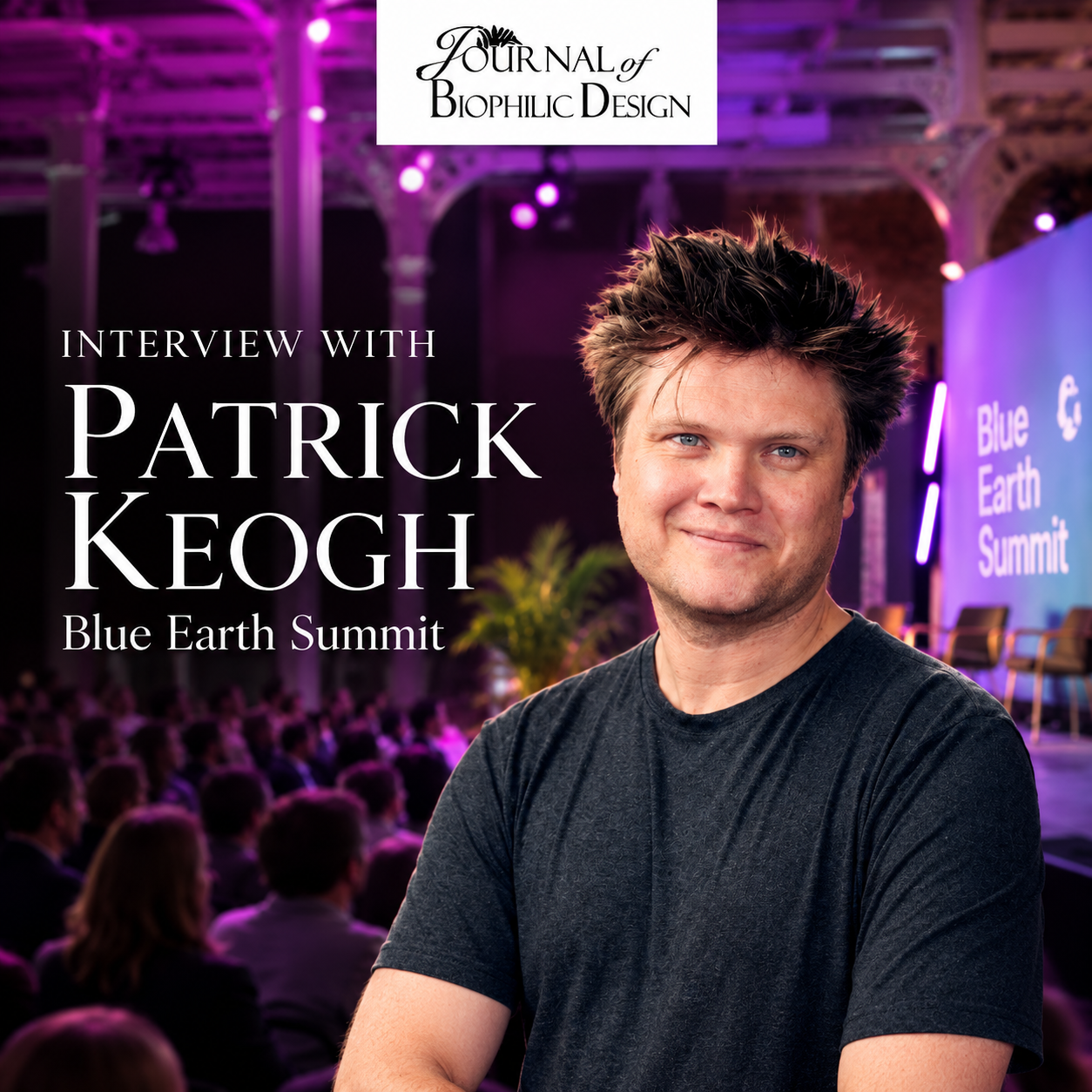
In conversation with the Journal of Biophilic Design Podcast, Patrick Keogh explores why the future depends on bringing different worlds together, learning from nature and having the courage to act.
What kind of future do we want to live in? The way we design our buildings, organise our businesses, invest our money and relate to the natural world lies at the heart of this year's Blue Earth Summit, taking place at Woolwich Works in London from 14–16 October 2026. Bringing together people from business, science, investment, culture, sport and the environmental world, the Summit aims to move beyond familiar conversations about sustainability and explore how we can create a more regenerative future.
In the latest episode of the Journal of Biophilic Design Podcast, I spoke to Patrick Keogh, who leads the Blue Earth Summit programme, about the importance of interdisciplinary thinking, the lessons we can learn from nature, and why we need to turn our knowledge of environmental challenges into meaningful action.
Explore the Blue Earth Summit programme and book your ticket.