Climate Change, Sustainable Architecture & Biophilic Design — Digital Edition - Issue 21
Climate Change, Sustainable Architecture & Biophilic Design — Digital Edition - Issue 21
How do we design for a changing climate?
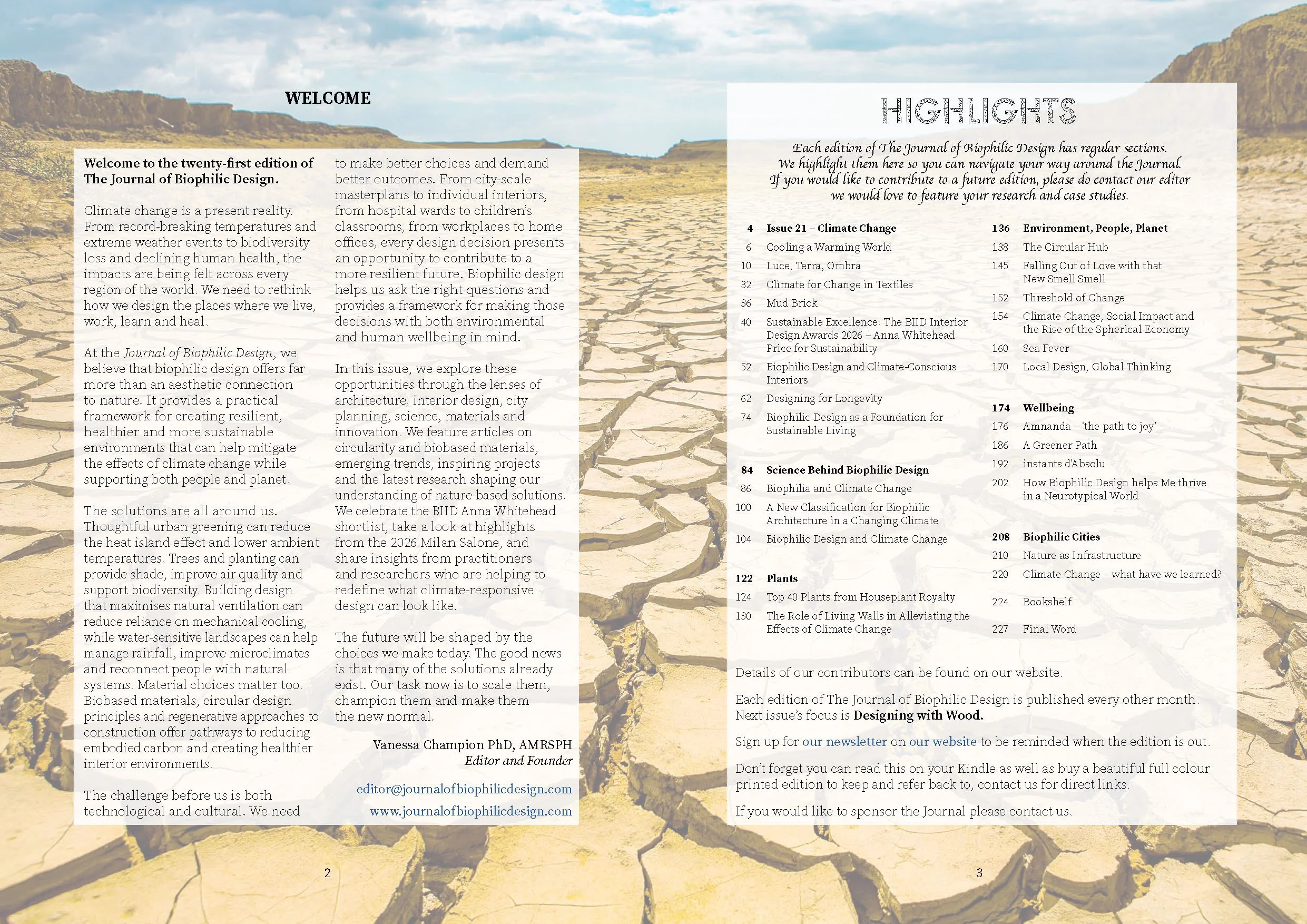
Climate change is changing the places where we live, work, learn and heal. This issue of the Journal of Biophilic Designexplores how biophilic design, architecture, interiors, landscapes, materials and nature-based solutions can help us create healthier, more resilient and more sustainable environments for people and planet.
Across 227 beautifully designed pages, this issue brings together research, science, projects, practical ideas and thought leadership from a wide range of perspectives.
Inside this issue
COOLING A WARMING WORLD
How thoughtful design, urban greening, trees, planting, natural ventilation and water-sensitive landscapes can help us respond to rising temperatures and changing climate conditions.
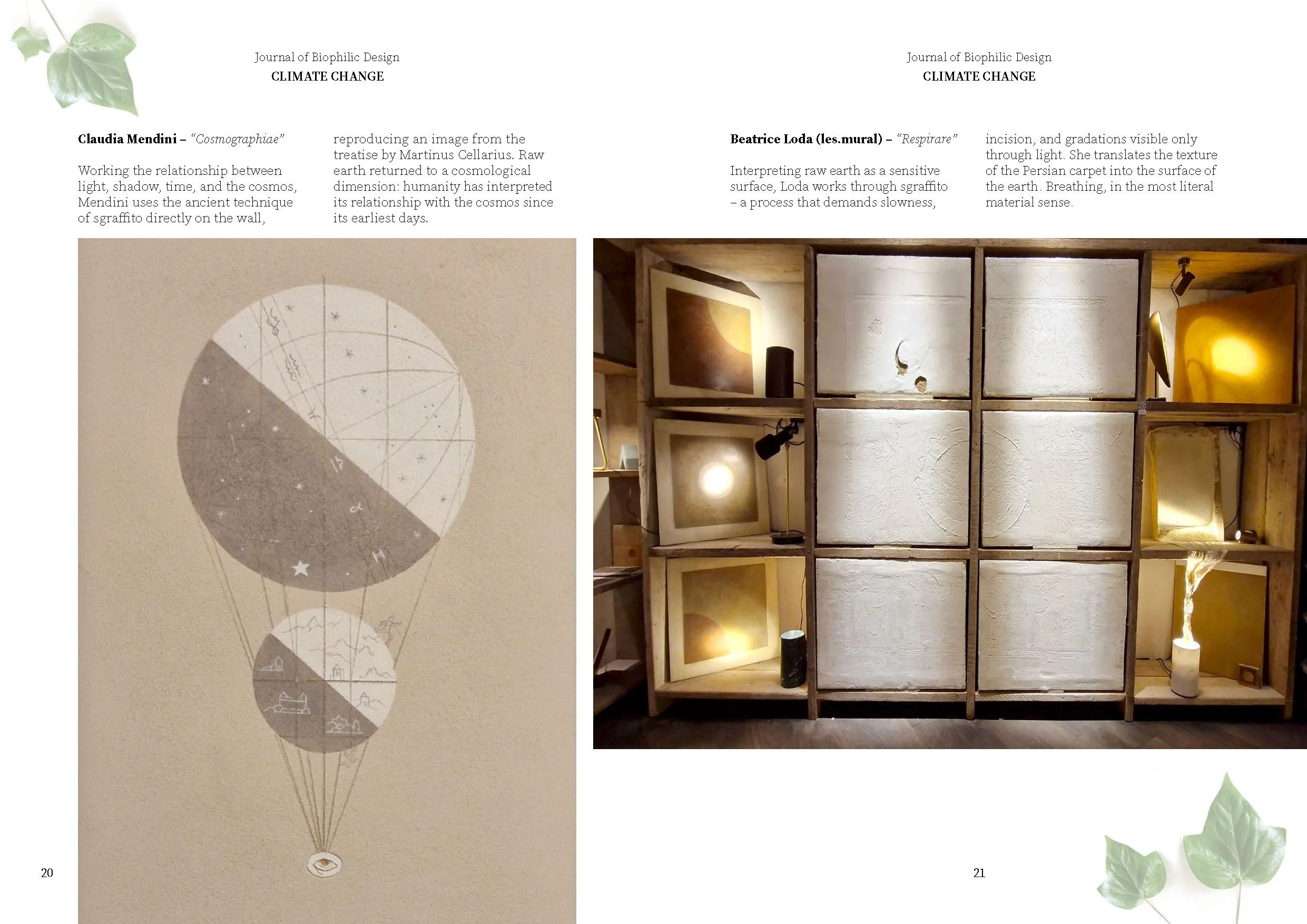
LUCE, TERRA, OMBRA
Exploring light, earth, shadow and our relationship with natural materials and the cosmos.
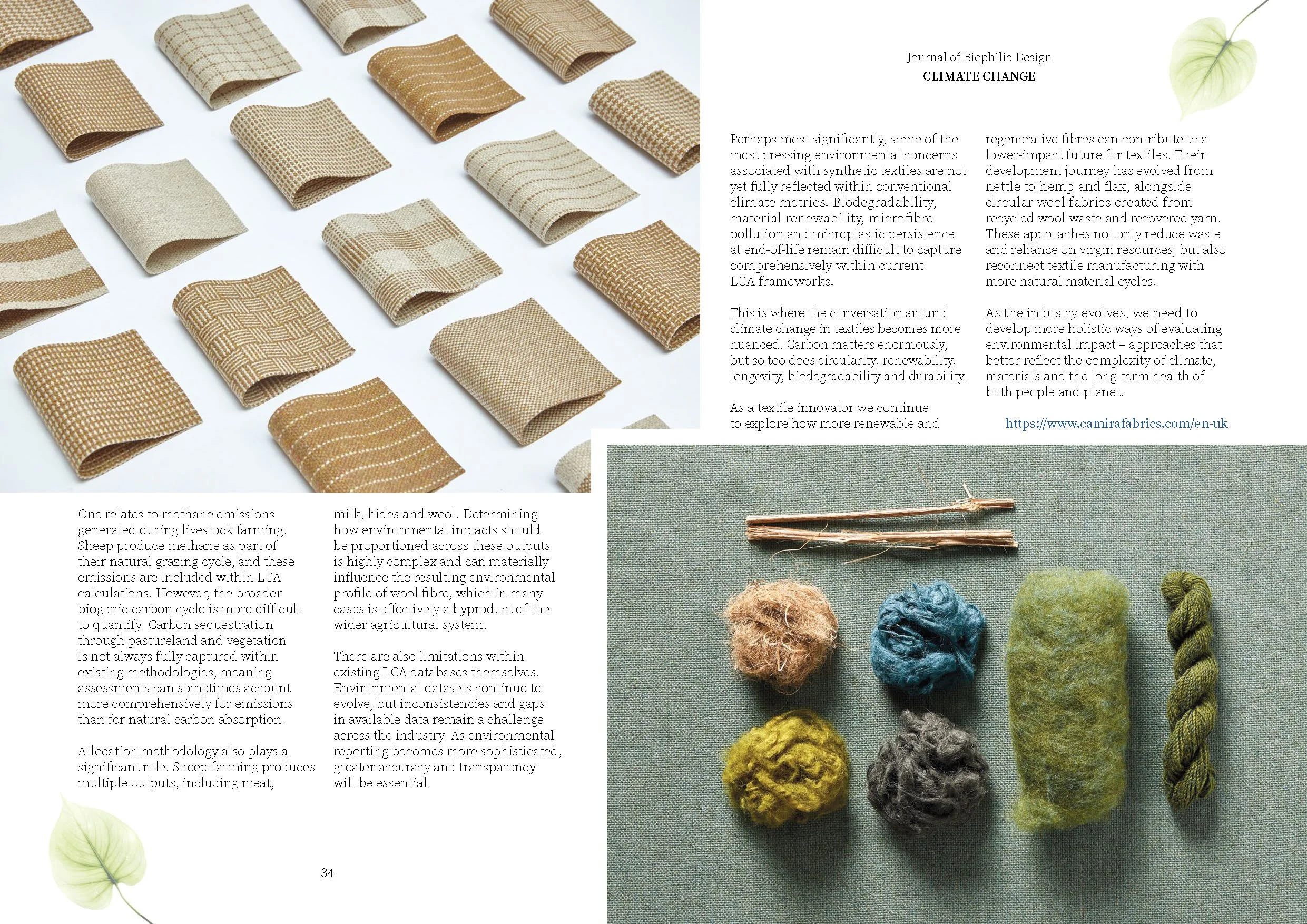
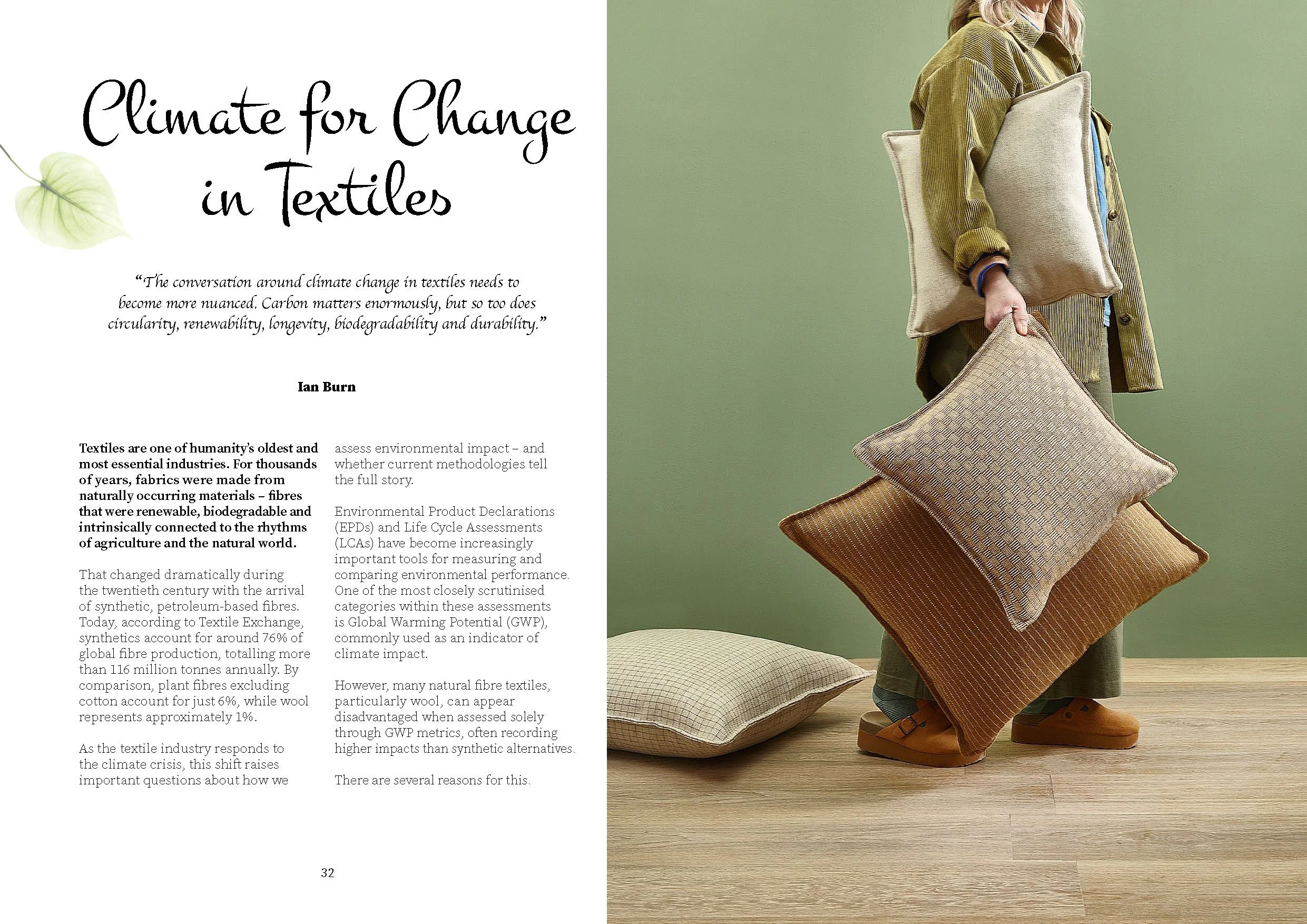
CLIMATE FOR CHANGE IN TEXTILES
How material choices and textile design can contribute to more sustainable interiors.
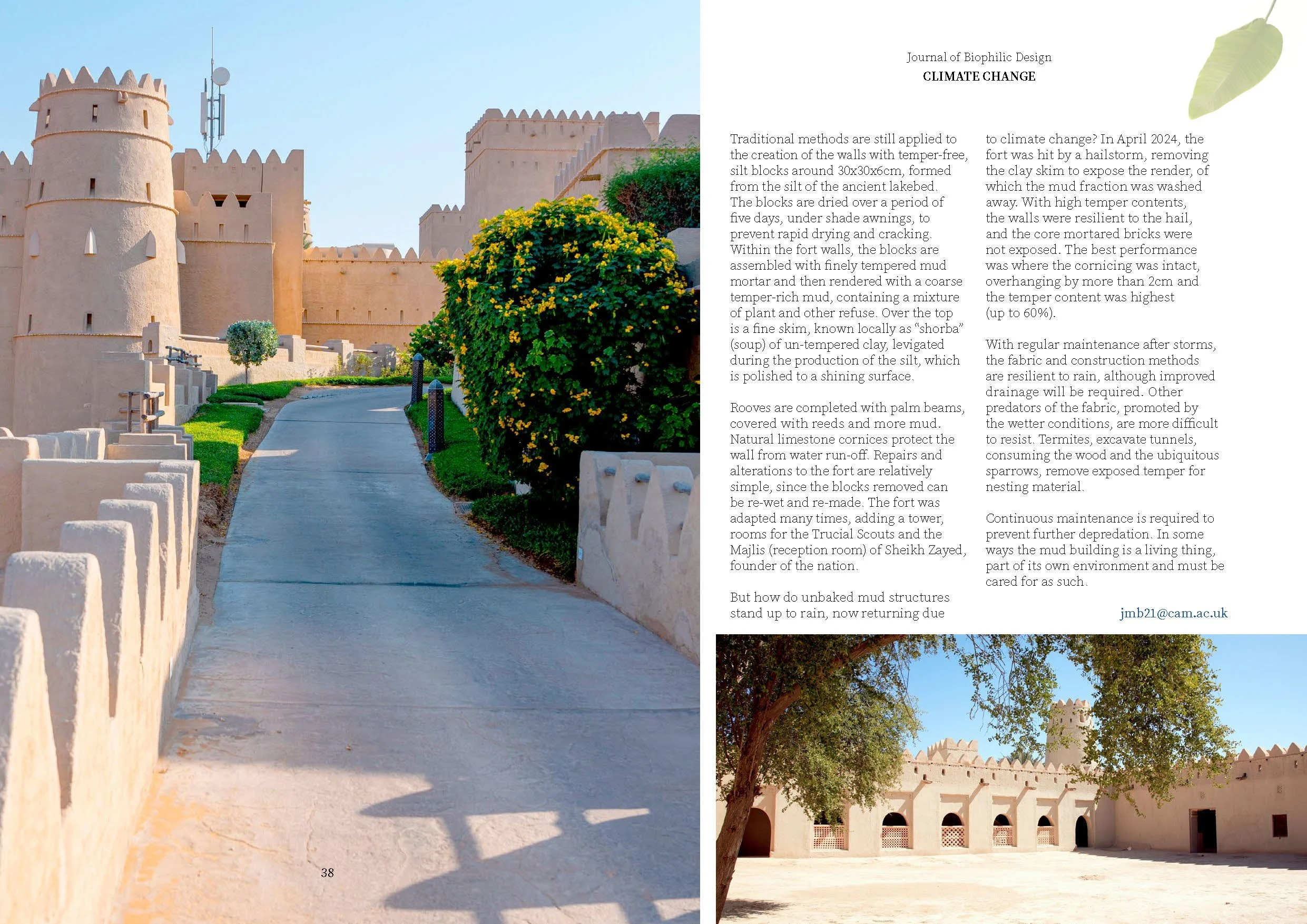
MUD BRICK
What traditional materials and construction approaches can teach us about climate resilience, place and resource-conscious design.
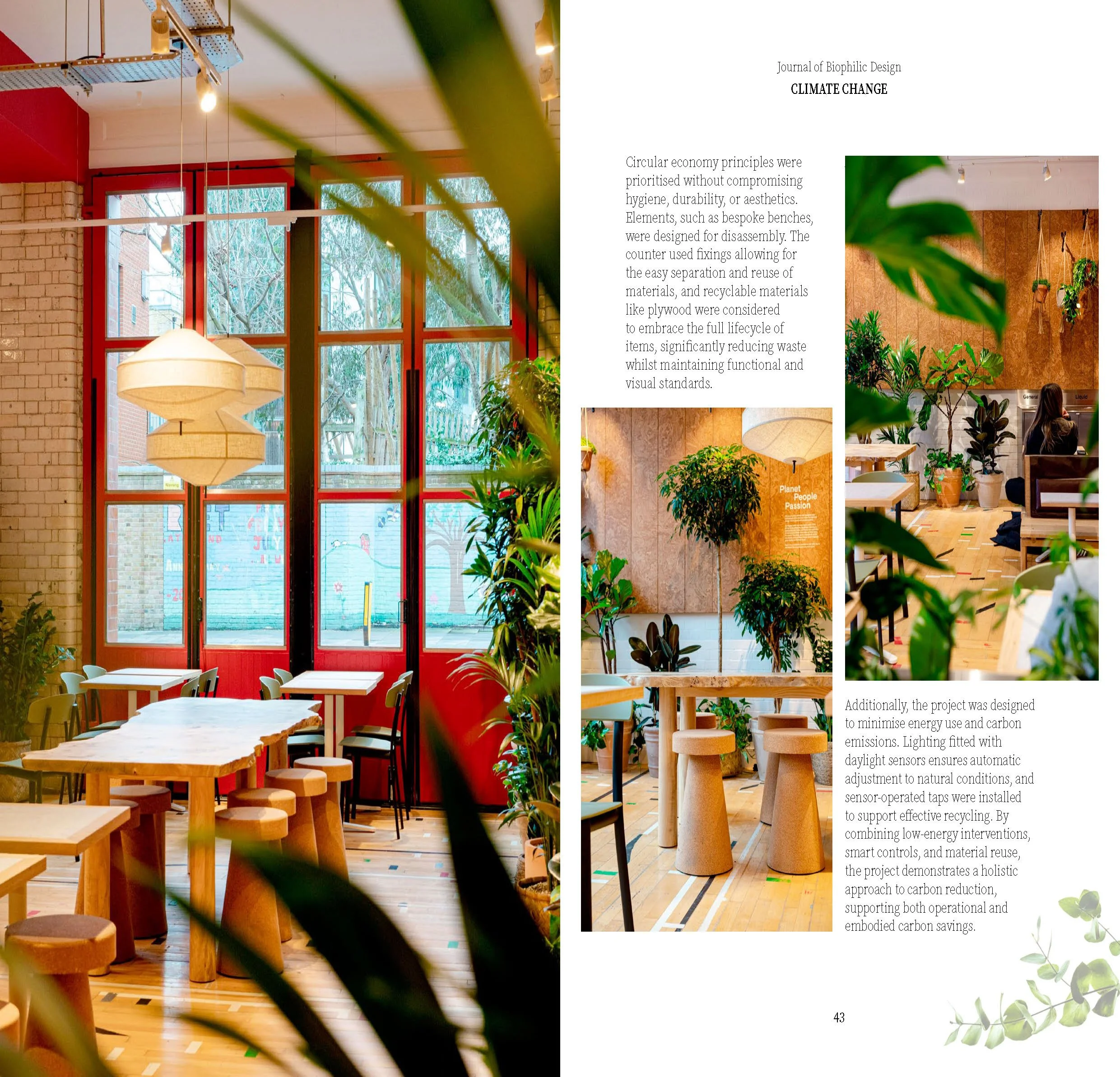
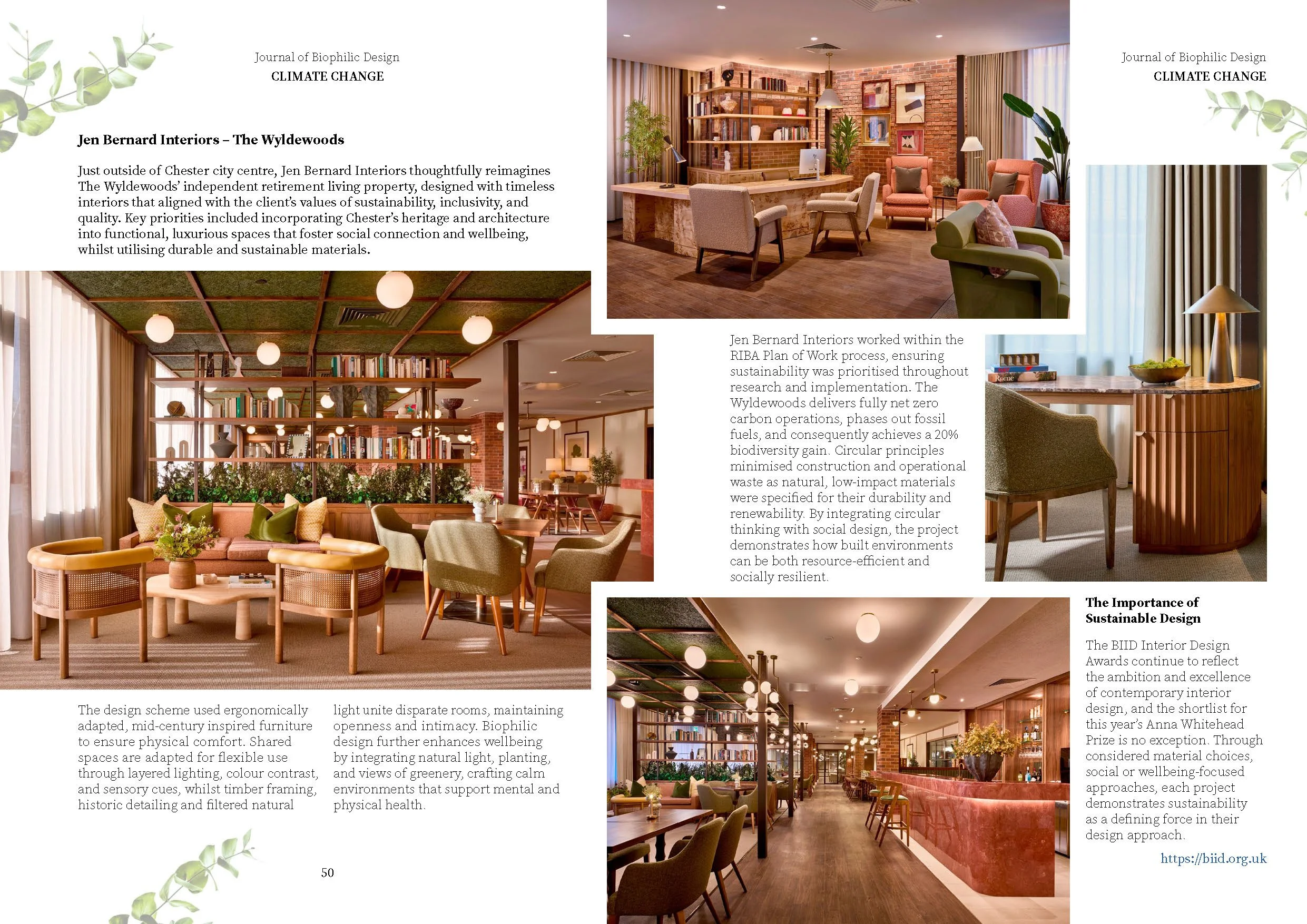
SUSTAINABLE EXCELLENCE
The BIID Interior Design Awards 2026 and the relationship between sustainability, design quality and responsible practice.
BIOPHILIC DESIGN & CLIMATE-CONSCIOUS INTERIORS
How interior designers can bring together wellbeing, material choices, nature connection and environmental responsibility.
DESIGNING FOR LONGEVITY
Why designing things to last may be one of the most important sustainable choices we can make.
BIOPHILIC DESIGN AS A FOUNDATION FOR SUSTAINABLE LIVING
Exploring how our relationship with nature can influence the way we live and the environments we create.
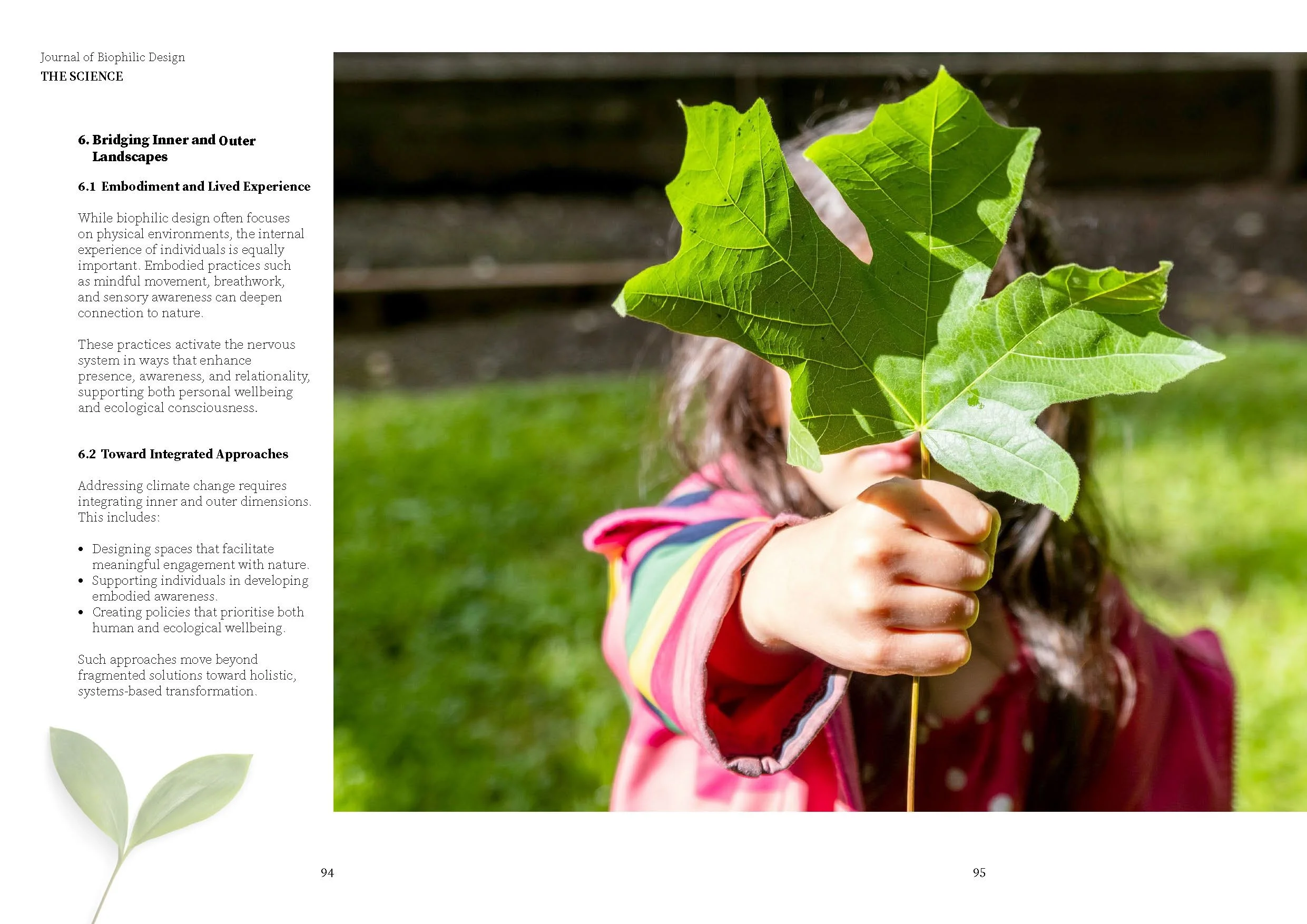
THE SCIENCE BEHIND BIOPHILIC DESIGN
Evidence, research and the science underpinning our connection with nature.
BIOPHILIA AND CLIMATE CHANGE
Why reconnecting people with nature matters in a rapidly changing world.
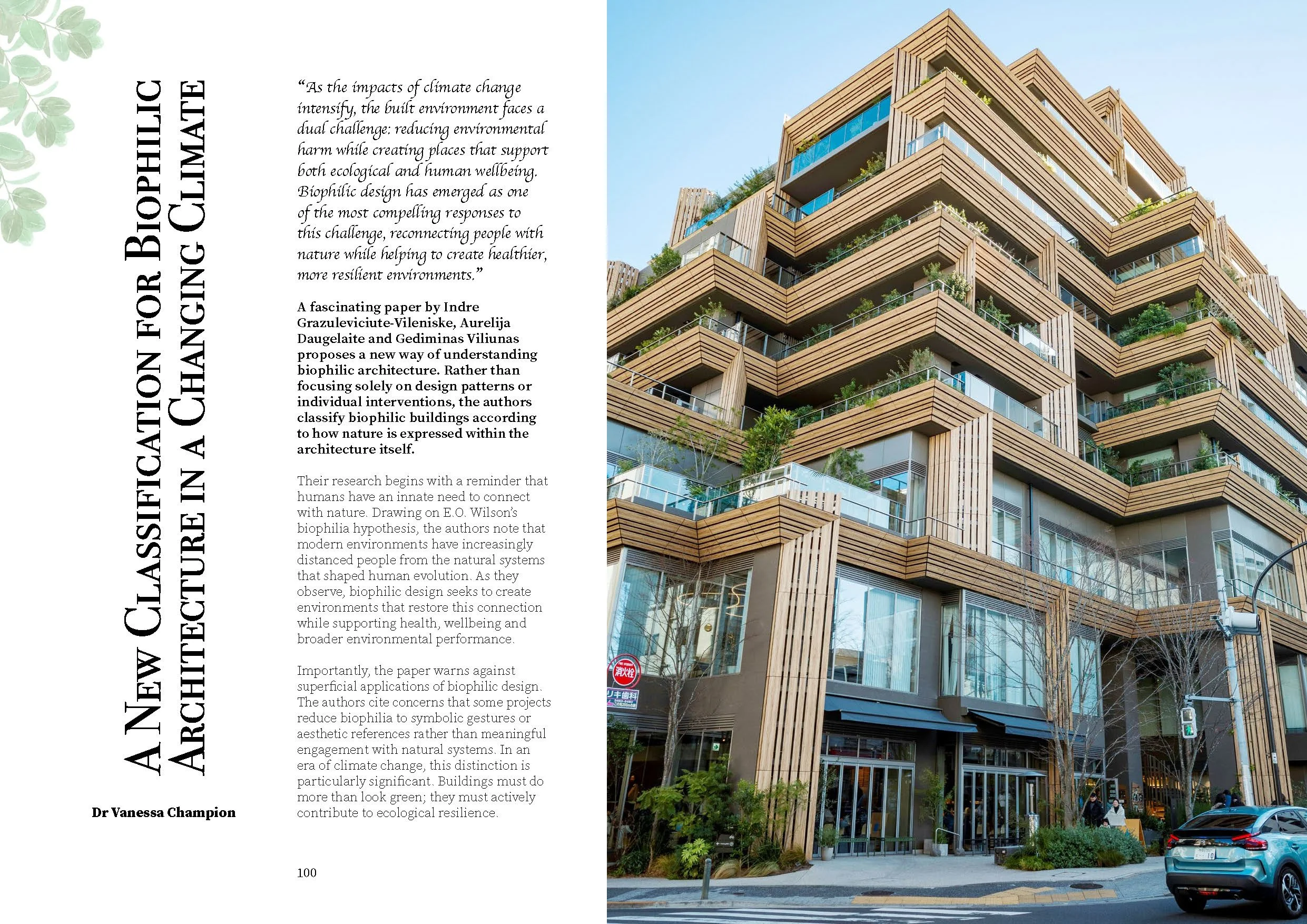
A NEW CLASSIFICATION FOR BIOPHILIC ARCHITECTURE IN A CHANGING CLIMATE
A fascinating exploration of Mimetic, Applied and Organic Biophilic Architecture, and why meaningful biophilic design needs to go beyond simply making buildings look green.
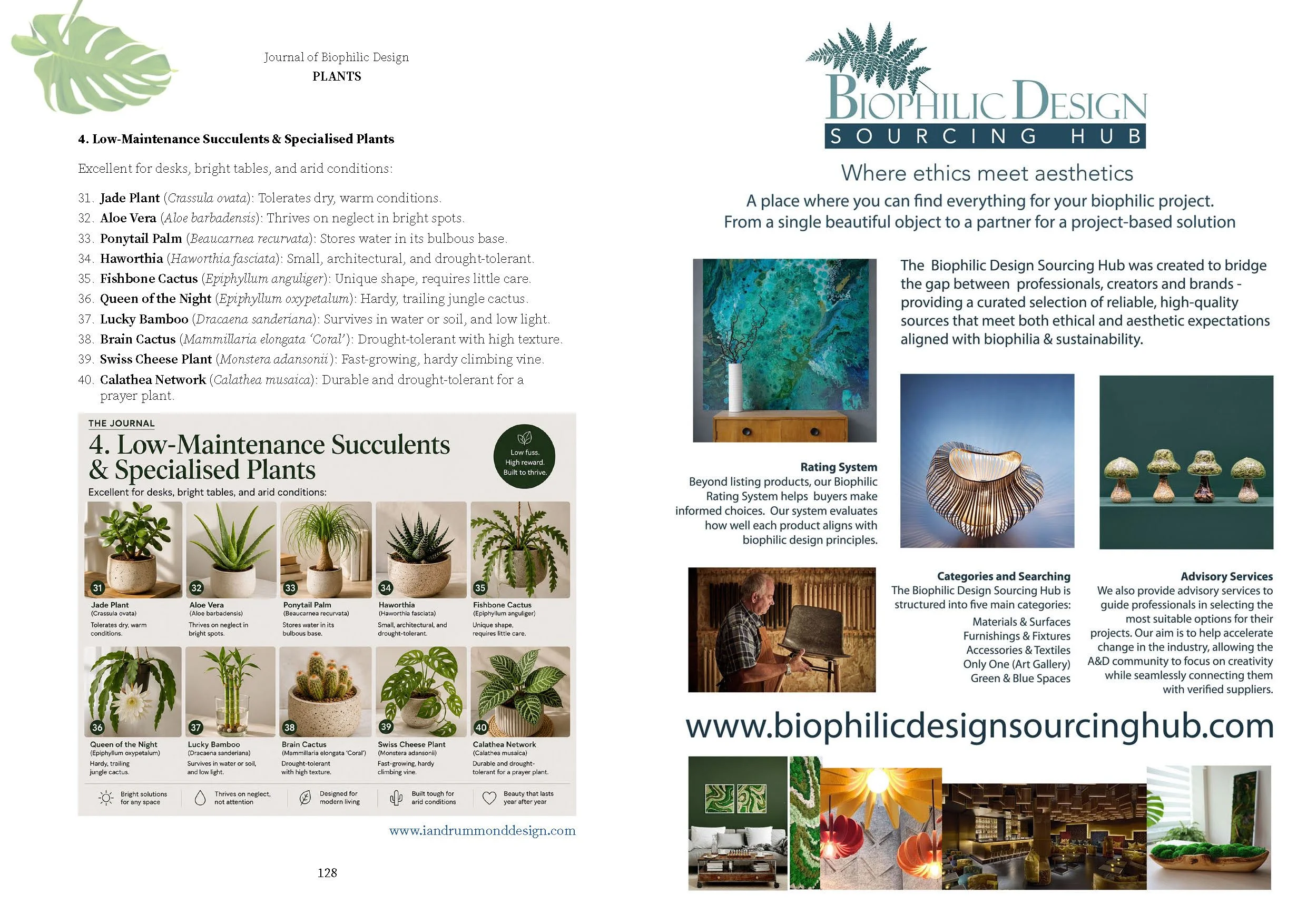
PLANTS & LIVING WALLS
Including Top 40 Plants from Houseplant Royalty and an exploration of the role living walls can play in alleviating the effects of climate change.
ENVIRONMENT • PEOPLE • PLANET
We also explore circular design, material health, air quality, social impact, changing consumer expectations, wellbeing, climate-conscious places and the role of nature in our cities.
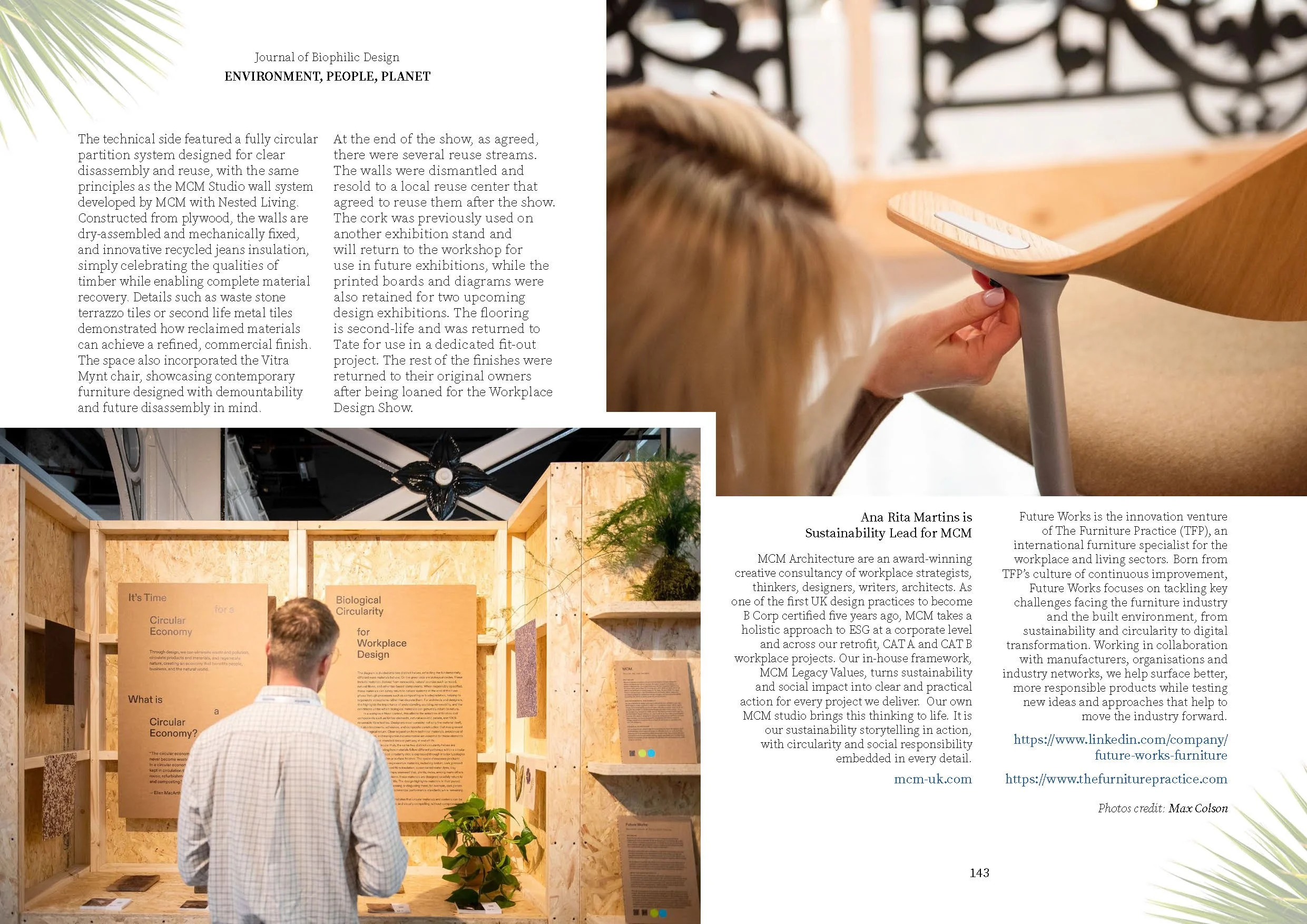
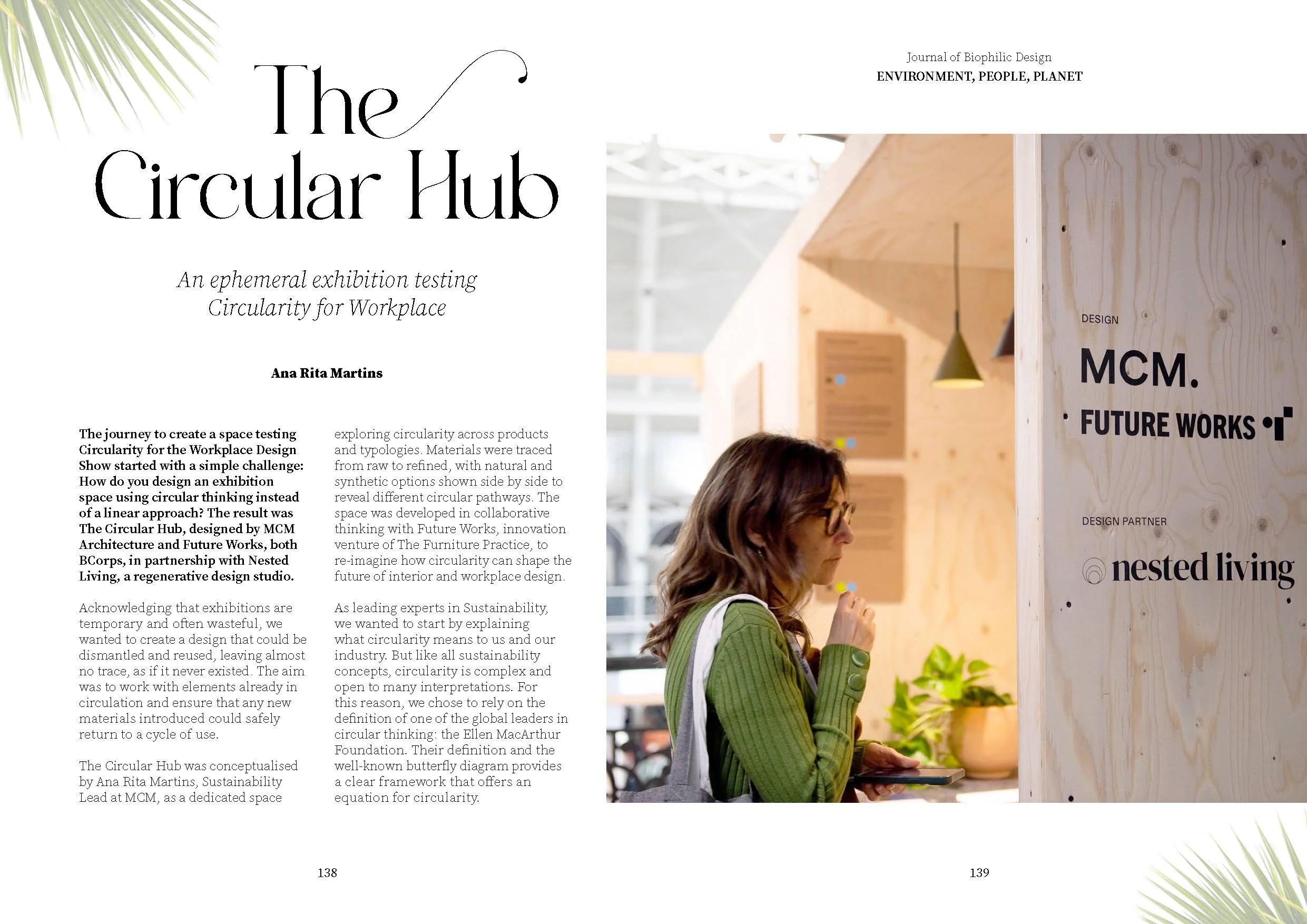
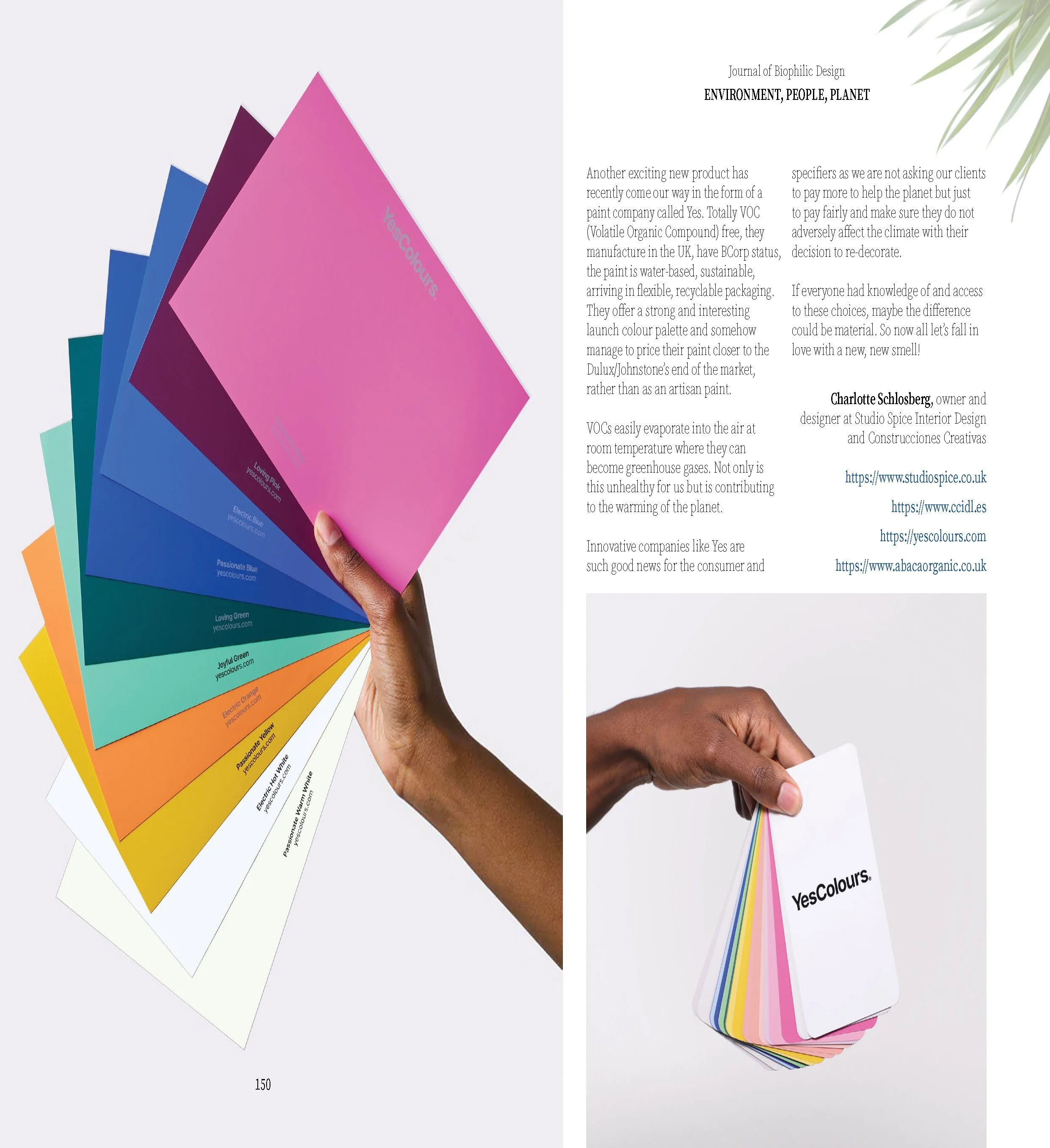
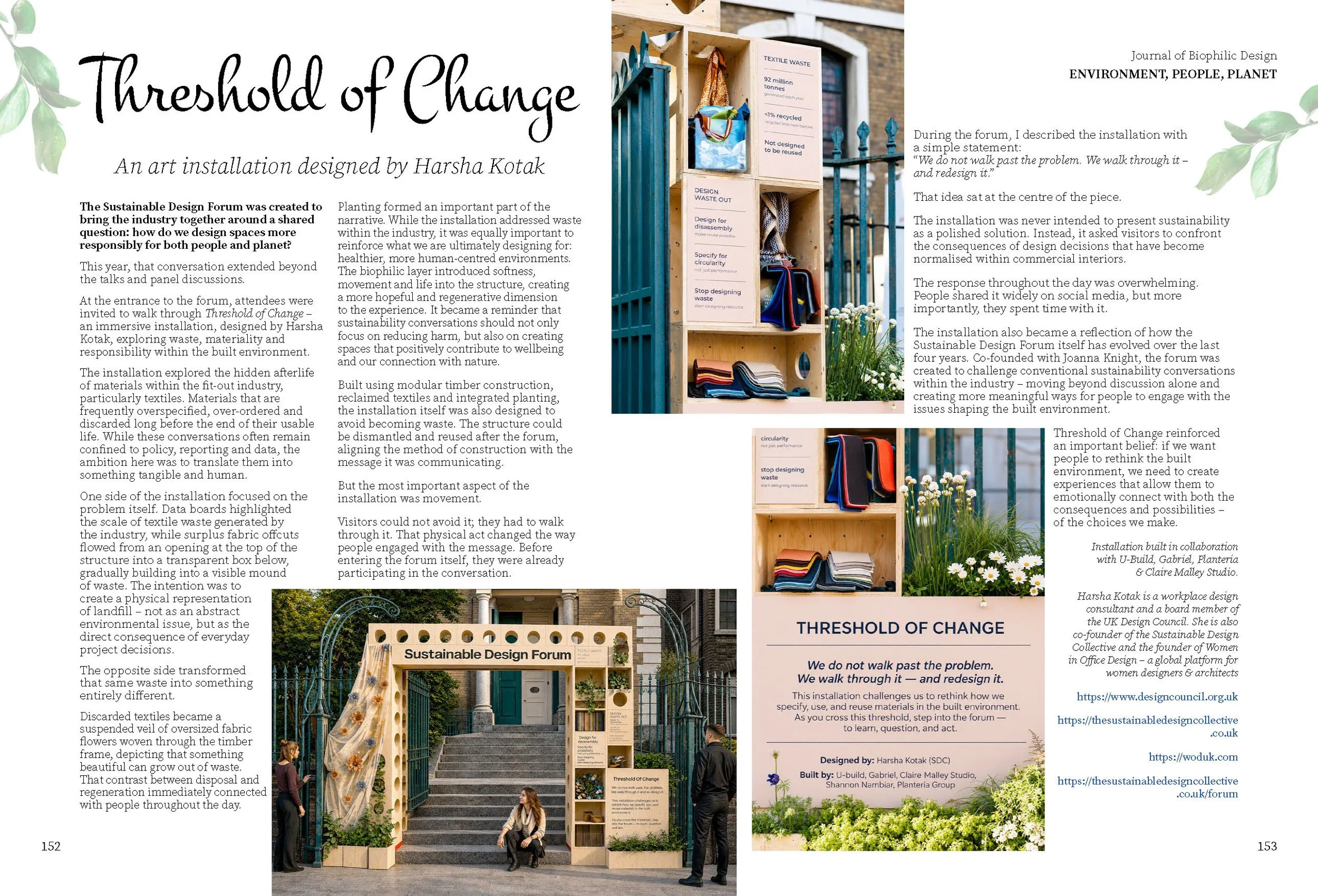
Discover The Circular Hub, explore the thinking behind The Spherical Economy, consider the environmental and health implications of the “new smell”, and look at how design can help us navigate a threshold of change.
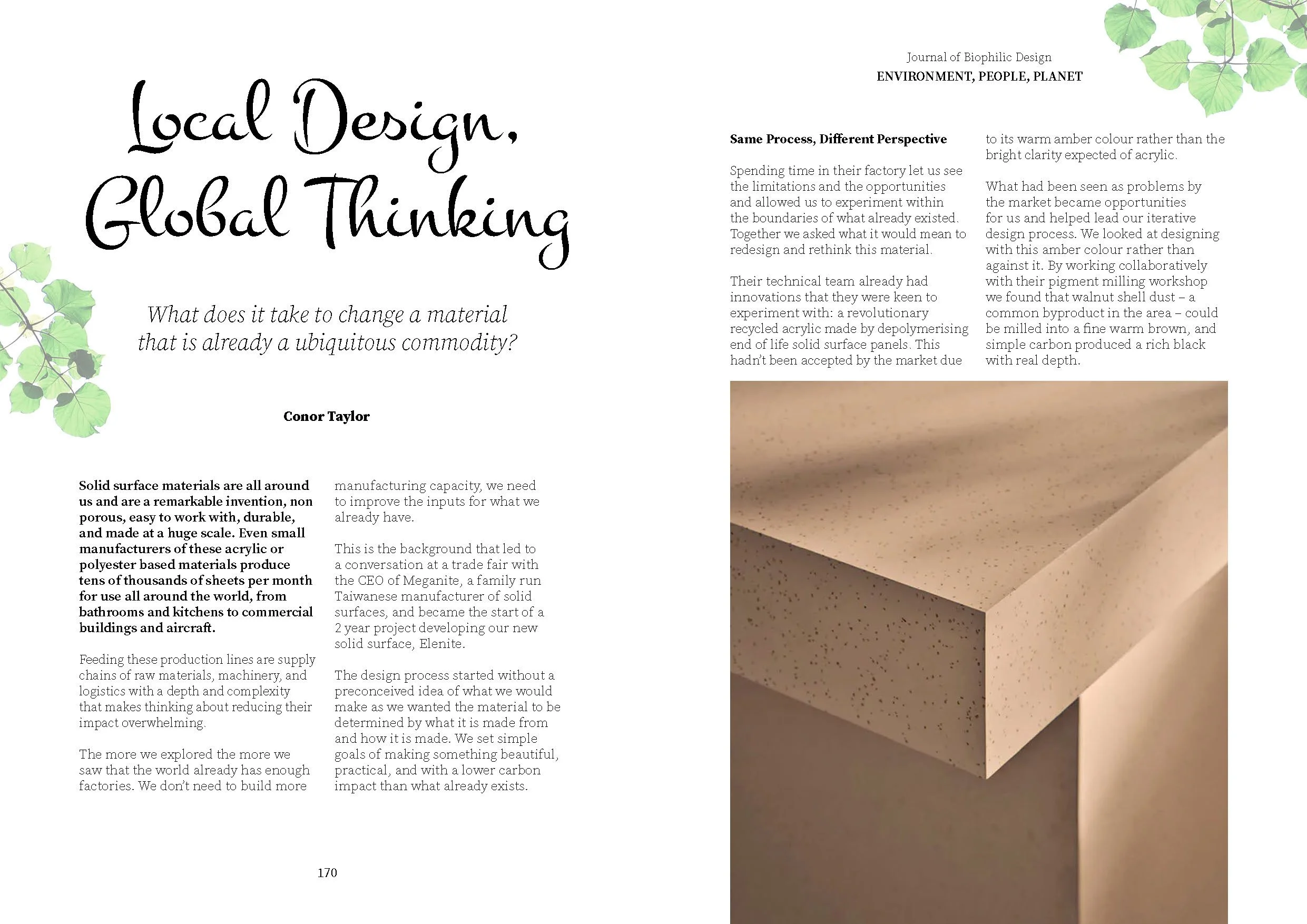
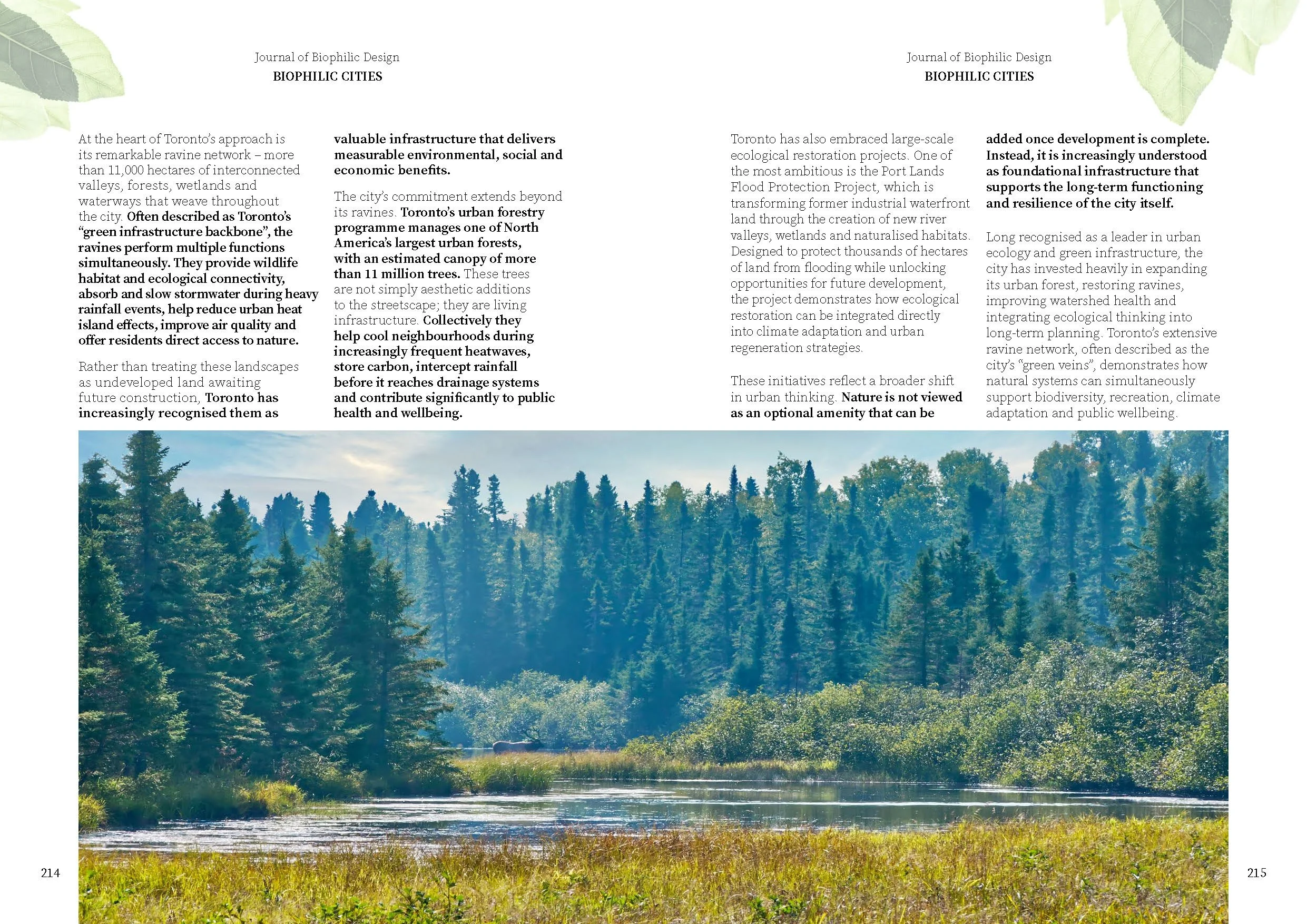
The issue also explores climate change through the lens of social impact, local and global design, wellbeing and human experience, including Sea Fever, A Greener Path, Biophilic Cities and Nature as Infrastructure.
WHY THIS ISSUE MATTERS
Climate change demands more than technological solutions.
It asks us to reconsider how we design, what we build with, how we use materials, how we manage landscapes and cities, and how closely our built environments remain connected to the natural systems on which we depend.
Biophilic design offers a practical framework for bringing these questions together — connecting human health, biodiversity, climate resilience, materials, sustainability and our innate need for contact with nature.
This issue brings those conversations together in one place.
WHAT YOU'LL FIND INSIDE
227 pages
Research & science
Architecture & interiors
Materials & sustainability
Plants & living walls
Climate-responsive design
Biophilic cities
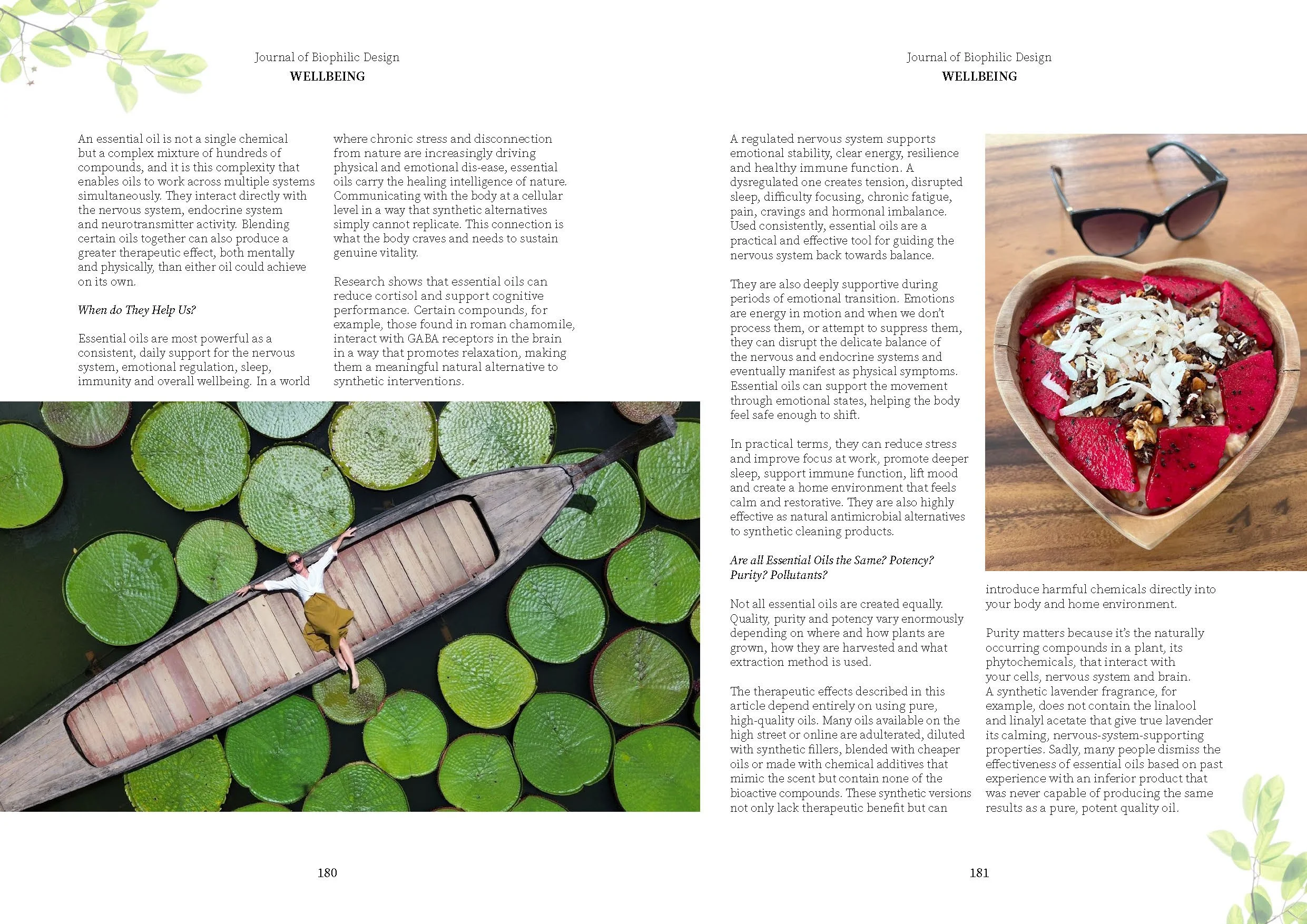
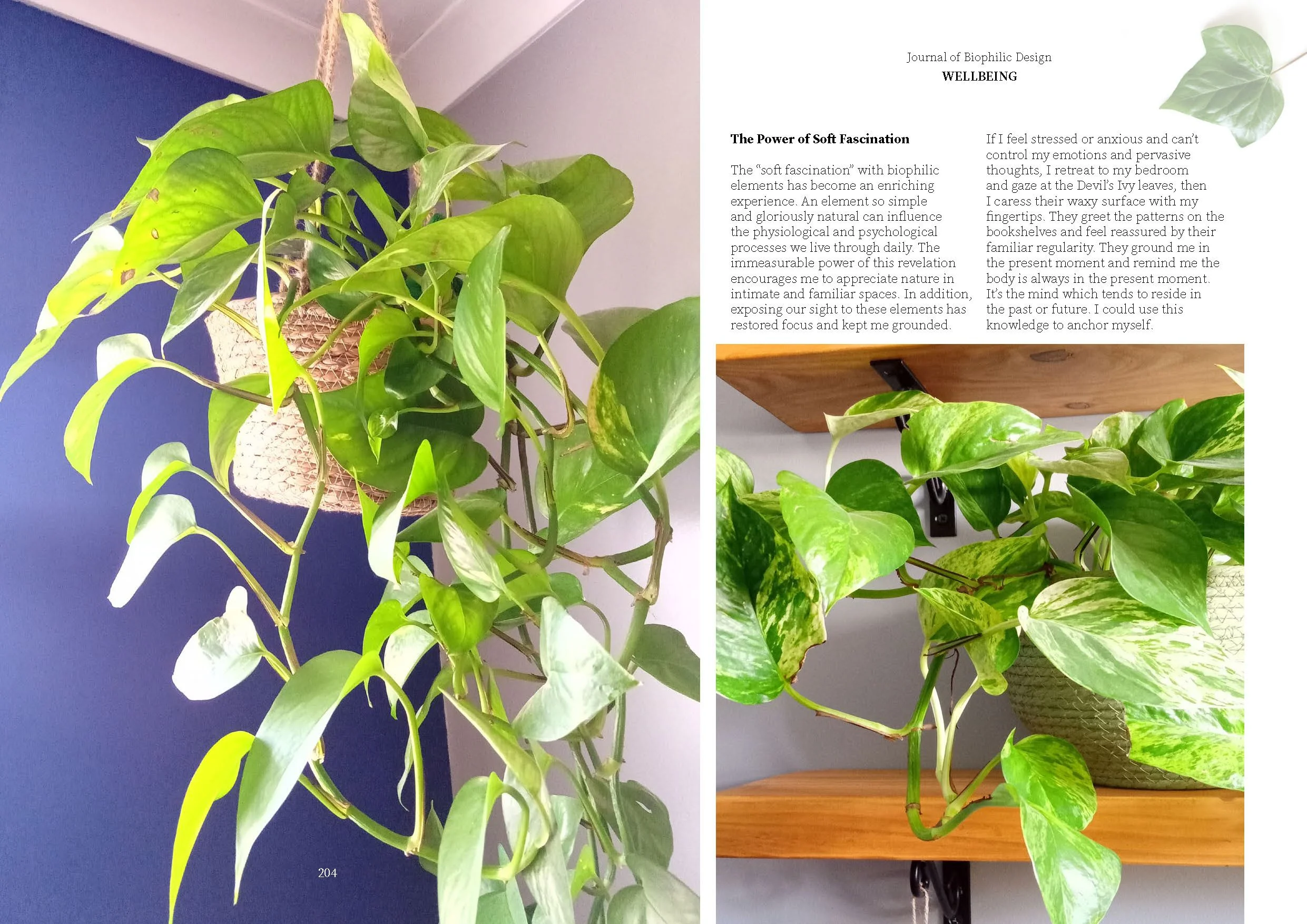
Wellbeing
Nature-based solutions
Projects & case studies
Thought leadership
Books & resources
For architects, interior designers, landscape architects, urban designers, sustainability professionals, developers, researchers, educators, students and anyone interested in creating healthier places for people and planet.
Digital Edition — £4.99
Read it on your screen or Kindle, or choose the beautiful full-colour printed edition to keep and refer back to.


