What can we learn from Ancient Roman balneology?

What can we learn from Ancient Roman balneology?

In Biophilic Design we speak about the importance of how the environment we are in affects our senses. This sensorial approach is a key feature of a human-centric mode of design. Why we would consider designing spaces which harm our minds, physical health and negatively affect our ability to focus or be creative is beyond me. Thankfully, this disconnect between understanding how to create spaces harmonious to our senses is losing ground, with the advent of the Biophilic Design movement.

This was one of the main reasons I was excited to interview Dr Giacomo Savani, who specialises in ancient Roman balneology. What is that you might ask? Balneology, as he explains in this podcast, is the study of baths and bathing, how water, springs and spas also can heal. Readers of our Journal and listeners to the podcast, will probably have some understanding of the concept of the “Blue Mind”, how water has such a positive affect on us. Dr Savani has taken this a few steps further and looked at the physical and sensorial aspects of ancient Roman bathing, and we discuss in this podcast, how we might learn from their experiences and design practices and bring aspects into our designs today.

My Green Pod - How to have a Biophilic Lifestyle

My Green Pod - How to have a Biophilic Lifestyle

The journey of My Green Pod founder, Jarvis Smith, is a fascinating one, and one that is inspiring to fellow environmentalists. We chat to Jarvis about his Shamanic training, his epiphany on the set of an observational documentary on a rubbish tip and how we can each make conscious decisions that will help this beautiful planet we are living on.

We also look at his office which was designed by Biophilic Design expert, Oliver Heath, and explore some of the features, from the living wall to the paint colours and materials used, and importantly what it feels like to work there.

Designing for Extremes

Designing for Extremes

Designing for extremes for the benefit of the mean, creates a solution that’s good for us all. 69-90% of our time at work is focussed on what we call, “deep work”, as little as 40-10% on collaborative activities. Of course depends on your job, but that’s some averages that are worth considering. Having 15 minutes to recharge is really important. Somewhere which gives you acoustic relief as well as some “you” time is important, somewhere you don’t have to be “on” or be in the spotlight or be judged. Personalising your workspace is really important, and this is not the first time, nor will it be the last, that we’ve discussed how human-centric design is paramount to creating better places for us to work in…

Technobiophilia - Life, Nature and Technology

Technobiophilia - Life, Nature and Technology

There are many metaphors of nature in cyber space which we use without even thinking about it: clouds, streams, webs, and so on. Dr Sue Thomas has conducted research on how we can use technology to enhance our connection with nature. In this podcast we talk about how the huge amount of research and environmental science data has shown the benefits of nature on our wellbeing, including reducing blood pressure and other measurable benefits. Sue has also studied research on the effects of engaging with nature on devices, through technology, such as watching wildlife shows and even playing video games. She shares her concept of Technobiophilia. We talk about a real mix of things, ideas you can do on your commute or at your office desk, from plants, to stones, alpacas on Instagram, Farmville, live streams from eagles nests, fixed nature webcams, and lots more...

Your Life Nature

Your Life Nature

When was the last time you took a “nature break”? Hobie Hare, founder of “Your Life Nature” encourages us not only to take some time and get out into nature but also to bring Biophilia into our homes, with reminders of positive emotions, maybe it’s seashells from the beech, or a photograph that conjures an emotion that resonates with you…

Botanic Shed 10 minute tip - 1 Soil

Botanic Shed 10 minute tip - 1 Soil

In the first of a series of short 10 minute podcasts with our partner Lara Cowan at The Botanic Shed, School of Nature, where she shares tips and science on why and how nature is good for us. Today we talk about Soil. You will learn some surprising facts about soil, from he smell, the bacteria, the negative ions therein and more. She also suggests a few things you can plant out at the weekend, from Broad beans to leeks… to get you out of the house and engaging in the gorgeousness of soil..

From Veterinary Science to a Wellbeing Biophilic Economy

From Veterinary Science to a Wellbeing Biophilic Economy

Fascinating and positive conversation with Glen Cousquer, covering biology, philosophy and the concept of the self, we talk conservation medicine, experiential education including getting outdoors, and exploring the concept of listening not only for human relationships but also listening to the living world around us. He is a qualified Vet, but after realising how there were underlying issues affecting different eco systems he moved away from the traditional veterinary model into developing a more holistic approach to health and welfare concerns…

Botanic Shed - School of Nature

Botanic Shed - School of Nature

When was the last time you felt stressed? Sometimes things in life can be a wee bit too much, or there's just one too many things to do, or just too much on your plate for whatever reason. We speak with Lara Cowan, founder of the Botanic Shed - School of Nature….

Oliver Heath - How to create Happiness, the benefits of Biophilic Design

Oliver Heath - How to create Happiness, the benefits of Biophilic Design

Biophilic design principles allow us to bring elements of nature into the built environment, especially into those places where we experience a great deal of stress. Our connection to nature can unlock so many benefits, stress washes off us, we become different people, we can think more holistically about our life and where it’s going. The impact the buildings we inhabit and work in have an enormous effect on our lives, especially now with the restrictions placed on us as a result of the Covid epidemic. With an onset of almost cabin fever, we are recognising the fact that the building we surround ourselves with has a huge impact on our physical, mental and emotional states. Nature can play a valuable role, the benefits of plants and greenery, adding personalisation, direct influence over a space, improve air quality, sunlight, fresh air, easy to improve spaces. S..

Forest Therapy

Forest Therapy

When was the last time you took a walk in the forest? We all recognise the positive power that being in nature has on our wellbeing and mindset, and some of us also are familiar with the Japanese ‘art’ of Shinrin Yoku, or Forest Bathing. What you might not have known is that there are “NHS Forest” hospitals. In this podcast we discuss whether there is a need for a nature-based health strategy to be…

Unblocking Creativity and aiding Healing in Times of Change - Nature, Retreats and a Haven in London

Unblocking Creativity and aiding Healing in Times of Change - Nature, Retreats and a Haven in London

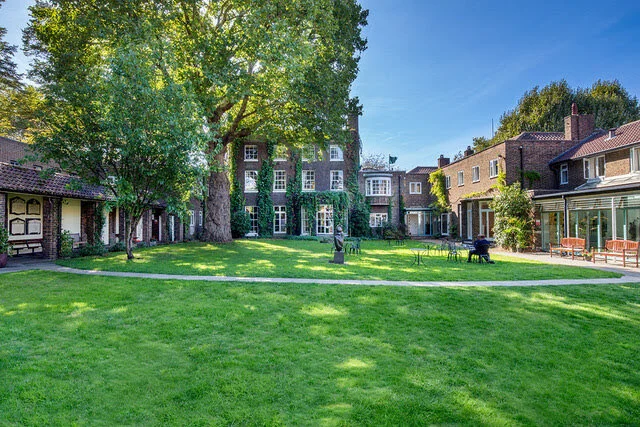
Sharing a space in silence can be uplifting, revelatory and inspiring, sharing a space in nature can be an even more powerful experience. Allowing your brain to think in different ways by taking time away by being in a different space unblocks creativity, it can help you shape a different way of thinking, a different ways of being. This is important in times of change, career change and stress. Doing this surrounded by nature compounds the effe..

Nature's Tonic

Nature's Tonic

Research has shown that contact with nature has a psycho-therapeutic effect. It also has been proven that being surrounded by nature, with all the multi-sensory effects it has on us, increases our immunity, improves resilience and improves our mood. In fact being in a calm environment allows part of our brain to rest. Mindfulness is a way of being present without judgment and research has shown that brainwaves change when people practice this too.