Have you ever wondered how materials shape our environment? What happens when design meets nature? If you’re craving a fresh perspective on sustainable, regenerative design, dive deep with us into the world of materials, creativity, and a future where biophilic principles transform every building, every product, and every space.
William Knight, co-founder of Material Matters, is a passionate advocate for a future where materials tell stories, innovate endlessly, and reconnect us to nature. His journey from politics to design might surprise you, but his journey has driven him to demystify material innovation that truly inspires.

In this podcast, you’ll discover how materials are pushing boundaries, why understanding them is critical, and how a shift in industry mindset can accelerate regenerative, biophilic environments.
Living Materials and Regenerative Design
Will emphasises that many materials we overlook have rich stories. Think about timber, agricultural waste, natural extracts, all of these can inspire radically different design solutions. For example, his work with companies using tree sap, algae-based bioplastics, or recycled aluminium demonstrates that every material is an opportunity. This perspective challenges the traditional sourcing black book, pushing designers to explore alternatives that are biophilic, regenerative, and resourceful.
Yes, natural waste and renewable sources are eco-friendly but they can also create compelling products that challenge our assumptions and expand design possibilities.

Will’s own story began unconventionally, with his early career in the House of Commons. From navigating politics to working with the UK Design Council, his journey reflects a passion for shaping perceptions and pushing creative boundaries. His work has spanned exhibitions, festivals, and major design events, with a focus on how materials are the foundation of design innovation. Today,
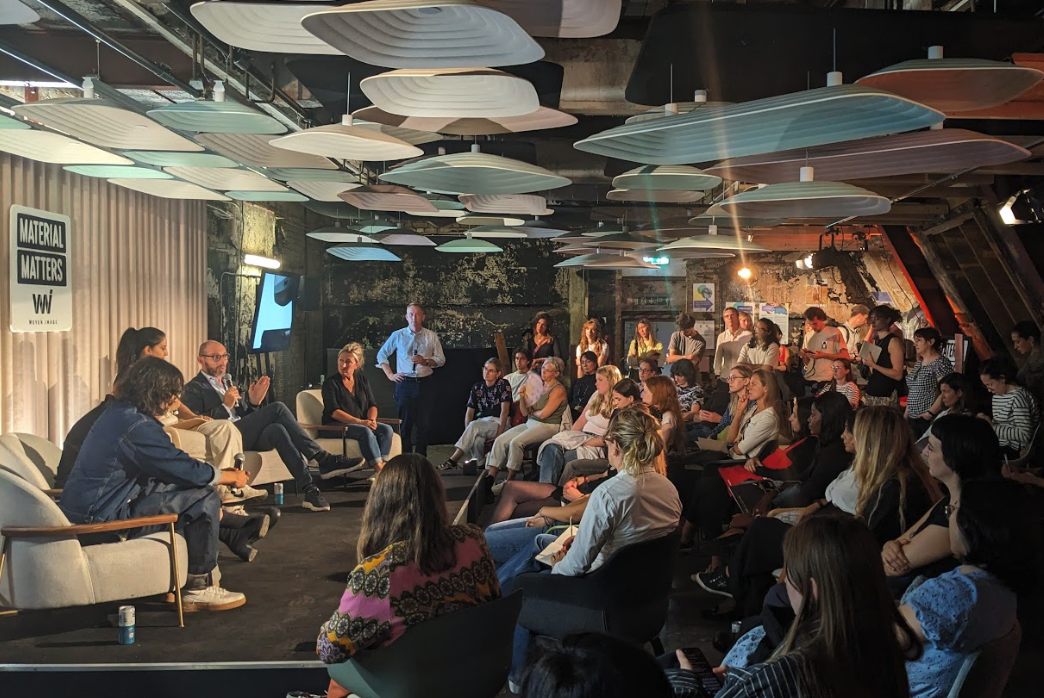
Material Matters is a platform for exploring the pulse of material intelligence. Its an accessible, open conversation about process, resourcefulness, and ecological mindfulness. It’s about bringing transparency and democratising knowledge so everyone, from designers to end consumers, can make smarter, sustainable choices.
Designing for a Biophilic Future
One of the most exciting areas Will touches on is the role of biophilic design principles, the integration of natural elements into environments to foster wellbeing and sustainability. He reminds us that design is inherently reactive, it responds to market demand, manufacturing capabilities, and cultural shifts.
But the real game-changer?
Materials that mimic or derive directly from nature, like bio-based concrete infused with moss, or fungi-based textiles, enable us to create living buildings and products. William highlights an inspiring example: materials with embedded bio-growth, which grow, adapt, and even repair themselves. They embody nature’s resilience and regenerative capacity, leading us toward healthier, more adaptable spaces.
Designers can act as catalysts, demonstrating and advocating for natural, sustainable materials. Success hinges on collaborating across sectors. Supply chains, manufacturing, regulation—each influences whether innovations reach the mainstream. We need inclusive platforms and storytelling, engaging property developers, clients, and end users in the process.

When supply chains embrace natural waste, local resources, and regenerative practices, scale becomes feasible, collaborative, cross-sector thinking is key. Regenerative and biophilic materials must be supported by resilient supply chains and more succinct regulation, a collective effort fuelled by shared knowledge and a willingness to challenge orthodoxies.
Your challenge: Think beyond the usual. Dive into local resources, embrace natural waste, and collaborate across disciplines to create environments that resonate deeply with human nature. The future of architecture and design is rooted in materials that are alive, local, and regenerative.
To find out more about Will and Material Matters check out these links below:
Material Matters: materialmatters.design
Podcast (Apple Podcasts) - Material Matters with Grant Gibson: https://podcasts.apple.com/gb/podcast/material-matters-with-grant-gibson/id1450375359
Bookshop: https://shop.materialmatters.design/
Check out our recent publication focused on Materials
What is Biophilic Design? https://journalofbiophilicdesign.com/what-is-biophilic-design
Have you got a copy of the Journal? You can now subscribe as a member of the Journal of Biophilic Design or purchase a gorgeous coffee table reference copy or PDF download of the Journal journalofbiophilicdesign.comor Amazon and Kindle.
Credits: with thanks to George Harvey Audio Production for the calming biophilic soundscape that backs all of our podcasts.
Listen to our podcast on Audible, Amazon Music, Spotify, iTunes, YouTube and all the RSS feeds.
https://www.facebook.com/journalofbiophilicdesign/
https://www.linkedin.com/company/journalofbiophilicdesign/
https://www.instagram.com/journalofbiophilicdesign
If you like this, please subscribe!