
cities

Circularity in Architecture - Designing for a Zero-Waste Future

Circularity in Architecture - Designing for a Zero-Waste Future

The built environment consumes enormous quantities of resources and produces equally enormous amounts of waste. Yet circularity is still often reduced to recycling percentages or the use of products containing recycled material. The reality is a lot more complicated.


A material can be recycled while losing much of its quality. A product can appear environmentally responsible while containing substances that are difficult to identify. A building can be saved from demolition without responding meaningfully to the people or community around it.

Circularity asks us to look more carefully at what already exists, such as the structure of a building, the composition of a product, the history of a material and the future uses that a design leaves open.

For biophilic design, a meaningful relationship with nature cannot begin and end with plants, timber finishes or views of greenery. It must also include the systems behind a space. We must ask ourselves where materials come from, what they contain, how long they can remain useful and what will happen when the needs of the building change.

Biophilic Design could help keep our cities – and our tempers – cool

Biophilic Design could help keep our cities – and our tempers – cool

If you've found yourself feeling more irritable during the recent heatwaves, you're not imagining it. A recent Guardian article explored the growing body of research showing that high temperatures affect far more than our physical comfort. Heat places the body under stress, disrupting sleep, increasing fatigue and dehydration, making us less patient, less focused and more prone to conflict. Studies have even linked hotter days with increases in aggression, road rage and mental health emergencies.

This is precisely why Biophilic Design needs to become central to the way we design our towns and cities. As temperatures continue to rise, we cannot rely solely on air conditioning and mechanical cooling. We need places that work with nature to create healthier, cooler and more resilient environments. READ ON…

The Hidden Story Behind This Year’s Stirling Prize: Biophilic Design

The Hidden Story Behind This Year’s Stirling Prize: Biophilic Design

Every year the Stirling Prize celebrates architectural excellence. This year, however, another story emerges. Look beyond the headlines and a pattern begins to reveal itself. Britain’s best new buildings are increasingly embracing many of the principles of biophilic design, whether they call it that or not.

Beneath the discussion of materials, detailing and craftsmanship lies a common thread that is increasingly shaping Britain’s best architecture: a deeper connection between people, place and nature.

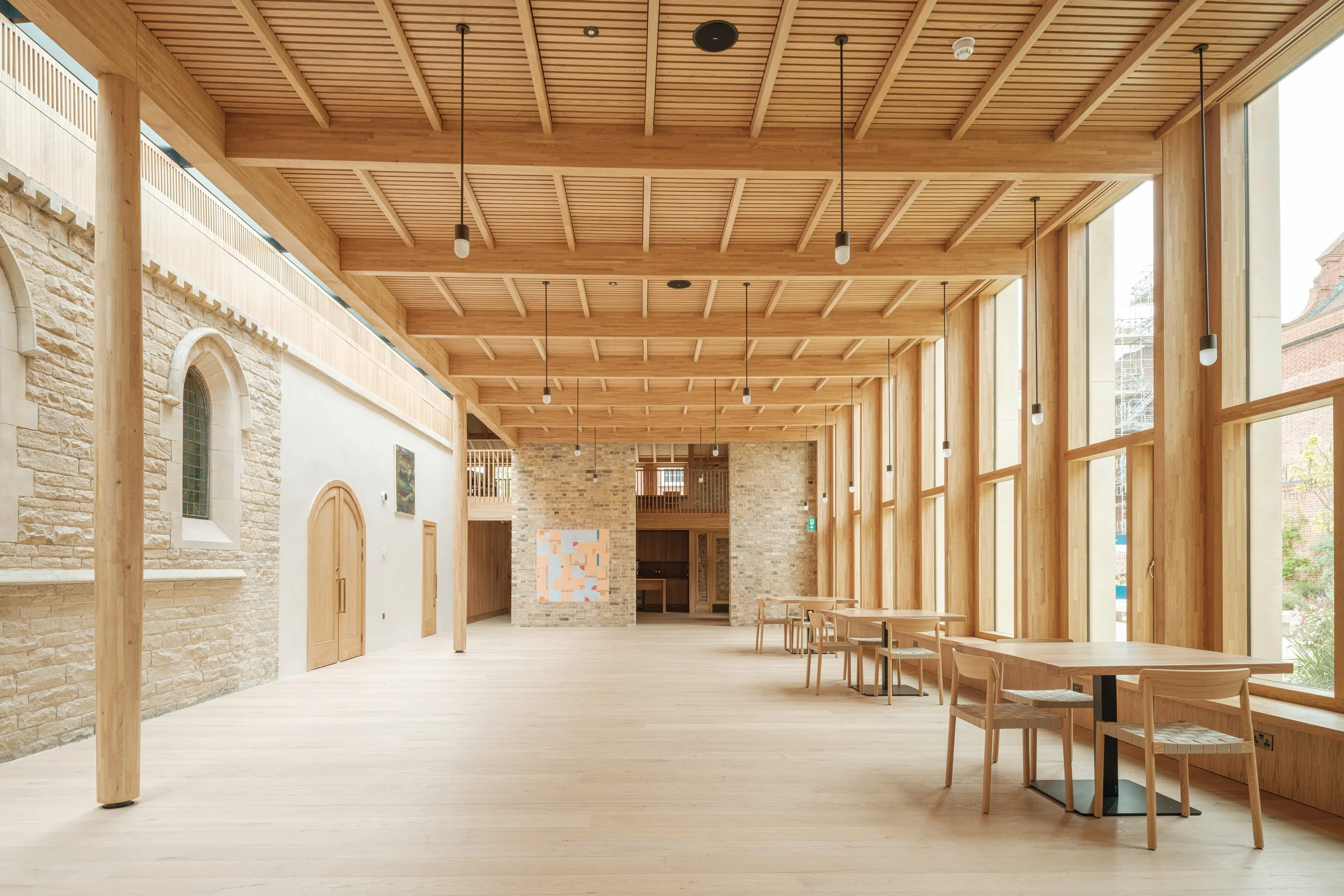
Whether through the warmth of timber, generous natural light, restorative views, biodiverse landscapes or carefully crafted communal spaces, many of this year’s shortlisted buildings demonstrate principles long championed by the Journal of Biophilic Design. They remind us that architecture is at its best when it supports both environmental resilience and human wellbeing.

    Natural materials – timber, brick with tactile qualities, exposed structure and honest materiality.

  • Prospect and refuge – long views balanced with sheltered places to gather.

  • Natural light – daylight used as a design material rather than simply illumination.

  • Connection with living systems – landscapes, rivers, planting and seasonal change.

  • Community – courtyards, shared gardens, public squares and informal meeting places.

  • Awe and delight – spaces that inspire curiosity, wonder and emotional connection.

The Natural Biophilic Solution to Health Housing and Climate - Response to the Kings Speech May 2026

The Natural Biophilic Solution to Health Housing and Climate - Response to the Kings Speech May 2026

The King’s Speech this week placed housing, clean water, energy independence, infrastructure and climate resilience firmly at the centre of the national conversation. For those of us working in and advocating for Biophilic Design, this moment matters deeply, because the ambitions outlined by government cannot truly succeed without a more fundamental shift in how we design places for people and planet.

READ ON…

Resilience, Reuse and Regenerative design - FUTUREBUILD

Resilience, Reuse and Regenerative design - FUTUREBUILD

We are also convening a Biophilic Design Masterclass on Placemaking with two of the best brains in Biophilic Design, Oliver Heath and Bill Browning. Plus a panel discussion on Biophilic Design and Resilience with Kirsty Wilman of Rebalance Earth, Luke Engleback of EcoUrbanist and Joanna Yarrow of Human Nature.

Chatham House Climate and Energy Summit 18-19 March 2025

Chatham House Climate and Energy Summit 18-19 March 2025

On the road to COP30, join governments and businesses for two days of interactive discussion exploring strategies to secure a resilient future. Two days of high-level panel dialogues, networking sessions and an interactive workshop under the Chatham House Rule will focus on multi-stakeholder collaboration for increased ambition, action and impact.

Join us!

Chatham House Climate and Energy Summit
18-19 March 2025 | In-person and broadcast live

Designing Healthy, Sustainable BIOPHILIC Buildings for the Future

Designing Healthy, Sustainable BIOPHILIC Buildings for the Future

As the climate crisis and mental health challenges collide, the built environment has a crucial role to play in supporting human wellbeing. In a wide-ranging discussion, hosted at Anticipate London, and chaired by Dr Vanessa Champion, founder and editor of the Journal of Biophilic Design, experts from the fields of architecture, sustainability, and design explored how green buildings can nurture both physical and mental health. Watch the discussion with Rob Buckley, Head of Sustainability at QODA Consulting, Astrid Hugo, Senior Sustainability Specialist, at Gensler and Anthony Thistleton-Smith, Co-Founder of Waugh Thistleton Architects.

How the Construction Industry Can Help Make Biophilic Design More Popularized

How the Construction Industry Can Help Make Biophilic Design More Popularized

A greater global emphasis on sustainability has caused biophilic design to gain mainstream attention, but the construction industry also has a part to play. Here’s how construction professionals can help take biophilic design’s popularity to the next level.

High-Profile Biophilic Projects

The simplest way the construction industry can popularize biophilic design is by exposing it to more people. Most of the population lives in big cities, so these locations are the most practical places to start. Greenifying our urban centres will improve the quality of life and give city dwellers a much-needed dose of nature.

Space and Nature are a Need, not a Luxury

Space and Nature are a Need, not a Luxury

From Edible bus-stops to pocket parks and Roof gardens on the tops of London Banks, journalist Hartley Milner takes us on a trip around the UK and London highlighting the difference nature has made to spaces, and how clever and heart-felt use of Nature in Design has transformed lives.

Read on for not only some interesting statistics but also there is a compelling interview with the architect of the beautiful and inspiring Maggie’s Cancer Care centre in Southampton.