
sustainability

Circularity in Architecture - Designing for a Zero-Waste Future

Circularity in Architecture - Designing for a Zero-Waste Future

The built environment consumes enormous quantities of resources and produces equally enormous amounts of waste. Yet circularity is still often reduced to recycling percentages or the use of products containing recycled material. The reality is a lot more complicated.


A material can be recycled while losing much of its quality. A product can appear environmentally responsible while containing substances that are difficult to identify. A building can be saved from demolition without responding meaningfully to the people or community around it.

Circularity asks us to look more carefully at what already exists, such as the structure of a building, the composition of a product, the history of a material and the future uses that a design leaves open.

For biophilic design, a meaningful relationship with nature cannot begin and end with plants, timber finishes or views of greenery. It must also include the systems behind a space. We must ask ourselves where materials come from, what they contain, how long they can remain useful and what will happen when the needs of the building change.

Biophilic Design - the Missing Link in Delivering the Future Homes and Buildings Standards

Biophilic Design - the Missing Link in Delivering the Future Homes and Buildings Standards

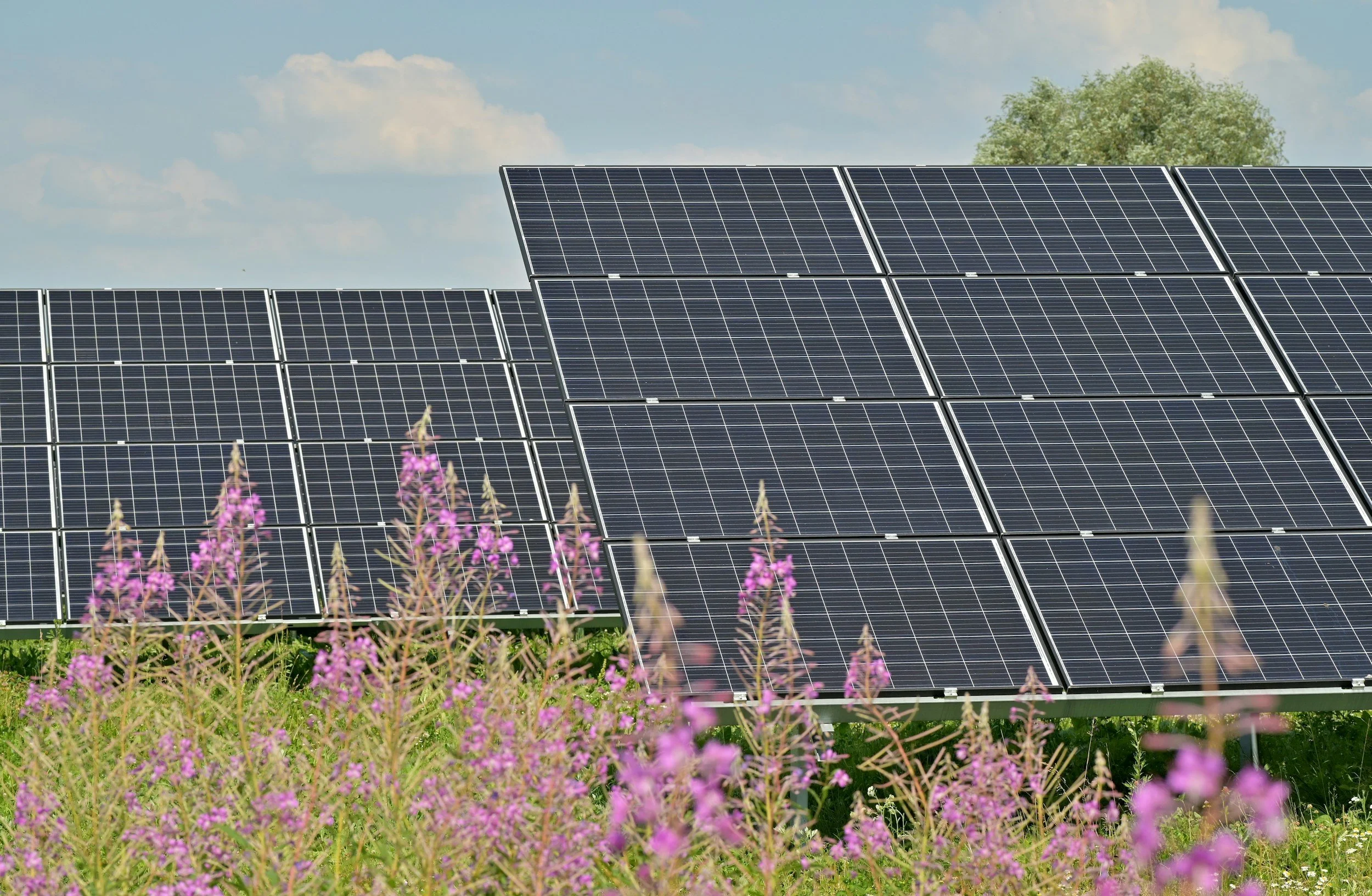
From March 2027, England's new Future Homes and Buildings Standards will fundamentally change the way we design new homes. Among the most significant amendments is the introduction of a new functional requirement (L3), requiring on-site renewable electricity generation for new dwellings and residential buildings. At the same time, Part L of the Building Regulations shifts its emphasis beyond simply conserving energy to also reducing greenhouse gas emissions.

For architects, designers, planners and developers, the conversation has understandably centred around technologies such as solar photovoltaics, heat pumps and smart controls. Yet there is a danger that renewable systems become viewed as solutions in isolation. Technology performs best when it works with nature rather than against it—and that is precisely where Biophilic Design has an important role to play.

Biophilic Design is often associated with planting, biodiversity and occupant wellbeing, but at its core it is about understanding natural systems. Before selecting renewable technologies, we should first ask: how does this site already work? Where does the sun travel? How do prevailing winds move across the landscape? Which existing trees provide seasonal shade? How can natural daylight reduce the need for artificial lighting? These are biophilic questions, but they are also questions of building performance.

READ one

Biophilic Design could help keep our cities – and our tempers – cool

Biophilic Design could help keep our cities – and our tempers – cool

If you've found yourself feeling more irritable during the recent heatwaves, you're not imagining it. A recent Guardian article explored the growing body of research showing that high temperatures affect far more than our physical comfort. Heat places the body under stress, disrupting sleep, increasing fatigue and dehydration, making us less patient, less focused and more prone to conflict. Studies have even linked hotter days with increases in aggression, road rage and mental health emergencies.

This is precisely why Biophilic Design needs to become central to the way we design our towns and cities. As temperatures continue to rise, we cannot rely solely on air conditioning and mechanical cooling. We need places that work with nature to create healthier, cooler and more resilient environments. READ ON…

The Hidden Story Behind This Year’s Stirling Prize: Biophilic Design

The Hidden Story Behind This Year’s Stirling Prize: Biophilic Design

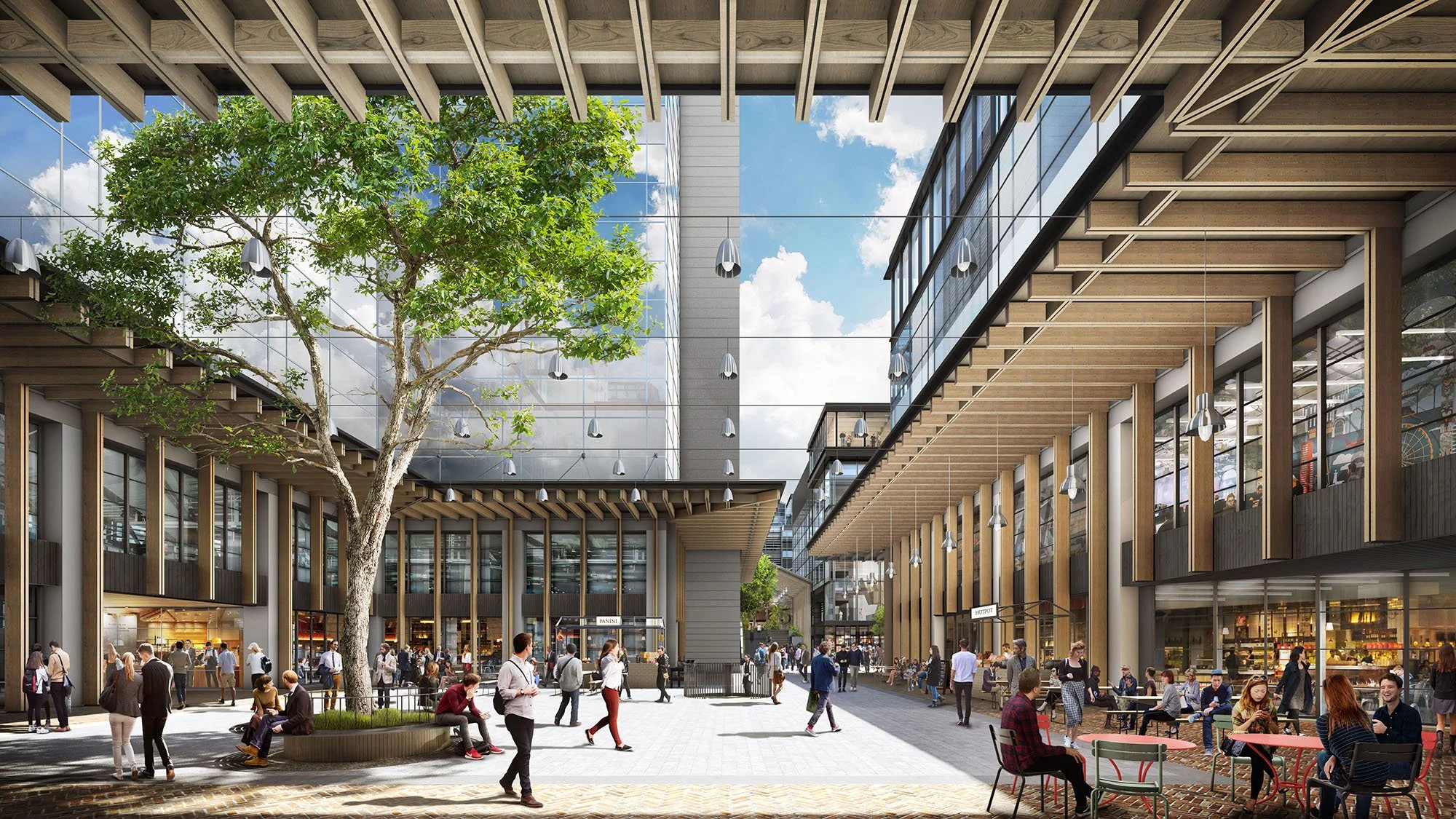
Every year the Stirling Prize celebrates architectural excellence. This year, however, another story emerges. Look beyond the headlines and a pattern begins to reveal itself. Britain’s best new buildings are increasingly embracing many of the principles of biophilic design, whether they call it that or not.

Beneath the discussion of materials, detailing and craftsmanship lies a common thread that is increasingly shaping Britain’s best architecture: a deeper connection between people, place and nature.

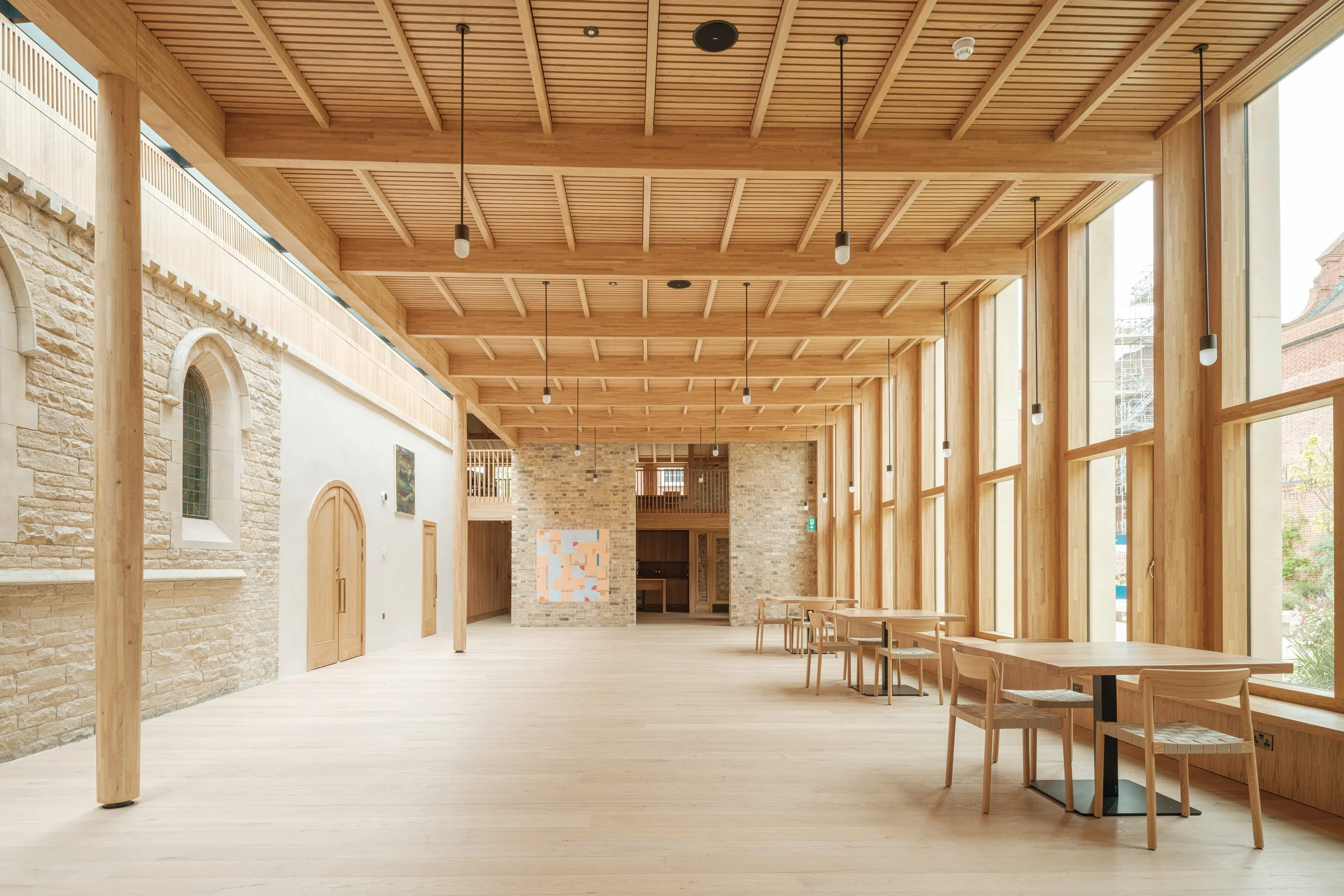
Whether through the warmth of timber, generous natural light, restorative views, biodiverse landscapes or carefully crafted communal spaces, many of this year’s shortlisted buildings demonstrate principles long championed by the Journal of Biophilic Design. They remind us that architecture is at its best when it supports both environmental resilience and human wellbeing.

    Natural materials – timber, brick with tactile qualities, exposed structure and honest materiality.

  • Prospect and refuge – long views balanced with sheltered places to gather.

  • Natural light – daylight used as a design material rather than simply illumination.

  • Connection with living systems – landscapes, rivers, planting and seasonal change.

  • Community – courtyards, shared gardens, public squares and informal meeting places.

  • Awe and delight – spaces that inspire curiosity, wonder and emotional connection.

When the Room Stops Listening - Why Breaking the Echo Chamber Matters for Biophilic Design

When the Room Stops Listening - Why Breaking the Echo Chamber Matters for Biophilic Design

There is a conversation happening in workplaces right now that most leaders are not fully part of, and it is not just happening in board meetings or leadership away-days. It is happening in the gaps: in the quiet frustration of the team member whose idea was talked over, in the instinct of the specialist whose insight was shelved, in the resignation of the person who stopped raising their hand because nobody seemed to be listening. It is also costing organisations far more than they realise.

On 1 October 2026, an important event is taking place at Gensler's London studio that speaks directly to this gap. Breaking the Echo Chamber: Real Voices, Real Change, hosted by Jennifer L. Bryan and building on the acclaimed Hearing Women in the Workplace research by Paige Hodsman and Dr Nigel Oseland, promises to move the conversation beyond familiar territory. This is not simply a discussion about gender equity. It is a rigorous examination of whose voices carry weight in organisations, whose insights translate into action and what leaders may be missing as a result. For those of us working at the intersection of human wellbeing and the built environment, the relevance could not be more direct.

READ ON… and BOOK TICKETS TO JOIN US.

Energy Secretary Ed Miliband joins Kenyan teenager on shortlist for UK’s leading climate awards

Energy Secretary Ed Miliband joins Kenyan teenager on shortlist for UK’s leading climate awards

 Energy Secretary Ed Miliband joins Kenyan teenager on shortlist for UK’s leading climate awards. P.E.A. Awards 2026 shortlist announced.

“We are pleased also to announce that Edgardo Rossi has also been shortlisted. The Journal of Biophilic Design is publishing a monograph on Preserved Plants with him. The monograph will be published in the Fall,” said Dr Vanesa Champion, Founder and Editor, Journal of Biophilic Design.

READ ON….

The Natural Biophilic Solution to Health Housing and Climate - Response to the Kings Speech May 2026

The Natural Biophilic Solution to Health Housing and Climate - Response to the Kings Speech May 2026

The King’s Speech this week placed housing, clean water, energy independence, infrastructure and climate resilience firmly at the centre of the national conversation. For those of us working in and advocating for Biophilic Design, this moment matters deeply, because the ambitions outlined by government cannot truly succeed without a more fundamental shift in how we design places for people and planet.

READ ON…

We debut at the Salone Milan April 2026 - come to our talk on 22 April

We debut at the Salone Milan April 2026 - come to our talk on 22 April

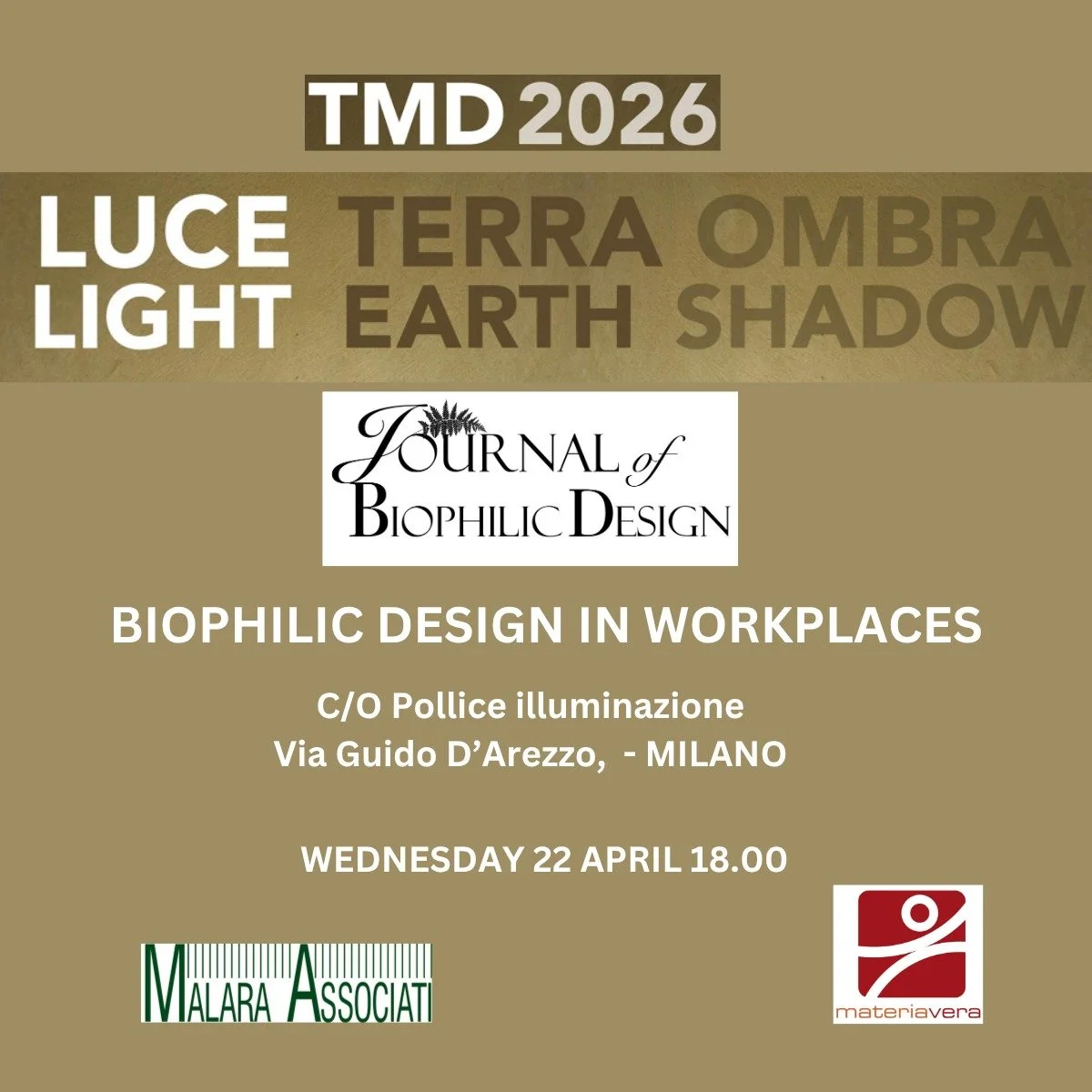
Journal of Biophilic Design makes debut appearance to Host Biophilic Workplace-Focused Panel at Fuorisalone 2026, Milan

Milan, Italy — April 2026 — As Milan Design Week transforms the city into a global hub of creativity and innovation, the Journal of Biophilic Design will make its debut appearance at Fuorisalone with a clear objective: to bridge the gap between design ideas and real-world application.

Hosted within a curated exhibition space developed in collaboration with ANAB and Terra Migaki Design, the Journal’s presence will spotlight practical, implementable approaches to biophilic design. The installation will take place at Pollice Illuminazione, a long-established destination for lighting design in Milan.

Amid a week known for conceptual exploration, this collaboration focuses on tangible solutions — showcasing bio-based materials, circular design thinking, and lighting strategies that can be specified, sourced, and delivered within today’s built environment.

Panel Event: Biophilic Design in Workplaces
📅 22 April 2026
🕕 18:00
📍 Pollice Illuminazione, Via Guido D’Arezzo 11, Milan ITALY

The Journal will host a panel discussion examining the role of biophilic design in shaping healthier, more resilient workplaces. Speakers include: READ ON…

Resilience, Reuse and Regenerative design - FUTUREBUILD

Resilience, Reuse and Regenerative design - FUTUREBUILD

We are also convening a Biophilic Design Masterclass on Placemaking with two of the best brains in Biophilic Design, Oliver Heath and Bill Browning. Plus a panel discussion on Biophilic Design and Resilience with Kirsty Wilman of Rebalance Earth, Luke Engleback of EcoUrbanist and Joanna Yarrow of Human Nature.

Best in Workplace Design Recognised in 2026 Workspace Design Awards Shortlist

Best in Workplace Design Recognised in 2026 Workspace Design Awards Shortlist

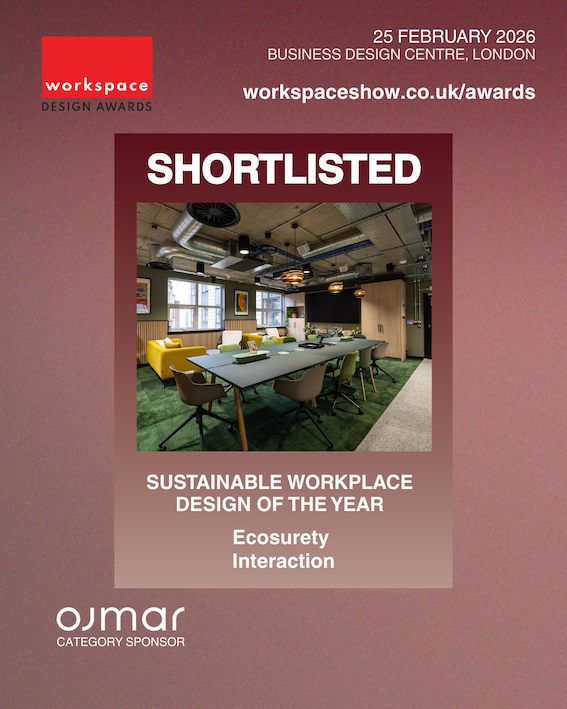
The 2026 edition of Workspace Design Show has officially revealed the shortlisted projects for its newly launched Workspace Design Awards, recognising outstanding achievements across workplace design, innovation, sustainability, experience and adaptability.The shortlisted projects showcase the breadth and depth of talent shaping today’s workplaces across the UK and Europe,from smart offices and large-scale corporate headquarters to flexible co-working environments and future-focused concept designs.Winners from all categories will be announced liveat the Workspace Design Awards Ceremony & Networking Party, taking place on Wednesday 25 February 2026 from 5:30pm to 7:30pm. The evening will bring together designers, architects, occupiers, and industry leaders to celebrate the most creative projects in workplace design. The networking party is also proudly sponsored by Mute, who is the main Headline Sponsor of the awards.

Futurebuild 2026

Futurebuild 2026

The Journal of Biophilic Design is proud to be one of 60+ industry-leading organisations, including UK Green Building Council (UKGBC), RIBA, ASBP - Alliance for Sustainable Building Products, and UK Architects Declare, supporting Futurebuild 2026. These influential bodies and associations play an integral role in the Futurebuild Knowledge Programme, delivering 133 hours of CPD-accredited content over 3 days across two conferences and multiple seminar stages.

Futurebuild is the platform where content is curated by the industry for the industry. Immerse yourself in three days of ideas, inspiration, topical discussions and debates on:

Improving design & safety
Tackling rising costs
Meeting ambitious sustainability goals

Find out more and register free CLICK HERE

A not quite fatal world

A not quite fatal world

Who would want to live in a world that is not quite fatal?

So said ecologist Paul Shepherd in 1958, and quoted by Rachel Carson in “Silent Spring”. 

The Biophilic Design Conference this year has a theme of Policy, Place, Planet – Biophilic Design for a regenerative future. It has this theme for a reason. 

We are living in a ticking time bomb. Our planet is heating up, our climates are changing all over the world, our food security is at risk, our physical health is challenged not just by lifestyle and town planning but also by air and sound pollution inside and outside of the home and workplace, our crops are sprayed, our bees are dying, we are losing our pollinators, our skies are quieter, our living world is struggling to breathe and we are the culprits.

When I first learnt about Biophilic Design, it seemed to me a concept which if applied globally and on all facets of society we could go some way to reverse the ills we have inflicted onto ourselves and our planet. 

READ ON… 

Futurebuild 4 -6 March 2025 London ExCeL

Futurebuild 4 -6 March 2025 London ExCeL

Join Futurebuild from 04 – 06 March 2025 at London’s ExCeL, the most impactful event in sustainable innovation for the built environment. Discover the latest products, solutions, and insights that will help you achieve your sustainability goals and drive meaningful change.

As Futurebuild celebrates its 20th anniversary, the theme for 2025 is Impact—marking two decades of driving positive change in the built environment and the communities we serve. Be part of this milestone event and contribute to shaping a more sustainable future. Register nowfor your free ticket.

Surface Design Show 4- 6 February 2025, London

Surface Design Show  4- 6 February 2025, London

EMBRACE THE WORLD OF MATERIAL INNOVATION

Join thousands of professionals from across the A&D sector, and be inspired by 180 exhibiting companies, dedicated to furthering material innovation.

4-6 February 2025 at the Business Design Centre, Islington, London.

Chatham House Climate and Energy Summit 18-19 March 2025

Chatham House Climate and Energy Summit 18-19 March 2025

On the road to COP30, join governments and businesses for two days of interactive discussion exploring strategies to secure a resilient future. Two days of high-level panel dialogues, networking sessions and an interactive workshop under the Chatham House Rule will focus on multi-stakeholder collaboration for increased ambition, action and impact.

Join us!

Chatham House Climate and Energy Summit
18-19 March 2025 | In-person and broadcast live

Designing Healthy, Sustainable BIOPHILIC Buildings for the Future

Designing Healthy, Sustainable BIOPHILIC Buildings for the Future

As the climate crisis and mental health challenges collide, the built environment has a crucial role to play in supporting human wellbeing. In a wide-ranging discussion, hosted at Anticipate London, and chaired by Dr Vanessa Champion, founder and editor of the Journal of Biophilic Design, experts from the fields of architecture, sustainability, and design explored how green buildings can nurture both physical and mental health. Watch the discussion with Rob Buckley, Head of Sustainability at QODA Consulting, Astrid Hugo, Senior Sustainability Specialist, at Gensler and Anthony Thistleton-Smith, Co-Founder of Waugh Thistleton Architects.

The inaugural Biophilic Design Conference 2024

The inaugural Biophilic Design Conference 2024

London’s iconic Barbican conservatory couldn’t have been more fitting for a conference dedicated to the immense benefits of a world designed with biophilic principles. Visionaries, designers, architects, lawyers, academics, entrepreneurs, advocates and professionals across various walks in life, came together to share their perspectives for one full day in a series of talks. 

Biophilic Desining Enhancing Wellbeing - Part 1

Biophilic Desining Enhancing Wellbeing - Part 1

This was part 1 of an interview with Jeffrey Hart of the Building Sustainability Podcast. Tables were turned and he was interviewing our founder, Vanessa Champion.

In this episode, guest Vanessa Champion discusses biophilia and biophilic design, emphasizing the importance of nature connection and its benefits for well-being and the environment. We explore underappreciated biophilic patterns, healthcare benefits, materials, and so much more.

Overall, the focus is on improving the built environment for people and the planet through biophilic design.

Part 1!

Biophilic Design Enhancing Wellbeing - Part 2

Biophilic Design Enhancing Wellbeing - Part 2

I really enjoyed this discussion with the lovely Jeffrey Hart, this is Part 2.

In this episode, we explors the fascinating world of biophilic design and its potential impact on sustainable and ethical practices. We delve into the use of clay, earth materials, and mushroom mycelium as tactile and eco-friendly alternatives. The episode also touches upon the challenges of promoting green alternatives in mainstream industries and the potential positive effects of biophilic design on employee ethics and productivity.

Lastly, Vanessa highlights the growing popularity of biophilic design and its numerous benefits, from improved air quality to increased real estate value.

Tune in for an intriguing discussion on incorporating nature into indoor spaces for a more sustainable and enjoyable environment.

Building Sustainability Podcast (Part 2!)