We spend around 90% of our lives inside buildings, yet we often design those environments around a remarkably narrow idea of what a human being is. We specify the same lighting, the same acoustics, the same spatial arrangements and the same sensory experiences, assuming that what works for one person will work for everyone. But human beings are not standardised — and our environments shouldn't be either.
This is where biophilic design and neuroinclusive design have an important conversation to have.
Biophilic design is often understood simply as bringing nature into buildings: plants, natural materials, daylight, views of greenery. But its deeper value lies in recognising that humans have an innate relationship with the natural world and that our surroundings influence how we think, feel, behave and perform. Nature can offer moments of restoration, connection and calm, but it can also provide stimulation, fascination, movement, texture and sensory richness.

For neurodivergent people, the sensory qualities of our environments can be particularly significant. Light, sound, colour, texture, spatial density and movement can influence how comfortable, focused, energised or overwhelmed we feel. Importantly, there is no single "neurodivergent experience". Some people may be highly sensitive to sensory input, while others actively seek greater stimulation. An environment designed only to reduce stimulation can therefore be just as limiting as one that overwhelms the senses.
This suggests a more nuanced approach to biophilic design: not designing for an imagined average person, but designing for difference.
It might mean providing a choice between spaces that are quiet and restorative and spaces that are more stimulating and social. It might mean using planting to create refuge, while maintaining views out — the principle of prospect and refuge. It might mean thinking more carefully about colour, contrast and light levels, or allowing people to adjust their environment rather than expecting everyone to adapt themselves to it.
Good inclusive design doesn't necessarily mean creating one perfect environment that suits everybody. It can mean creating environments where people have choices: where they can retreat, connect, focus, move, adjust and regulate themselves according to what they need at that moment.
This is where biophilic design comes into its own. A view of nature, the touch of timber, the changing quality of daylight, the presence of planting or the creation of a sheltered place to sit can all become part of a richer sensory landscape — one that supports our brains and bodies rather than working against them.
Ultimately, designing for human flourishing asks us to become more curious about the relationship between people and place. What helps us slow down? What energises us? What helps us feel safe? What enables us to concentrate, connect and be ourselves? And how can we create environments that give different people the conditions they need to flourish?
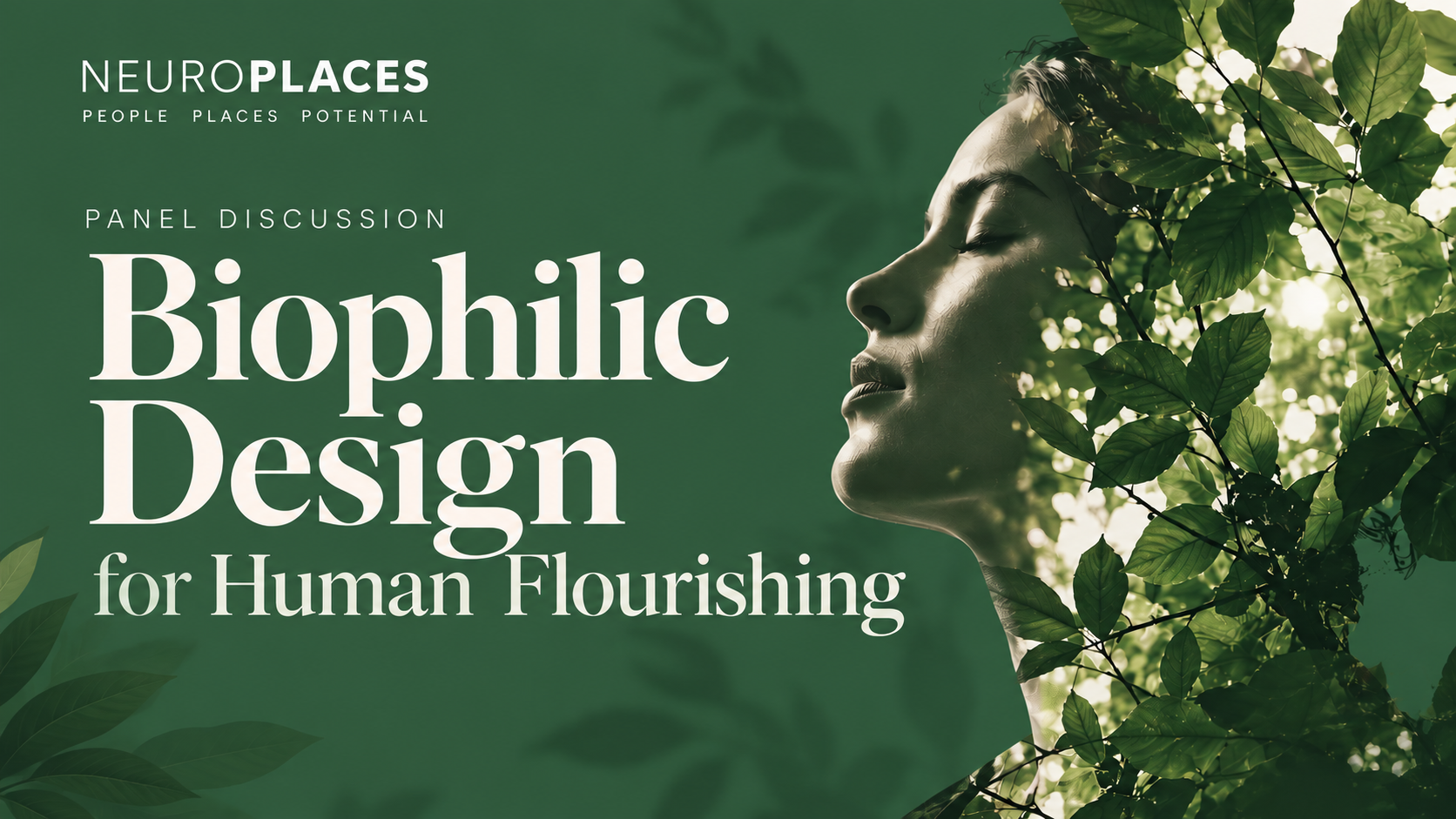
These are the questions we will be exploring at Neuroplaces 2026 in “Biophilic Panel: Designing for Human Flourishing”, taking place on Tuesday 15 September, 11.45–12.30 at Protein STUDIOS dios, 31 New Inn Yard, Shoreditch, London. The conversation brings together Graham Flisher, Oliver Heath, Freyja Sewell and Dr Shelley James - The Light Lady to explore how nature-connected design, sensory experience and neuroinclusive thinking can help us create places that work better for all of us.
Visit https://www.neuro-places.com/biophilic-panel to book your place.