The shortlist for the RIBA Neave Brown Award for Housing is announced today. The annual award recognises the UK’s best new affordable housing, with this year's shortlisted projects demonstrating how high-quality affordable homes can meet both community needs and environmental ambitions.
Many of the qualities celebrated by the judges are exactly those that underpin Biophilic Design: abundant natural daylight, dual-aspect homes, visual connections to nature, biodiverse planting, natural materials, community interaction, and layouts that encourage movement, safety and wellbeing.
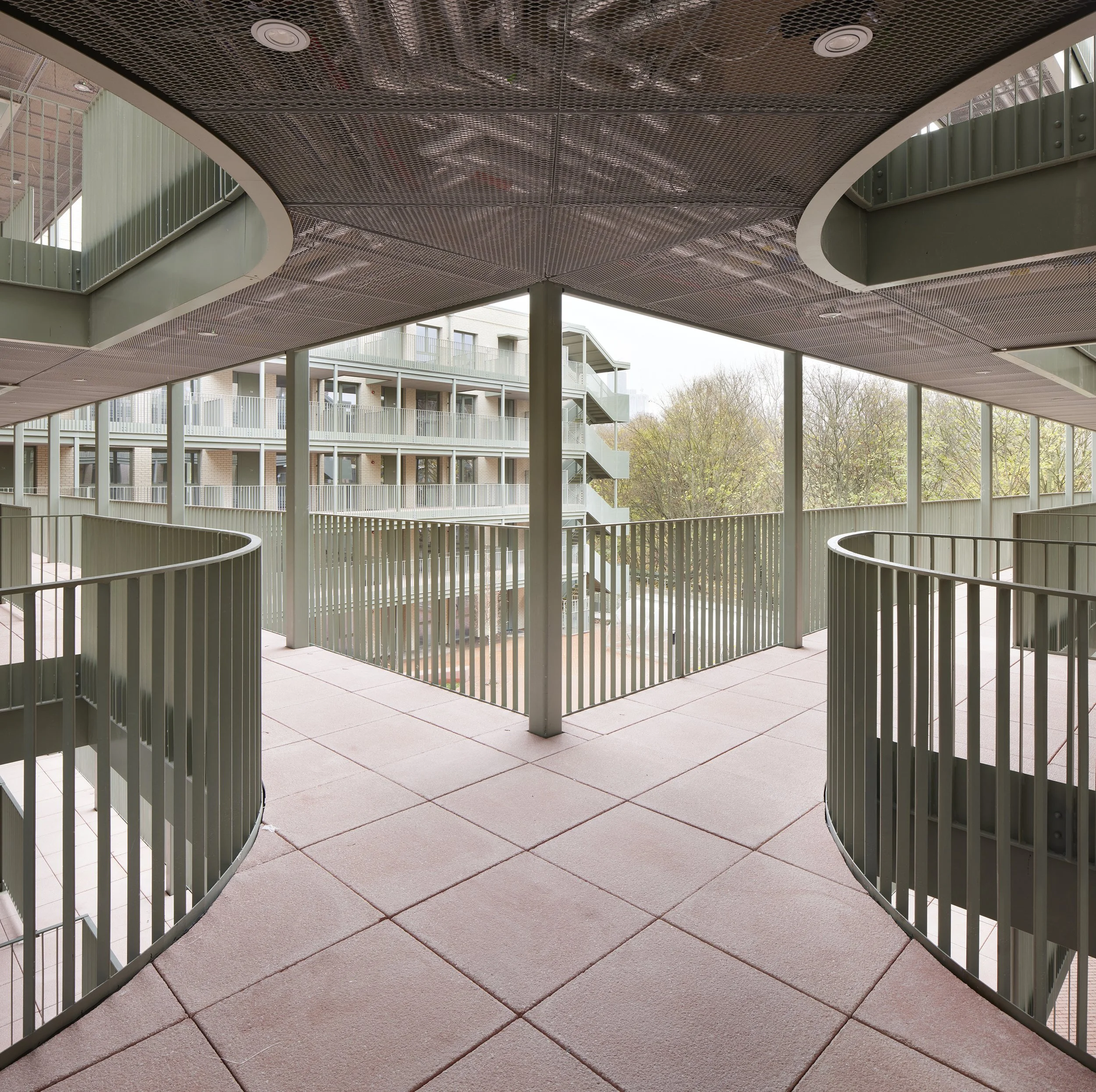
Canada Water Plot K1, photo credit Jack Hobhouse
At Canada Water Plot K1 in Southwark, the relationship between architecture and landscape is central to the scheme. A generous courtyard opens directly towards woodland, creating visual and physical connections with nature, while every home is dual aspect and filled with natural daylight. Carefully designed circulation decks become social spaces where neighbours naturally meet, strengthening community alongside wellbeing.
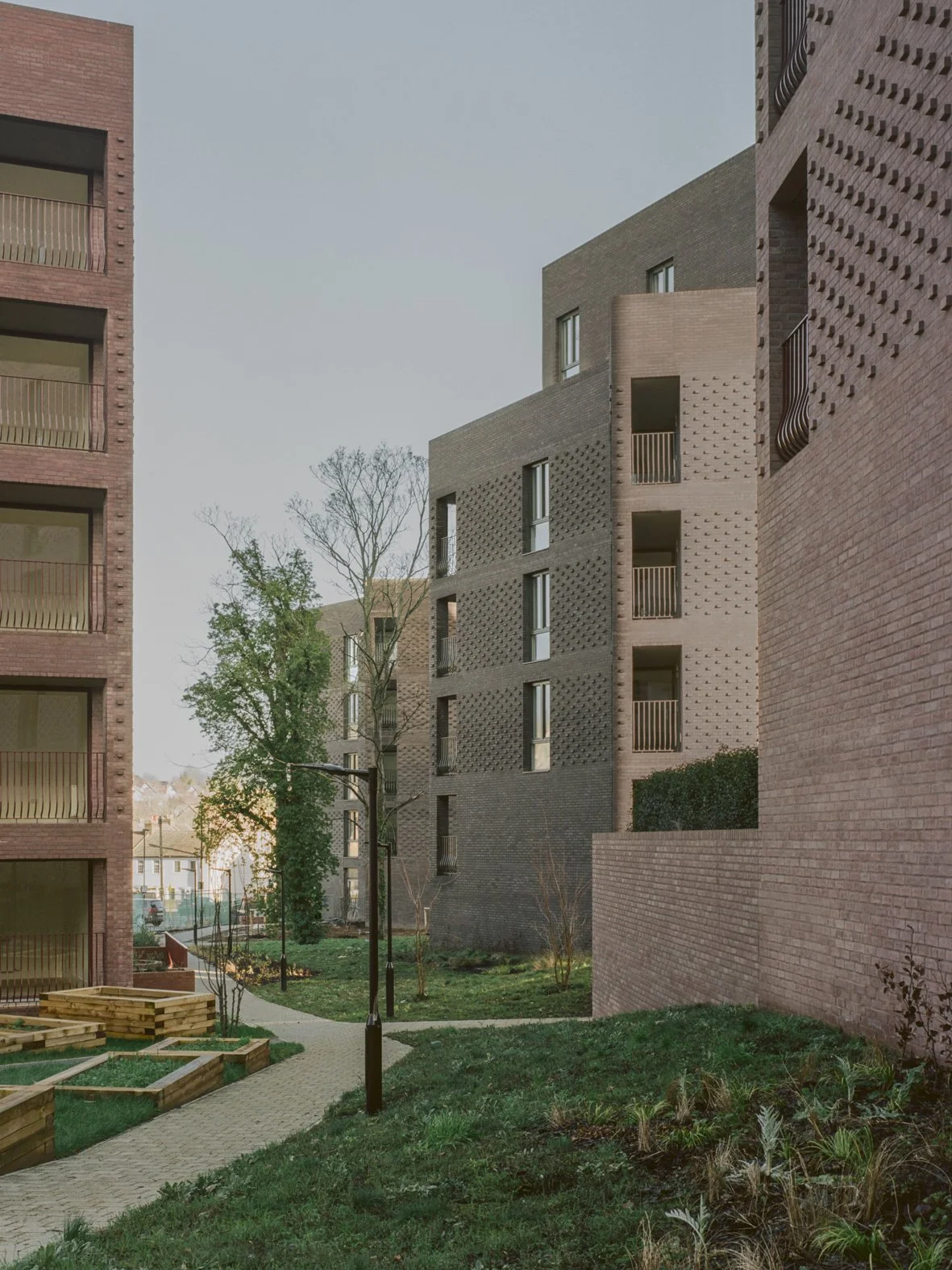
Lion Green Road, photo credit Lorenzo Zandri
Lion Green Road in Croydon takes a landscape-led approach. Five pavilion buildings sit within richly planted, biodiverse gardens that accommodate children's play, seating areas and growing spaces. Public pathways weave through planting, encouraging walking and informal encounters, while dual-aspect apartments maximise daylight and long views across the site. Here, nature is not decoration but the organising framework for the development.
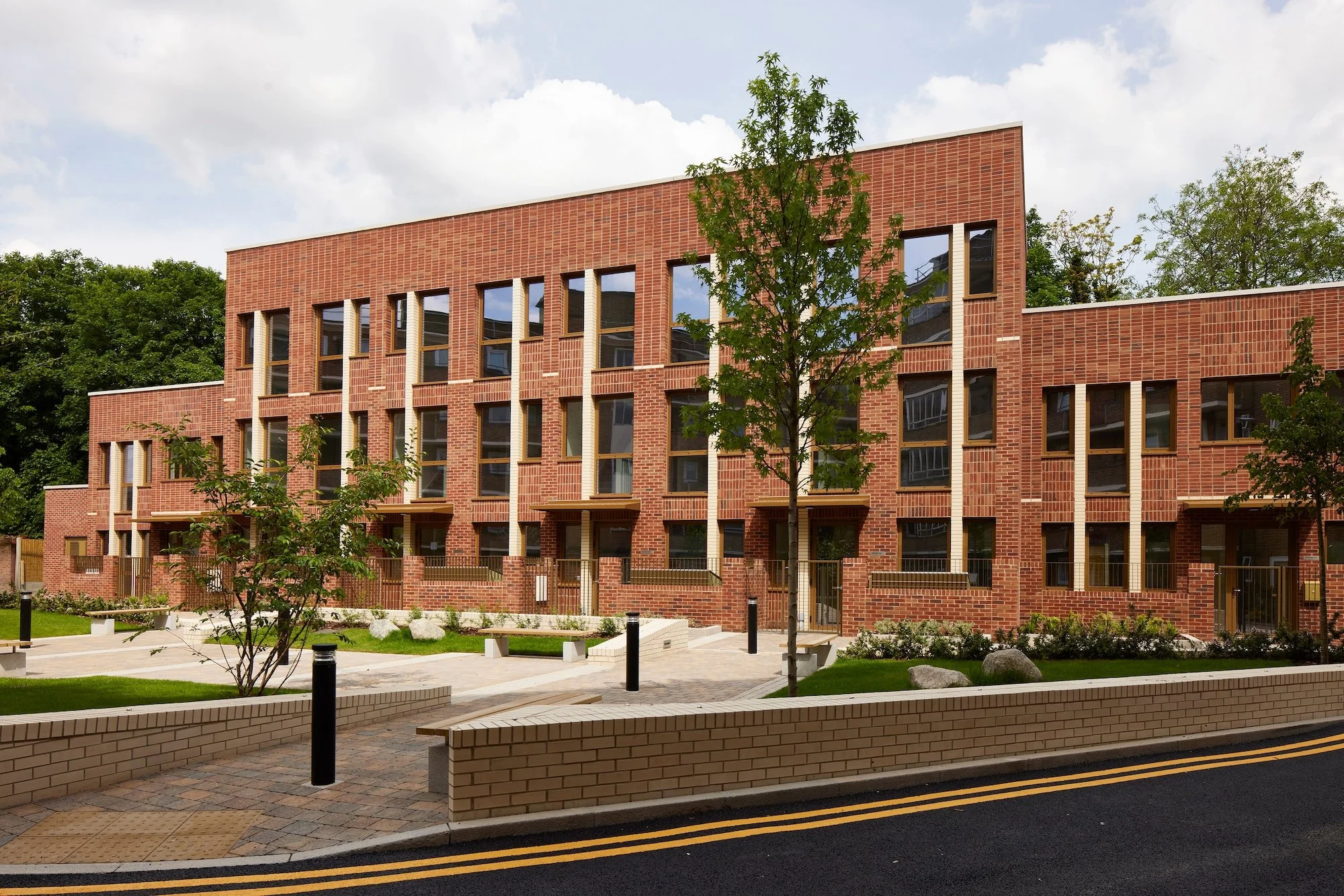
Rowan Court, photo credit Richard Chivers
Rowan Court in Seven Sisters demonstrates how thoughtful housing design can transform neglected urban land into a place of belonging. Dual-aspect homes provide excellent daylight and natural ventilation, generous floor-to-ceiling heights improve comfort, while community gardens and shared outdoor spaces are already being embraced by residents. Active frontages and well-connected pedestrian routes encourage both safety and neighbourly interaction.
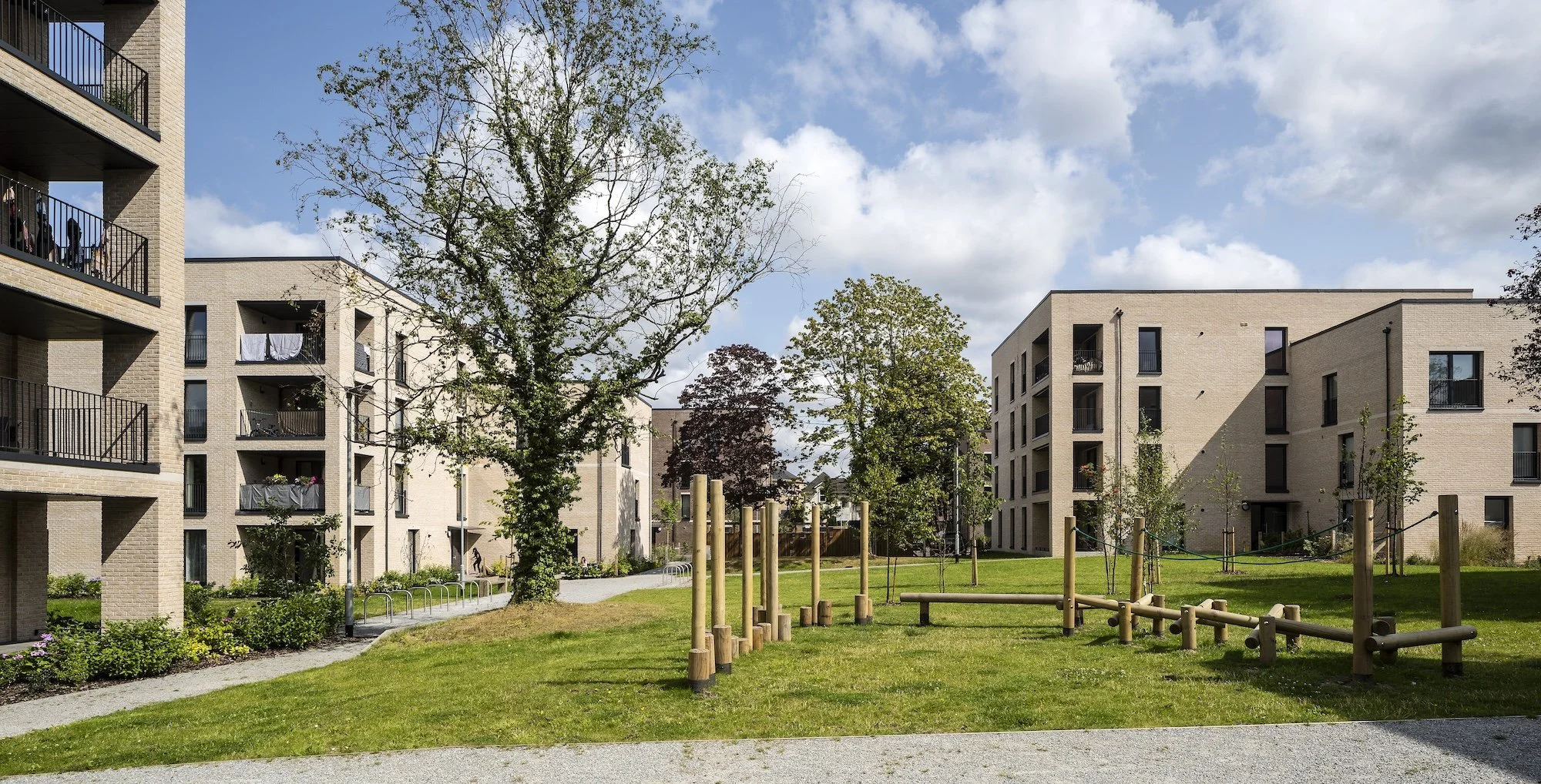
St Andrew’s Drive, Glasgow, photo credit Kieth Hunter
Meanwhile, St Andrew's Drive in Glasgow combines shared greens, sustainable drainage, generous communal spaces and homes carefully arranged to optimise daylight, privacy and outdoor amenity. The result is a development that supports environmental resilience while fostering a strong sense of community.
Collectively, these projects suggest that successful housing is increasingly being measured by more than density, aesthetics or technical performance. Access to nature, daylight, healthy materials, walkability, biodiversity and opportunities for meaningful social connection are emerging as hallmarks of design quality.
One aspect of the shortlist is particularly thought-provoking. While the projects celebrate many of the principles associated with Biophilic Design—daylight, biodiversity, community, generous landscapes and connections to nature—the architecture itself remains remarkably familiar. The buildings are predominantly rectilinear, orthogonal and angular in form. Their courtyards, gardens and planted spaces soften the experience, often introducing more organic shapes and naturalistic landscapes, but the buildings themselves largely retain the language of contemporary urban housing.
Perhaps this reflects the realities of construction, planning, density and cost. Yet it also raises an intriguing question. If we increasingly recognise the value of nature in the spaces between buildings, could we also begin to explore what nature might teach us about the buildings themselves?
Nature rarely works in straight lines. It evolves through patterns, fractals, curves, variation and layered complexity. As our understanding of human health and environmental psychology develops, perhaps the next evolution of housing will surround people with nature, but also allow nature's geometries and forms to influence the architecture itself. Biophilic Design frameworks can help shape this next generation of housing, integrating the science of human-nature relationships into both landscape and architecture.
The subtle variation in brick tones across several of the shortlisted schemes is a welcome move away from the stark uniformity of the past, bringing warmth, texture and a more natural palette. Yet the question remains: if these are the qualities RIBA juries consistently recognise and reward, are the principles of Biophilic Design becoming the defining characteristics of housing excellence—and, if so, what might happen when the architecture itself becomes as biomorphic as the landscapes that surround it?