by Caroline Knight, PR Director for the Journal of Biophilic Design, and co-founder of The Renew Consultancy.
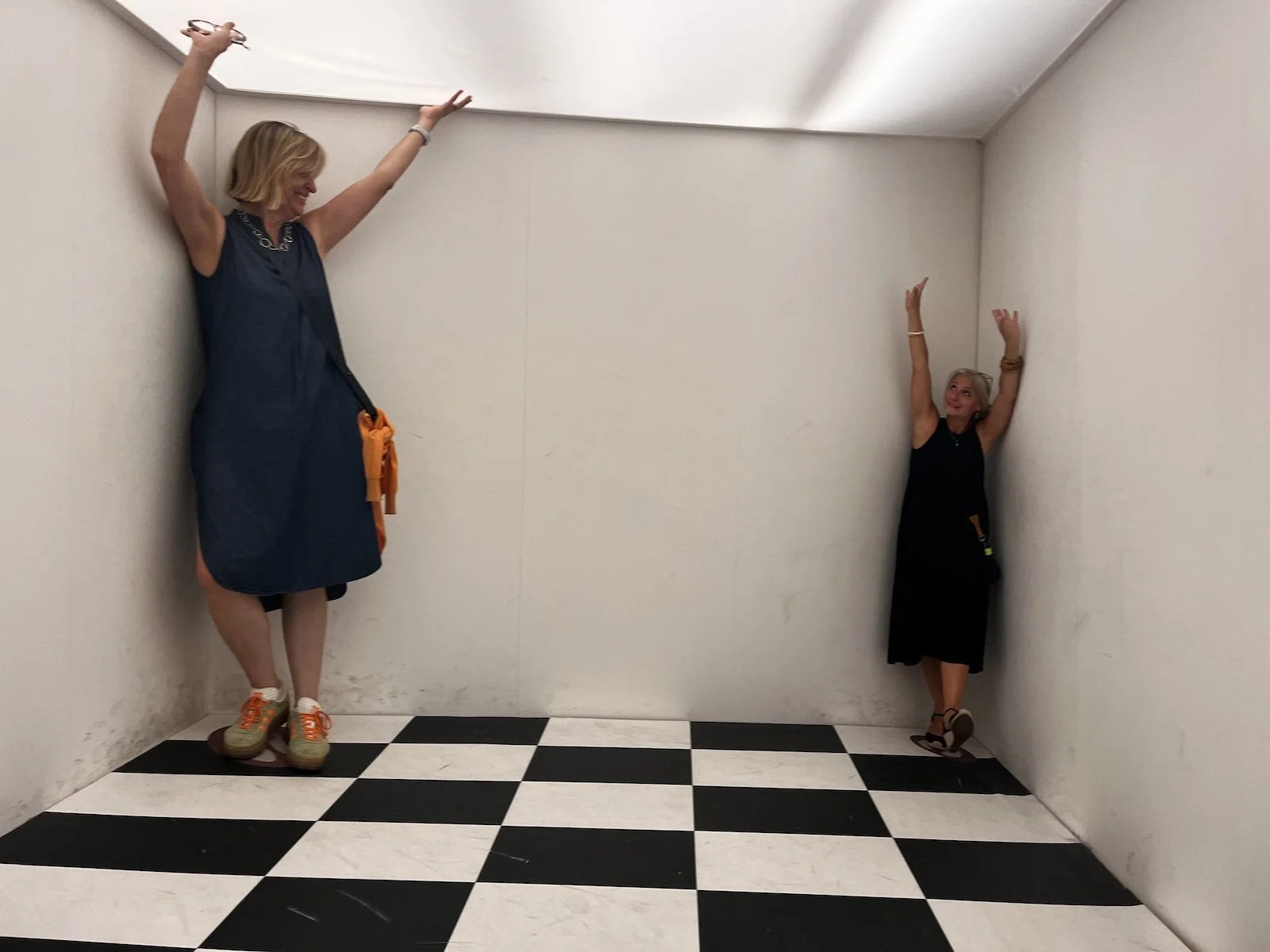
A visit to the current M.C.Escher exhibition at Somerset House recently transported me back to a personal discovery of the connection between mathematical formulas and the natural world. During a memorable - and ultimately successful - project for my maths A-Levels, my lifelong interest in art and design gave me a new perspective on the power and complexity of the natural world and maths..

M.C. Escher Day and Night, 1938 Woodcut, 391x677 mm M.C. Escher Heritage Collection, The Netherlands All M.C. Escher works © 2026 The M.C Escher Heritage, Baarn, The Netherlands All rights reserved www.mcescher.com
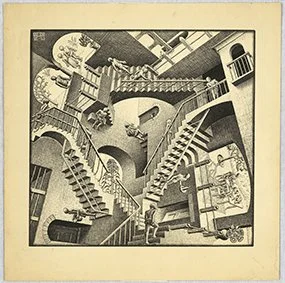
M.C. Escher Relativity, 1953 Lithograph, 277x292 mm M.C. Escher Heritage Collection, The Netherlands All M.C. Escher works © 2026 The M.C. Escher Heritage, Baarn, The Netherlands All rights reserved www.mcescher.com
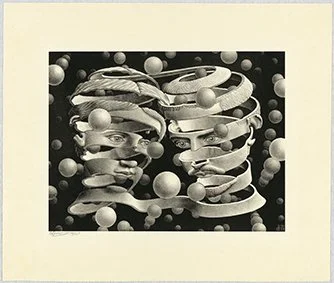
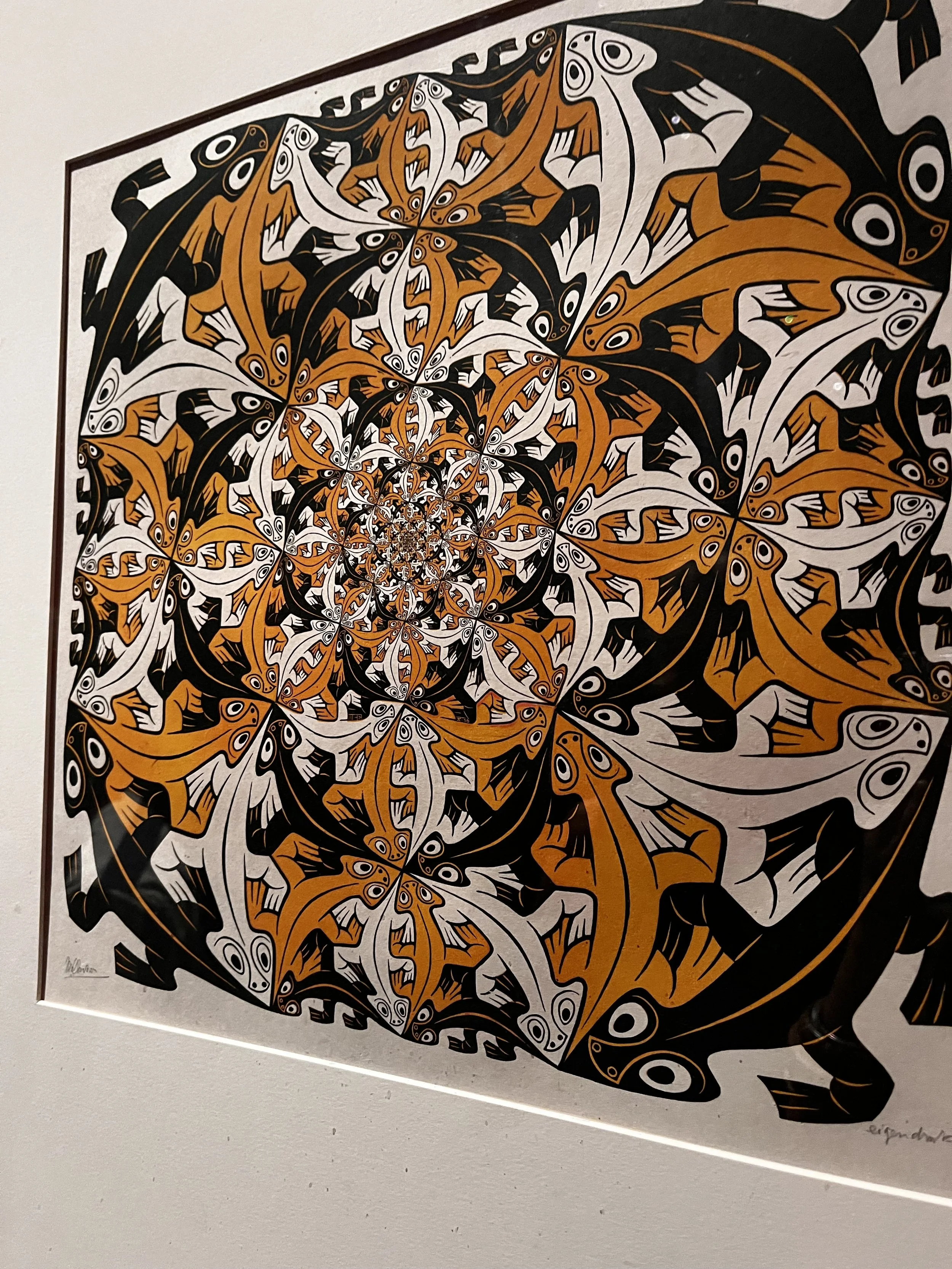
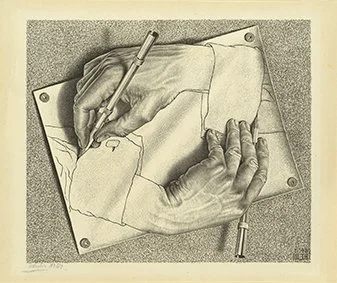
My recent close-up with Escher’s impossible staircases, his tessellation experiments and his disorientating pieces such as Metamorphosis II or Relativity brought home how he linked unrealities to the very source of life itself.
His fascination with all kinds of maths, including his applications of symmetry, designing polyhedral and optical illusions and using the Penrose triangle echoed nature’s rules on paper.


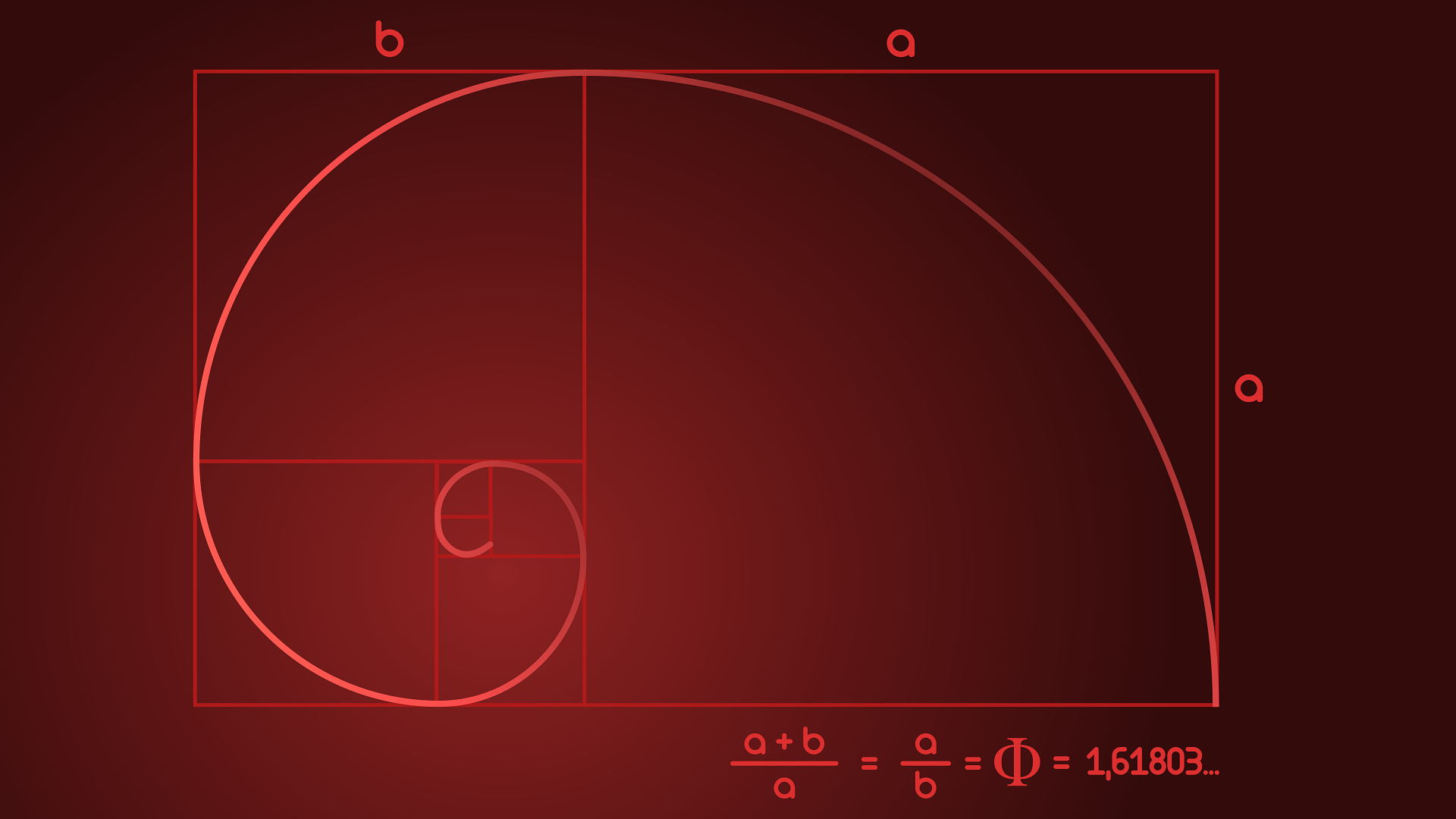
Long before Escher sketched an impossible staircase, nature had established critical numbers and patterns. A nautilus shell, a sunflower head and a spiralling galaxy, to name but just a few, all approximate a proportion known as the Golden Ratio: 1.618, or Phi (Φ): where two quantities have a ratio of approximately 1.618, or where the larger number divided by the smaller one equals this value.

CGolden-ratio Fibonacci spiral fractal graphic (pixabay.com_users_amelsegre-545286)
Take a line, divide it in two using the same ratio. Use them to form a rectangle - and there is the Golden Rectangle. Place a square inside to form a second rectangle, insert another square inside which forms another rectangle, this repeats infinitely for a sequence of further rectangles. The proportions of this ratio are seen repeatedly in nature, and as the results are inherently pleasing to the human eye, are seen time and time again in art and design.
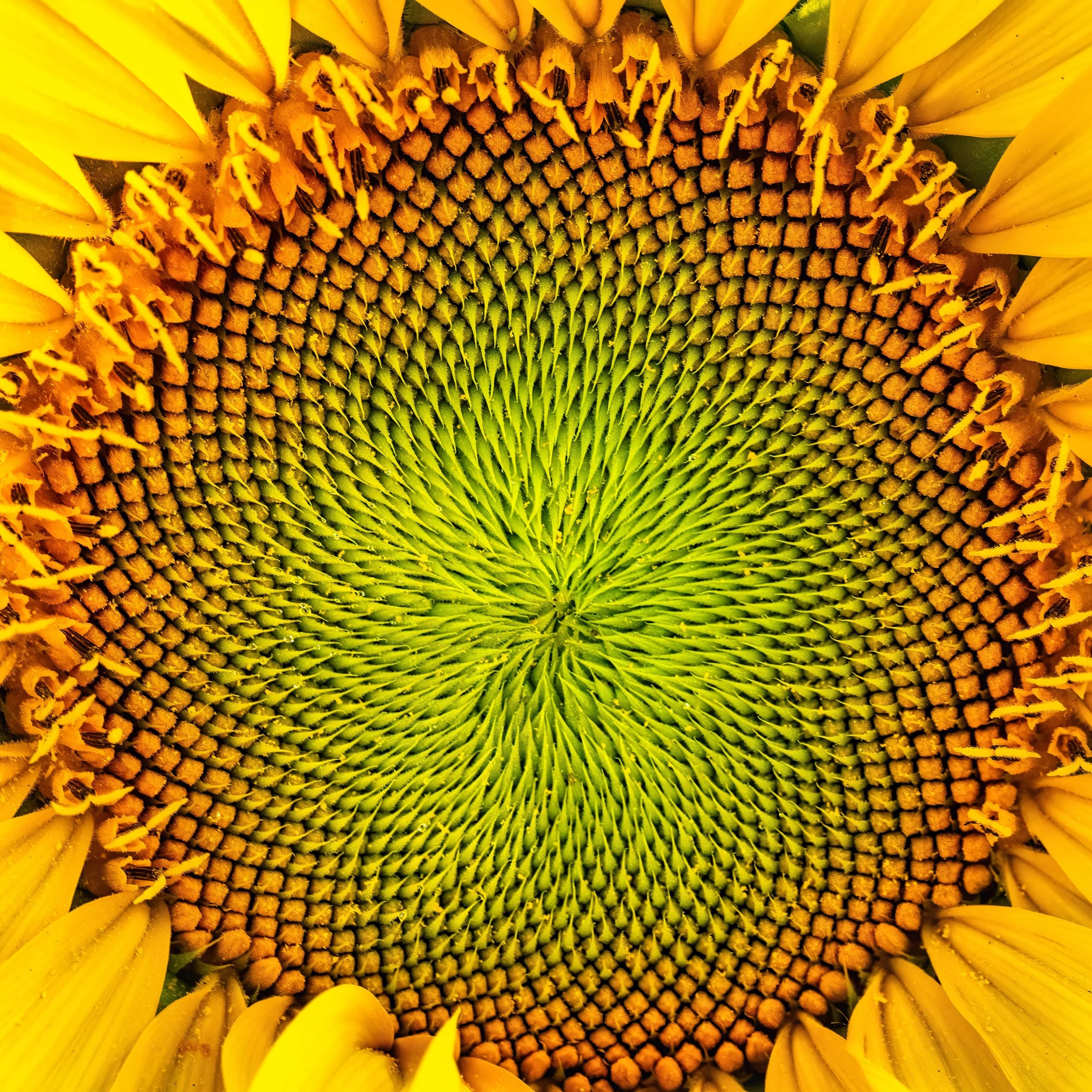
Sunflower center, close-up, photo by Tom Fisk (pexels.com_@tomfisk)
In nature, growth is consistently in proportions that can be traced back to the golden ratio; In a snail’s shell, the chambers are added at a constant angle close to the ’golden’ one. Look closely at a sunflower head, and you'll find two sets of spirals curving in opposite directions. Count them, and you'll almost always land on two consecutive Fibonacci numbers: a mathematical formula where each number is the sum of the two preceding it. This is usually 34 and 55, sometimes 55 and 89.
The flower isn't doing maths. It's just growing the most efficient way it can to squeeze as many seeds into the flower head, the efficiency of the Fibonacci's sequence written in seeds. This is extended into the world of engineering, where wind turbines are engineered using the same sequence to achieve the most efficient air flow.
In the world of art, these proportions are used across the great masters; encoded by the human hand, the same ratios nature arrives at through natural growth. Da Vinci’s Vitruvian Man is often linked to the golden ratio, and a golden grid can be seen to frame the perfect composition of Mona Lisa’s face on the canvas. Historians still debate whether the golden ratio was intentionally used in The Last Supper or if it was simply Da Vinci’s skilled eye for composition, while Salvador Dali’s ‘Sacrament of the Last Supper’ places a giant golden ratio dodecahedron intentionally behind the table.

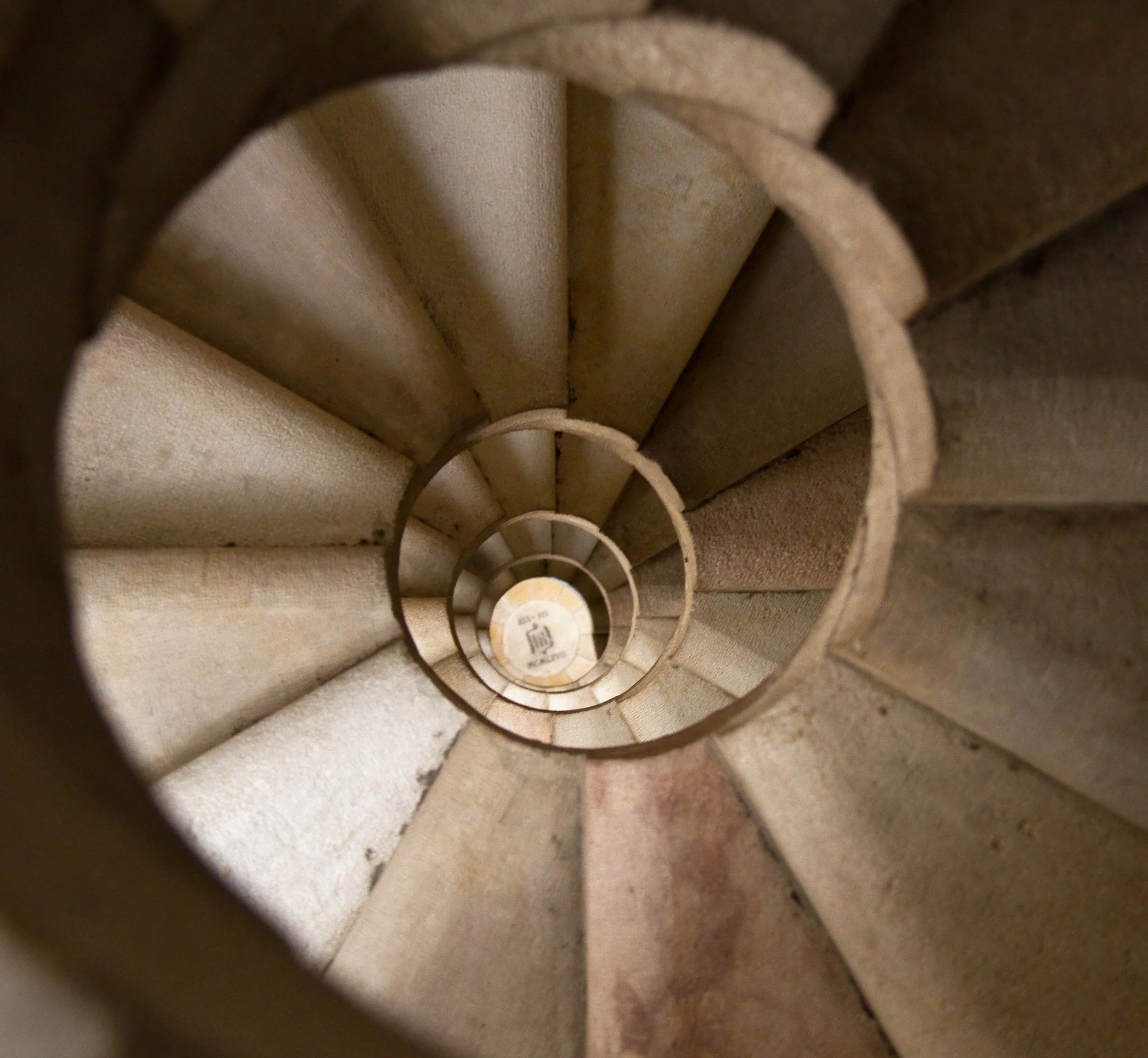
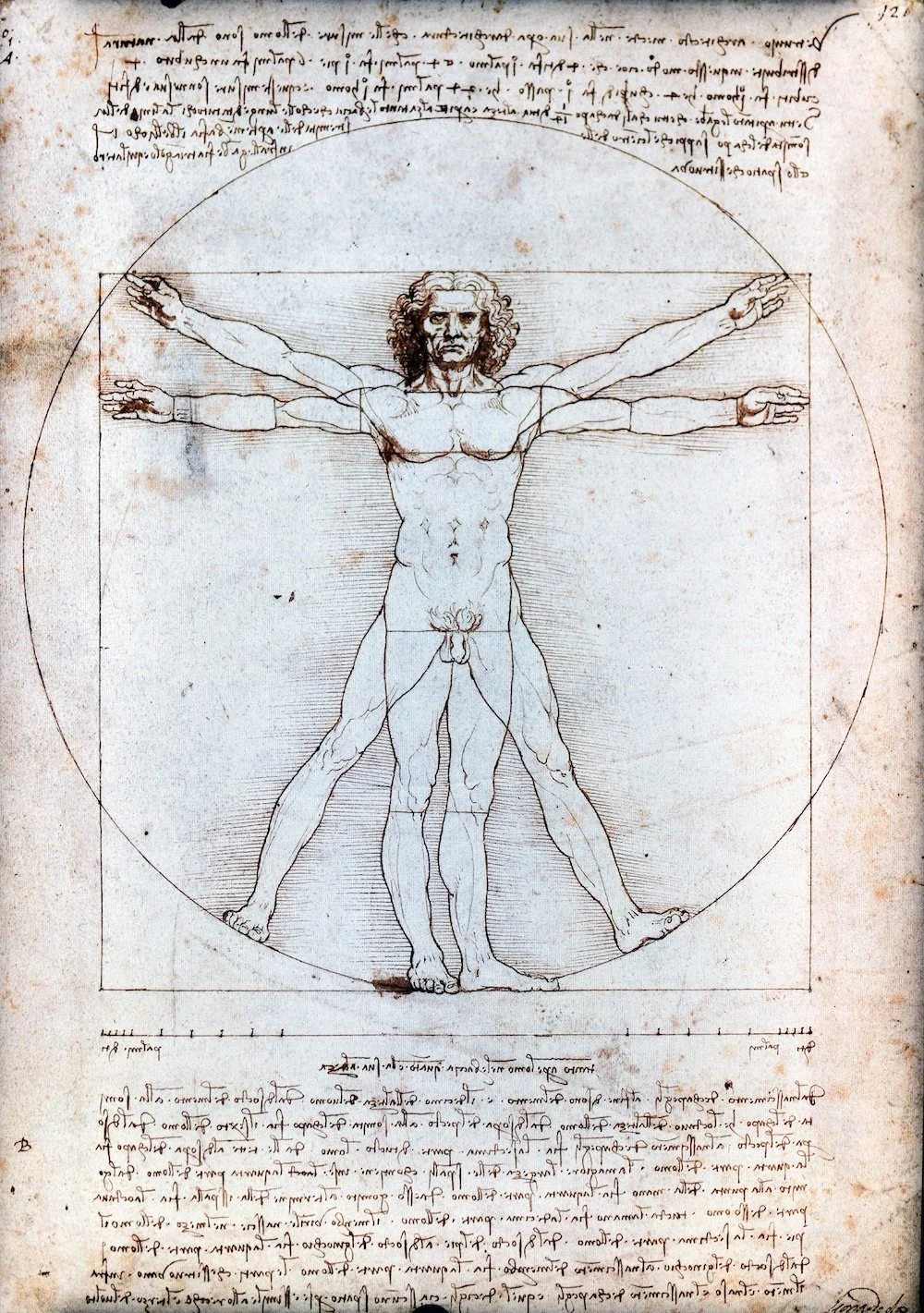
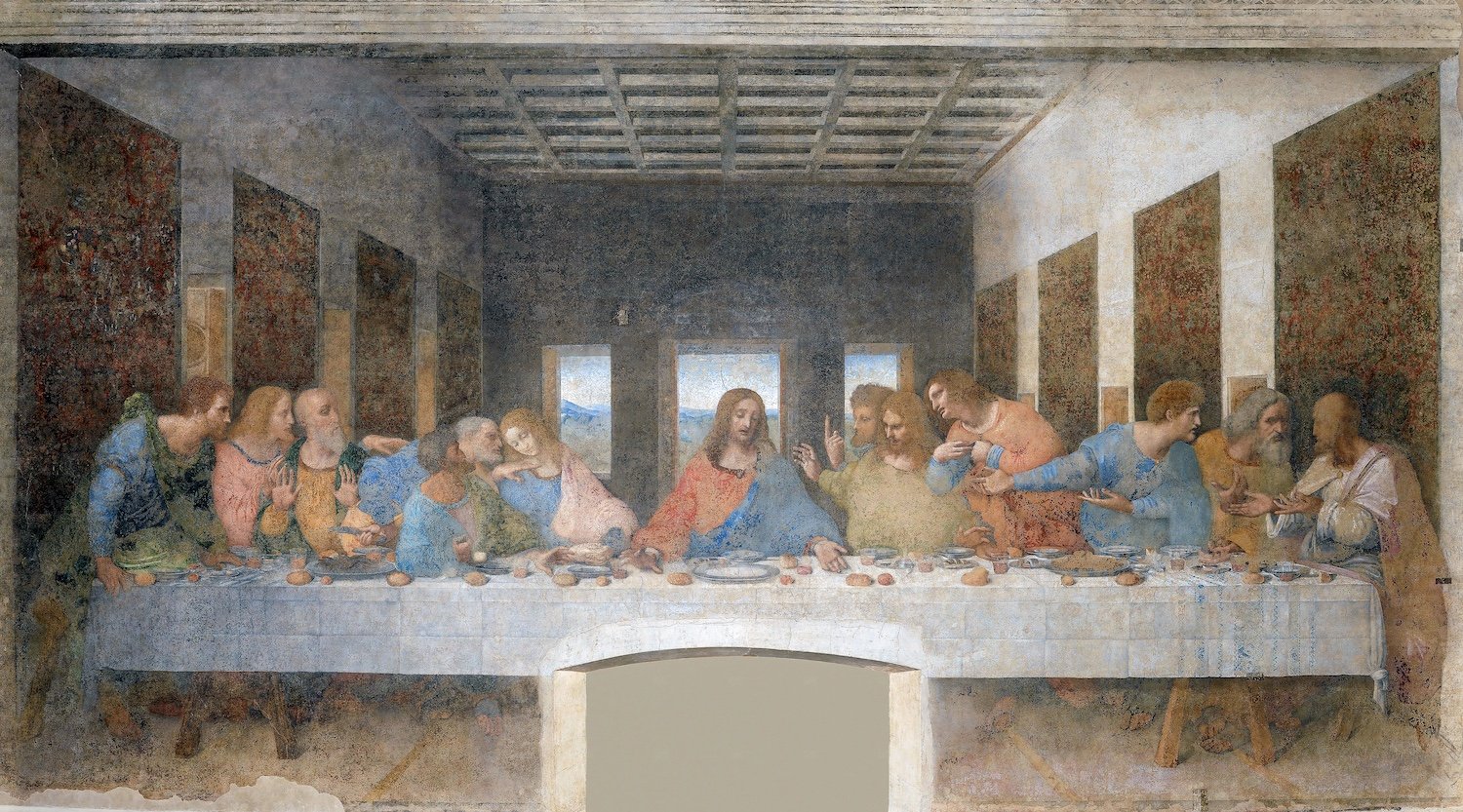
Architecturally speaking, if you enter a building that makes you want to linger, there's a good chance the golden ratio is quietly at work, in the proportions of a room, the rhythm of a staircase, or the pitch of a facade. Look at the ancient pyramids in Giza, the Parthenon, the pleasing facade of Notre Dame Cathedral, or Gaudí’s spiral stairwells of the Sagrada Família, though scholars dispute how many of these were deliberate.
Architects still reach for tessellation today when they want a space to feel less designed and more discovered, as if it had simply grown that way. Contemporary buildings use tiled, perforated, and tessellated repeating geometric units for the same effect. Escher's tessellations, built on symmetry, translate from paper to glass, steel, and concrete now.
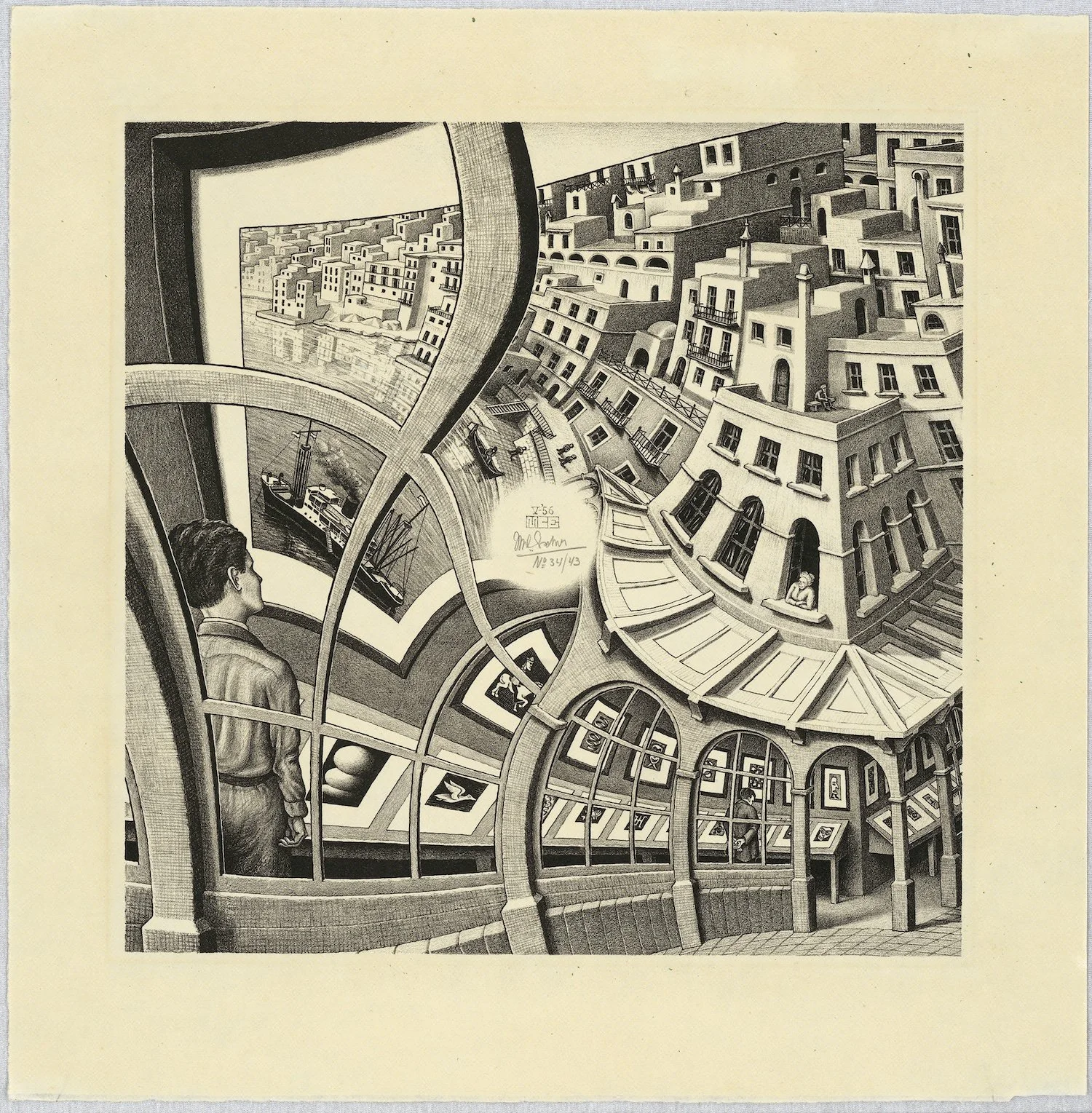
M.C. Escher Print Gallery, 1956 Lithograph, 319x317 mm M.C. Escher Heritage Collection, The Netherlands All M.C. Escher works © 2026 The M.C. Escher Heritage, Baarn, The Netherlands All rights reserved www.mcescher.com
Escher was translating nature’s language back to us, speaking the same language as pinecone scales or broccoli florets. It's not that art borrowed from maths, or that maths borrowed from nature. They were never separate. Maths is a language spoken in art, design and creativity, and is spoken by nature to effortlessly create balance, harmony and visual appeal.
A-level projects come and go, and I remain proud of the grade, but for me the real mark of that project was that I see the magic of Phi in a shell, a fresco, a building and in the world of M.C. Escher.
References
M.C. Escher: The Exhibition — Somerset House (until 6 Sept 2026)