workplace

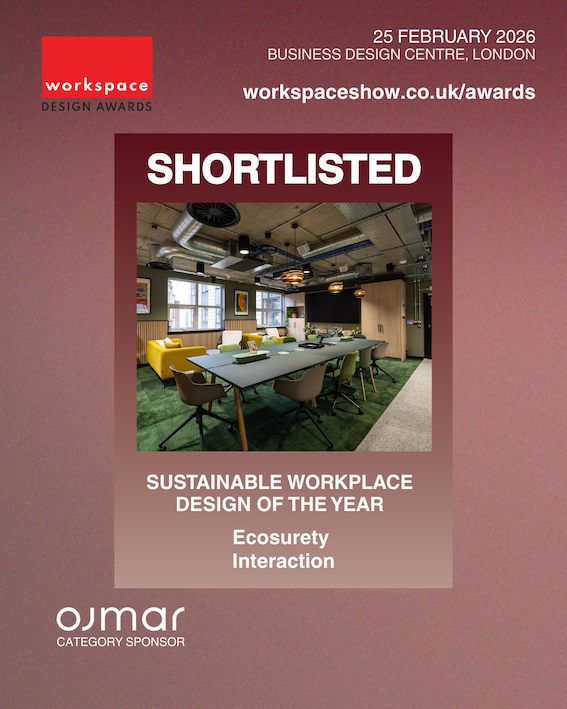
Best in Workplace Design Recognised in 2026 Workspace Design Awards Shortlist

Best in Workplace Design Recognised in 2026 Workspace Design Awards Shortlist

The 2026 edition of Workspace Design Show has officially revealed the shortlisted projects for its newly launched Workspace Design Awards, recognising outstanding achievements across workplace design, innovation, sustainability, experience and adaptability.The shortlisted projects showcase the breadth and depth of talent shaping today’s workplaces across the UK and Europe,from smart offices and large-scale corporate headquarters to flexible co-working environments and future-focused concept designs.Winners from all categories will be announced liveat the Workspace Design Awards Ceremony & Networking Party, taking place on Wednesday 25 February 2026 from 5:30pm to 7:30pm. The evening will bring together designers, architects, occupiers, and industry leaders to celebrate the most creative projects in workplace design. The networking party is also proudly sponsored by Mute, who is the main Headline Sponsor of the awards.

Chief People Priorities for 2026 - A Biophilic Response.

Chief People Priorities for 2026 - A Biophilic Response.

At its core, Biophilic Design is not about plants or aesthetics. It is about designing the conditions in which humans function best, drawing on our innate biological responses to light, nature, materiality, rhythm, refuge, connection and sensory balance. In other words, it provides a tangible way to turn cultural intent into lived experience.

Culture as an operating system is expressed not only through policies and leadership behaviours, but through the environments people inhabit every day. Spatial hierarchy, access to daylight, acoustic control, choice and autonomy, visibility, and opportunities for connection all send powerful signals about what is valued. A workplace that offers psychological safety, dignity, and agency does not rely solely on behavioural KPIs to reinforce culture — it embeds it into the system itself.

Similarly, as leaders become the primary interface of culture, the environments they operate within either support or undermine their ability to lead well. Biophilic workplaces reduce cognitive load, stress and fatigue, enabling better judgement, emotional regulation and decision-making. This matters when leaders are being asked to hold complexity, have difficult conversations and support mental health alongside performance. Capability does not exist in isolation from context.

CPOs’ deliberate reframing of wellbeing as performance infrastructure also aligns strongly with biophilic principles. Decades of research link exposure to natural light, views of nature, sensory variability and restorative spaces with improved concentration, faster recovery from stress, reduced absenteeism and stronger engagement. This is not a trade-off between care and results; it is a performance strategy grounded in human biology. READ on

A not quite fatal world

A not quite fatal world

Who would want to live in a world that is not quite fatal?

So said ecologist Paul Shepherd in 1958, and quoted by Rachel Carson in “Silent Spring”. 

The Biophilic Design Conference this year has a theme of Policy, Place, Planet – Biophilic Design for a regenerative future. It has this theme for a reason. 

We are living in a ticking time bomb. Our planet is heating up, our climates are changing all over the world, our food security is at risk, our physical health is challenged not just by lifestyle and town planning but also by air and sound pollution inside and outside of the home and workplace, our crops are sprayed, our bees are dying, we are losing our pollinators, our skies are quieter, our living world is struggling to breathe and we are the culprits.

When I first learnt about Biophilic Design, it seemed to me a concept which if applied globally and on all facets of society we could go some way to reverse the ills we have inflicted onto ourselves and our planet. 

READ ON… 

Workspace Design Awards - Open Sept 1 2025

Workspace Design Awards - Open Sept 1 2025

Workspace Design Show (25 – 26 February 2026, Business Design Centre, London)announces the launch of the Workspace Design Awards, a brand-new awards programme dedicated exclusively to celebrating outstanding workplace design and its impact on business. The 2026 London edition of the Workspace Design Show will see the first awards take place on 25 February 2026, giving recognition to architectural innovation, user experience and creativity that is redefining how, where, and why we work.  

Designs with Distinction - Workspace Design Awards to Launch at the 2026 London Edition of Workspace Design Show!

Designs with Distinction - Workspace Design Awards to Launch at the 2026 London Edition of Workspace Design Show!

Workspace Design Show (25 – 26 February 2026, Business Design Centre, London)announces the launch of the Workspace Design Awards, a brand-new awards programme dedicated exclusively to celebrating outstanding workplace design and its impact on business. The 2026 London edition of the Workspace Design Show will see the first awards take place on 25 February 2026, giving recognition to architectural innovation, user experience and creativity that is redefining how, where, and why we work.  

Workspace Design Show is a must-attend event for the commercial interiors community and this new awards programme expands the Workspace Design Show offering, creating a new platform to honour both completed workplace projects and visionary designs.  

What sets the Workspace Design Awards apart is its commitment to real end user impact and evaluation, as such the judging panel will be exclusively composed of corporate occupiers, developers, and project management firms, bringing a rounded assessment of entries. Judges include, Steve Wright, Director of Workplace Design & Change Management, GSK, Helena Hughes, Director, Global Occupier Services, Savills, James Stratford, Head of Workplace, AXA XL, Sarah Audsley, Partner, Knight Frank and others. 

The awards ceremony will be hosted by Alys Bryan, Editor, Design Insider and Anna King, CEO and Founder, Informare and will be held in a beautifully designed feature space within the show, brought to life by leading architects and designers. Guests can expect an evening of celebration, complete with drinks, canapés, and a lively atmosphere, coupled with the opportunity to connect with the industry. 

READ ON and ENTER THE AWARDS

SURFACING BRANDS WITH SOUL - a report on the Surface Design Show 2024

Get your jazz hands ready and lets celebrate sustainable design. Surface - the annual design showthat takes place in London’s Design hub in Islington each February, was a vibrant showcase ofbrands - international, as well as domestic, being creative in their mission to help our planet.

 As Nickie West, Managing Director of Surface Design Show explains: "The theme for 2024focuses on the ambition to design well while doing good – with a conscious effort to protect our planet by aiming for zero waste manufactures and sustainable alternatives.

The natural world remains a key influence on the design industry, inspiring new techniques andprocesses, as well as offering a wealth of material substitutes."

Surface Design Show 4- 6 February 2025, London

Surface Design Show  4- 6 February 2025, London

EMBRACE THE WORLD OF MATERIAL INNOVATION

Join thousands of professionals from across the A&D sector, and be inspired by 180 exhibiting companies, dedicated to furthering material innovation.

4-6 February 2025 at the Business Design Centre, Islington, London.

Pioneering Research study aims to prove The Value of Biophilic Design in the workplace.

Pioneering Research study aims to prove The Value of Biophilic Design in the workplace.

Biophilic Design - the use of plants in providing cleaner air and connecting us with nature, coupled with natural light, certain colours, acoustics, and fragrances - has long been proven to have a positive effect on both mental and physical well-being. For over 25 years, expert horticulturalists Benholm Group have pioneered the use of plants for interiors, not only as an eye-catching focal point, but also to promote the natural health benefits that being surrounded by plants can bring.

This concept has now been brought to the forefront of a new research study led by Sustainability Lead at House of Commons + PhD Researcher, Joyce Chan-Schoof to question if we can apply a social and economic value to biophilic design.

Can biophilic design add value to the workplace - not only through improving air quality and aesthetics, but can it have a tangible impact on employee productivity, retention, absenteeism, satisfaction, engagements and up-skilling?

Biophilic Design for the Workplace

Biophilic Design for the Workplace

The benefits of biophilia are increasingly being accepted by workplace designers and managers as not only adding to the visual attractiveness of a workspace, but also by enhancing the wellbeing and happiness of its staff and visitors. We all know that this in turn results in increased productivity, creativity, attendance rates, stress levels and fatigue, and ultimately increased workplace performance. Read more…

Even mainstream media is saying how nature is good for you

Even mainstream media is saying how nature is good for you

How many times have I written, “it’s not rocket science…nature is good for you?” Well for the umpteenth time, I’m saying it again, and so is NBC. A recent NBC article discusses why natural scenery improves your mood and makes you more productive. They quote the results of an article published in the Journal of Environmental Psychology which outlines the benefits of having just 40 second green views can have on sustaining attention, less errors and more consistency. This is because it boosts sub-cortical arousal and cortical attention control.

Preventing the £100 billion loss to the British Economy

Preventing the £100 billion loss to the British Economy

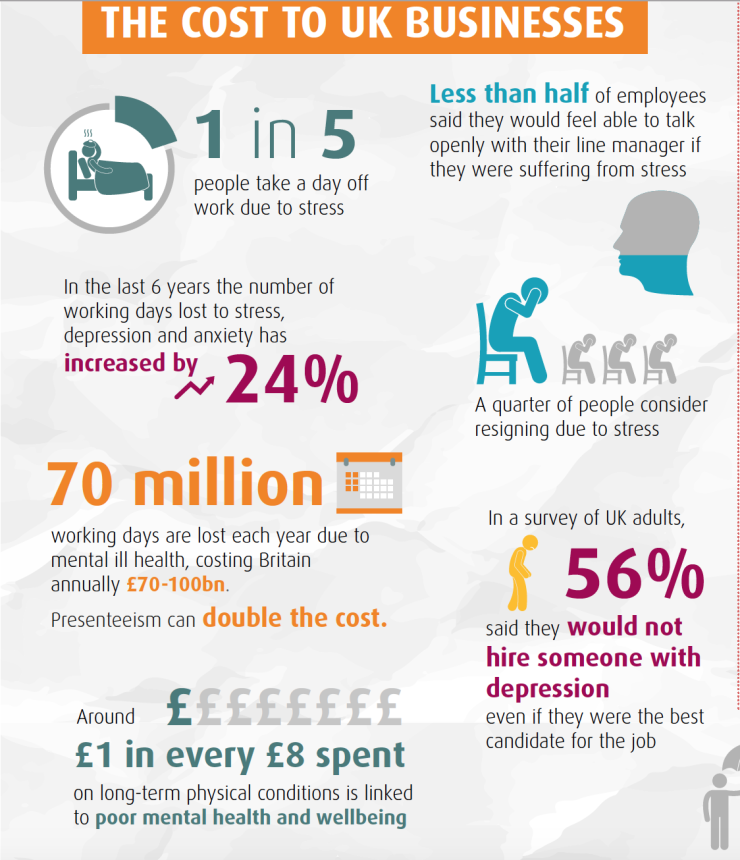
70 million working days are lost each year due to mental ill-health, costing Britain £70-£100 billion, according to the Mental Health Foundation, with a 24% increase to the number of working days lost in the past 6 years the number of working days due to stress, depression and anxiety. How do we improve this? The solution is closer and cheaper than you think…