In The Symbolism of Habitat: An Interpretation of Landscape in the Arts, Jay Appleton explores the relationship between human beings and the environments they inhabit, introducing the concepts of prospect, refuge and hazard. Appleton’s work offers a fascinating perspective on why certain landscapes, buildings and views attract us, while others make us feel exposed, uncomfortable or confined. Drawing on evolutionary thinking, he suggests that our responses to landscapes may be connected to the opportunities they offer us to see without being seen, to observe our surroundings while retaining somewhere to retreat, and to recognise and negotiate potential hazards.
For readers familiar with Biophilic Design, the concept of prospect and refuge will already be recognisable. It has become an important consideration in the design of buildings, interiors and outdoor spaces, informing how we create environments that balance openness and outlook with shelter, privacy and a sense of security. A window overlooking a garden, a sheltered seating area beneath a tree, a woodland clearing or a quiet corner in a busy workplace can all offer different expressions of this relationship.
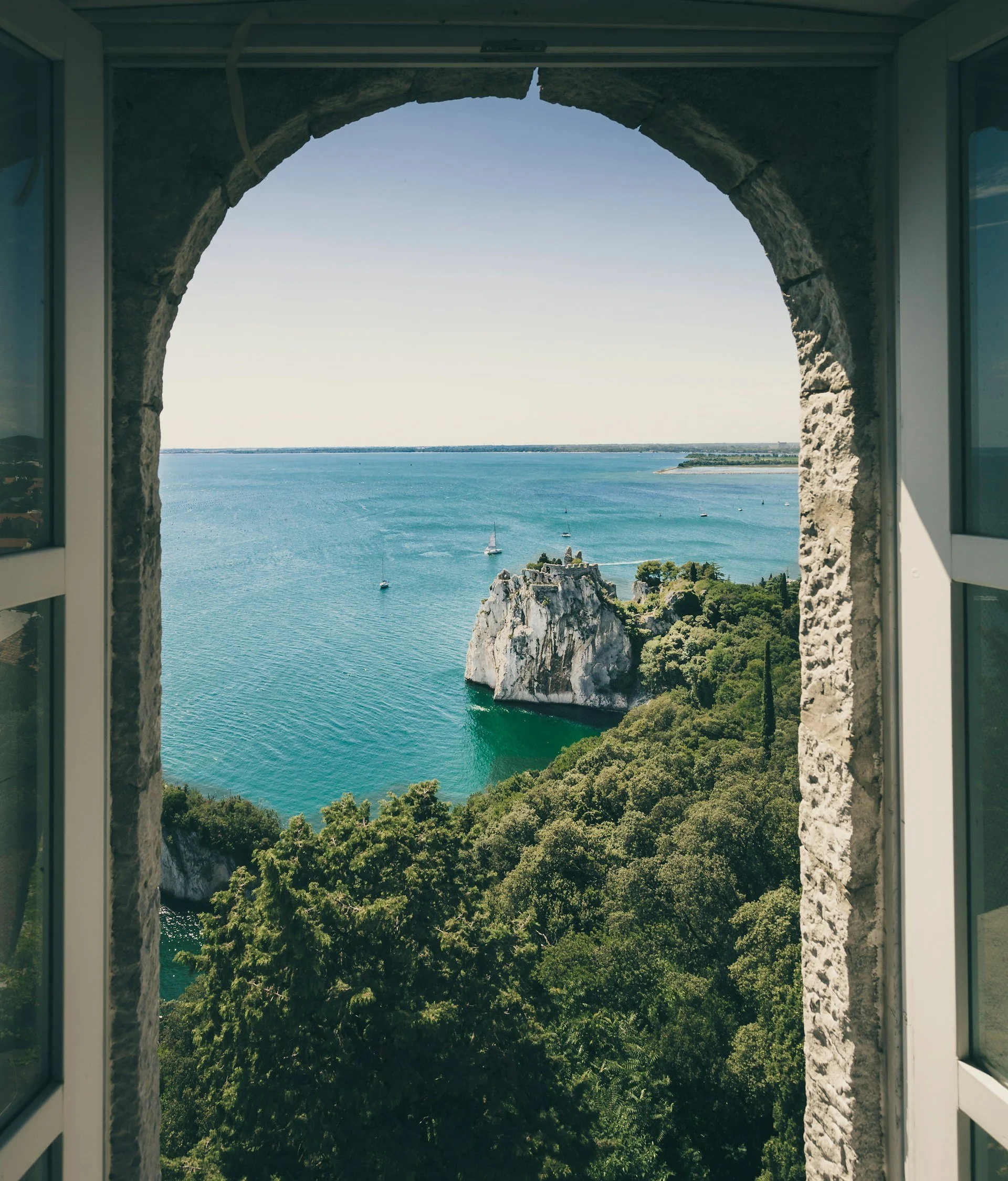
Good design allows us to choose when to engage with our surroundings and when to withdraw from them. What makes Appleton’s book particularly interesting, however, is the breadth of his observations. He looks beyond the natural landscape to consider how prospect, refuge and hazard are expressed through painting, architecture and the design of entire urban environments.
One of the most intriguing aspects of Appleton’s argument is his interpretation of buildings as habitats in their own right. The shape, height, mass and arrangement of a building can influence not only what we see, but also how we perceive the building and respond to it. Architecture communicates something about our relationship with a place before we even enter it. A building may appear welcoming and accessible, or imposing, defensive and difficult to penetrate. These impressions are not necessarily accidental; sometimes they reflect the very purposes for which the building was constructed.
Appleton offers the example of an old textile mill, whose fortress-like appearance can be understood in the context of the social tensions surrounding industrialisation. The introduction of new machinery in the late eighteenth century threatened the livelihoods of textile workers, and organised machine-breaking became one of the hazards against which mill owners sought to protect themselves. The resulting architecture could therefore be both an expression of power and a practical response to a perceived threat. The building did not merely look fortified: its physical form reflected a genuine concern with security. Appleton’s interpretation invites us to consider how architecture embodies the fears, priorities and power relationships of the society that produces it.
He makes a related observation about large shopping centres, whose imposing external walls can communicate exclusion rather than invitation. Using the old Broadmarsh shopping centre in Nottingham as an example, he describes small openings in the wall that are not immediately apparent to a passer-by. The overall impression is of a structure designed to keep people out, rather than one that encourages engagement with the surrounding city. It is interesting to note there has been a massive shift locally. Nottingham City Council opened the new "Green Heart" urban park on a portion of the site in September 2024, featuring trees, a marsh pond, and rain gardens.
Appleton suggests that large, apparently impenetrable façades can be disturbing because they threaten our perceived opportunities for escape. They can make us feel trapped or claustrophobic, particularly when their scale and solidity seem to deny us any clear route through or beyond them. At a distance, a substantial wall may simply communicate separation; experienced at close quarters, however, it can feel oppressive because we become more conscious of our inability to see through it or move freely around it.
The prison wall represents an extreme expression of this effect. Its purpose is explicitly to restrict movement, deny escape and separate those within from the outside world. Yet Appleton also observes that architectural features associated with defence and surveillance can acquire an aesthetic appeal when their original function becomes less relevant. Towers, turrets, elevated vantage points and fortified forms have long been incorporated into civic and monumental architecture, where they can evoke strength, security and the pleasure of looking out across a landscape. The same architectural language can therefore produce very different responses depending on our position in relation to it, our ability to move through it and the possibilities it appears to offer.
These observations have particular relevance for contemporary urban design. A building can be visually striking yet feel hostile at street level; a public space can appear expansive yet leave people feeling exposed. Conversely, an environment can offer a sense of shelter without becoming restrictive, allowing people to enjoy an outward view while retaining a sense of control over their immediate surroundings. From a Biophilic Design perspective, its form and spatial arrangement should be questioned to see if it supports our ability to feel comfortable, orient ourselves and engage with the world around us.
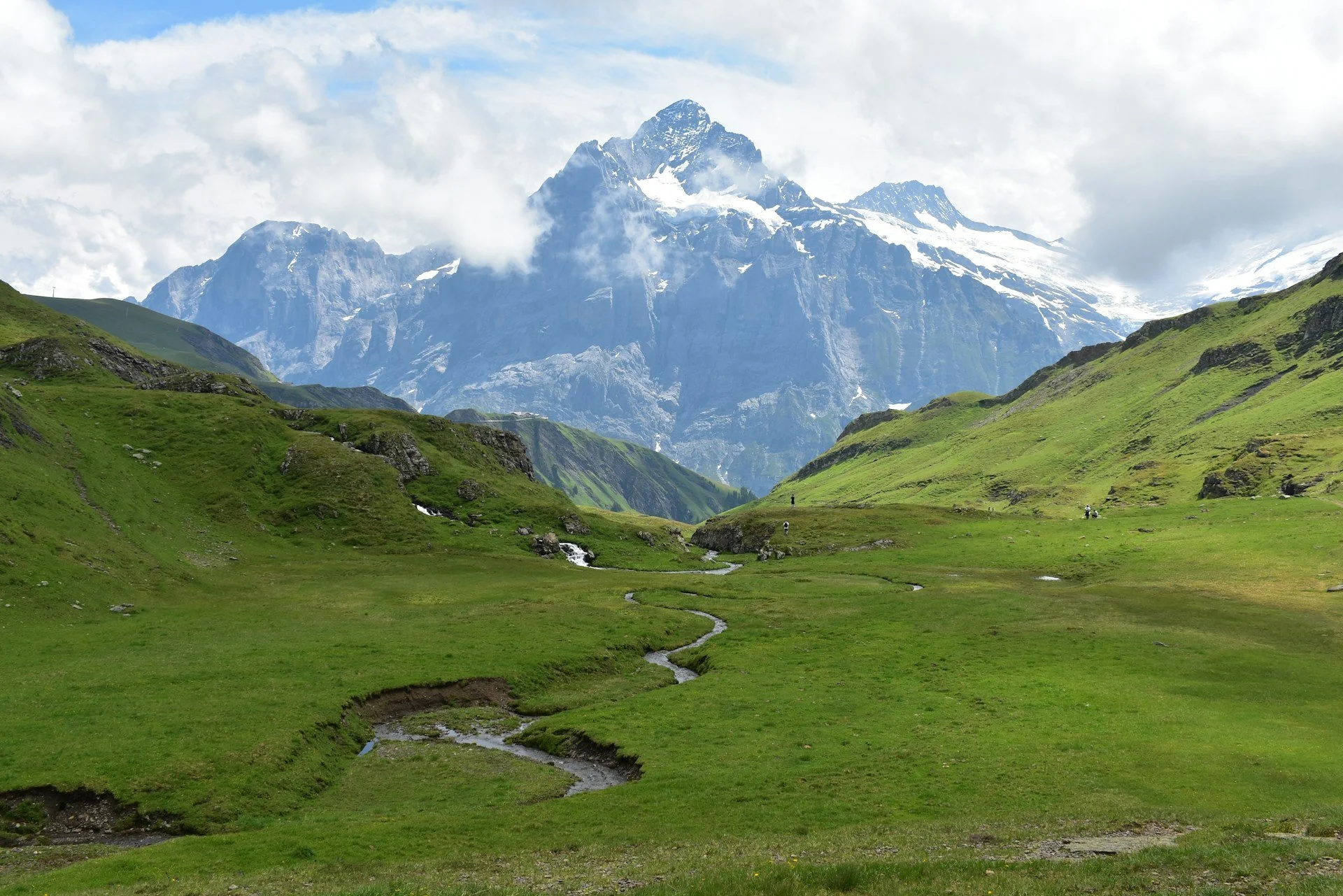
Appleton finds equally compelling expressions of prospect and refuge in landscape painting. He draws attention to a familiar composition in which the picture is divided, broadly speaking, between a sheltered area and an open vista. On one side, perhaps beneath trees or within a wooded enclosure, we find the suggestion of refuge: a cottage, a shaded path or a protected foreground. On the other, the eye is drawn towards a distant horizon, an expansive valley or an opening in the landscape. The painting offers both somewhere to imagine ourselves being sheltered and somewhere to look towards. We are invited to inhabit the scene in our imagination, enjoying the security of one part of the composition while anticipating the possibilities suggested by the other.
The arrangement is particularly effective because prospect and refuge are not necessarily competing experiences. They can complement one another, creating a landscape that feels simultaneously secure and full of possibility. The cottage beneath the trees offers a place of retreat, while the open horizon suggests movement, discovery and freedom. The viewer is not simply looking at a landscape; the composition establishes a relationship between the observer and the world depicted. Appleton’s analysis gives us another way to understand why certain landscape paintings feel so inviting, and why the placement of a tree, a building, a path or an opening can transform the experience of an entire scene.
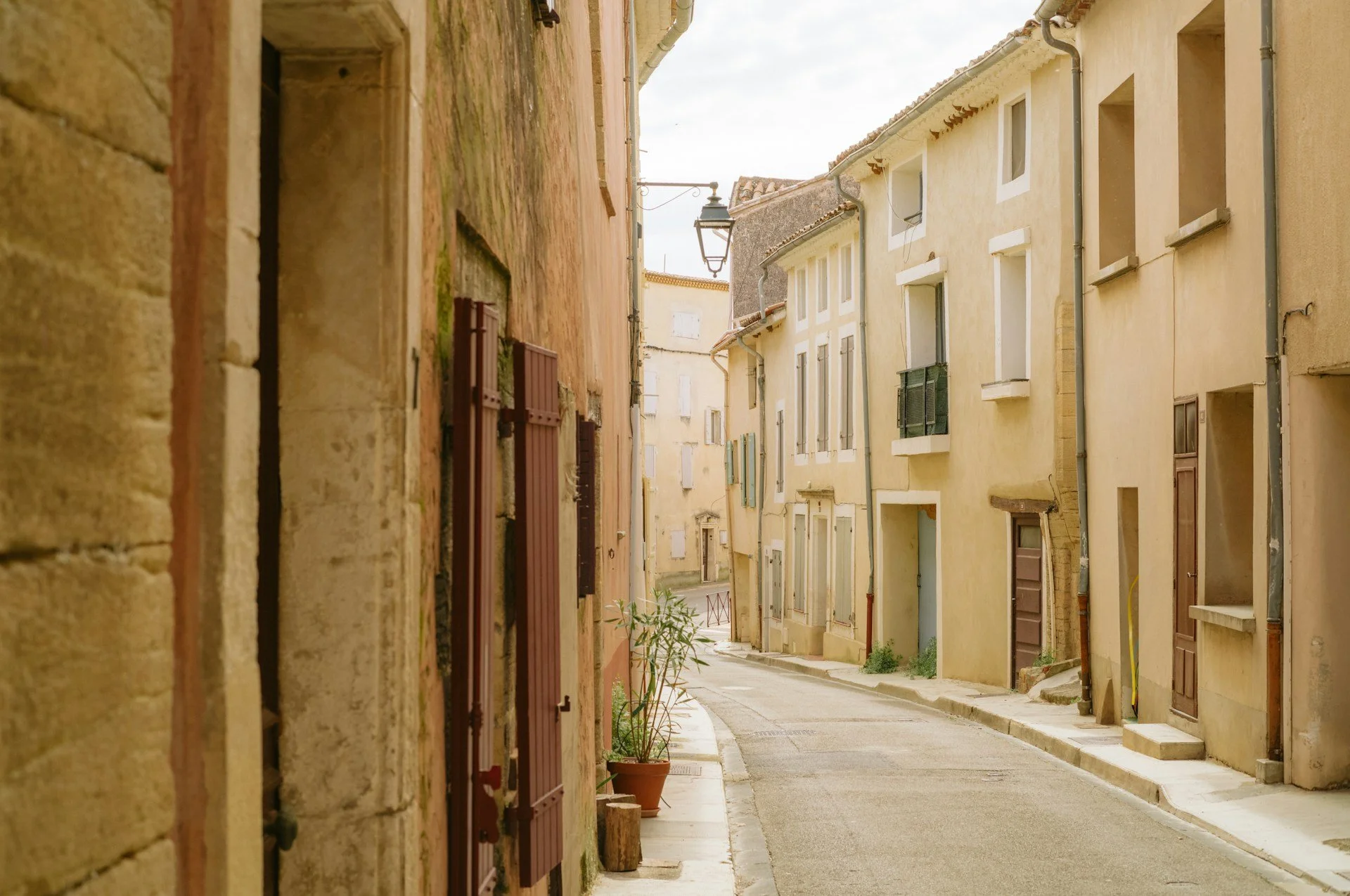
Nor are these principles confined to paintings or carefully composed gardens. Appleton identifies similar spatial relationships in the experience of moving through historic French towns, where pathways curve between four-storey eighteenth-century buildings. As we follow a winding street, our view is partially obscured by the buildings on either side. We cannot see the entire route ahead, but we are drawn forward by the possibility of discovering what lies beyond the next turn. The solid façades create a sense of enclosure, while the curving space between them offers a prospect that unfolds gradually as we move.
Appleton compares this experience with the dramatic landscape of glaciated valleys in the Alps. The scale and physical features are entirely different from those of a French street, yet a similar spatial arrangement can stimulate our anticipation. In both settings, the eye follows a curving, linear opening flanked by substantial masses that obscure part of the view. We are given enough information to understand the direction of the space, but not enough to know precisely what awaits us. The result is a sense of expectation: we want to continue, to see around the bend and to discover the next part of the landscape. It is a reminder that our experience of place is shaped not only by what is visible, but also by what remains just beyond our field of vision.
This relationship between what is revealed and what is concealed also connects prospect and refuge to light. I recently explored this subject in a podcast conversation with Dr Shelley James, discussing how light can be used to enhance prospect and refuge in our built environments. Light influences where we look, what we notice and how we understand the spaces around us. A well-lit view can draw us towards a window or an opening, while softer illumination can create a more sheltered, intimate atmosphere. The relationship between brightness and shadow can help establish a hierarchy of spaces, making some areas feel open and expansive while others offer a quieter place to retreat.
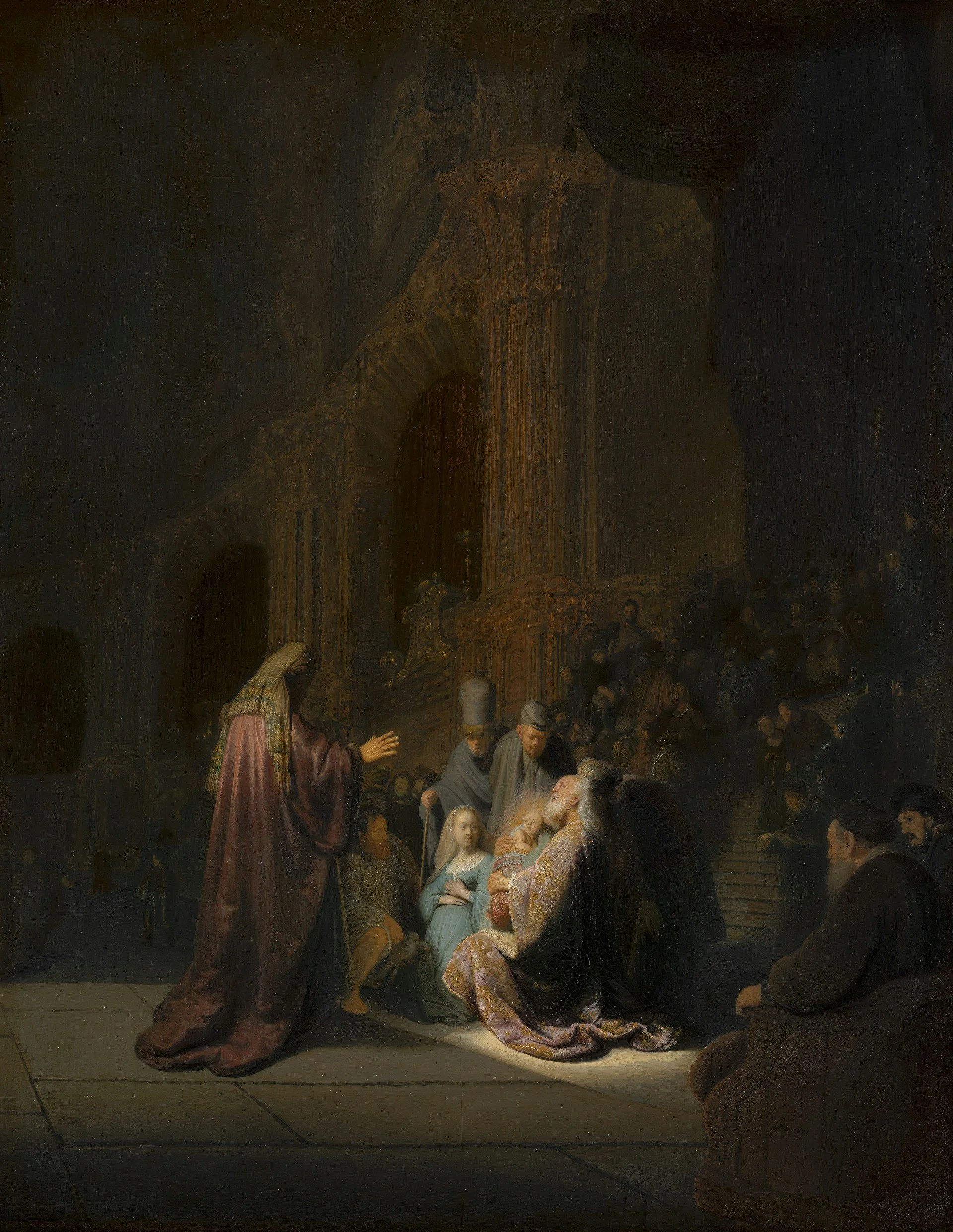
Simeon's Song of Praise by Rembrandt van Rijn from 1631
Appleton’s discussion of chiaroscuro, the technique of contrasting light and shade, provides an interesting artistic parallel. Painters such as Caravaggio and Rembrandt (such as illustrated here Simeon's Song of Praise by Rembrandt van Rijn from 1631) used dramatic differences in illumination to direct attention, create depth and heighten the emotional impact of a scene. Brightly illuminated figures and objects tend to attract our attention, while darker areas can conceal detail and suggest spaces waiting to be explored. Through this interplay, the painter can establish a focal point, frame a view or create a sense of mystery. Light does not simply reveal the subject; it shapes the viewer’s experience of the entire composition.
The same principle has practical implications for the design of interiors and buildings. Daylight, the placement of windows, the contrast between illuminated and shaded areas, and the relationship between indoor and outdoor views can all influence how we experience a space. A brightly lit room with a clear view beyond may provide a sense of prospect, while a more softly lit seating area, positioned away from the main circulation route, can offer refuge. Neither condition is inherently better than the other. What matters is how they work together, and whether the environment provides people with meaningful choices about where to look, where to sit and how much stimulation to experience. This is particularly important in spaces used by people with different sensory preferences, where the ability to find shelter from excessive light, movement or visual activity can be as valuable as access to openness and daylight.
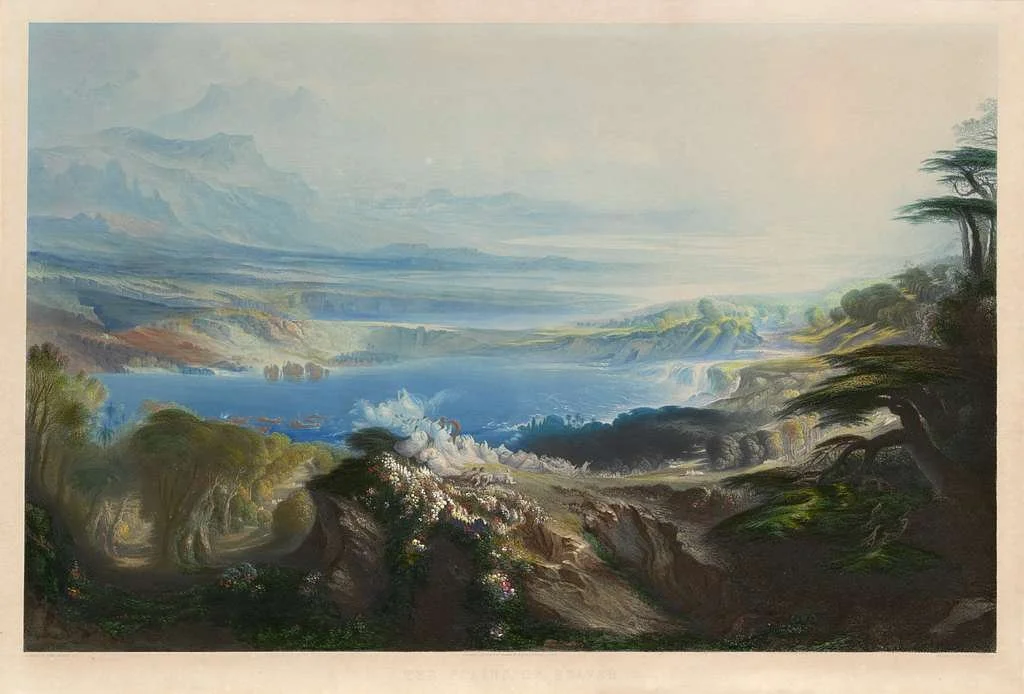
The Plains of Heaven by John Martin,
Appleton’s exploration of landscape painting also resonates with the work of environmental psychologists Stephen and Rachel Kaplan, whose concept of mystery describes the appeal of environments that suggest there is more to discover. A view can be engaging when it offers clues about what lies beyond, encouraging us to explore further rather than presenting everything at once. Appleton discusses the painting The Plains of Heaven by John Martin, a dramatic landscape in which layers of vegetation, trees, shadows and pathways create a rich sequence of possible destinations. The eye is drawn through the scene along identifiable routes, moving between areas of shelter and openings that reveal more of the landscape. In the distance, water appears in contrasting forms, from a turbulent cataract to a tranquil lake, while a pyramid-shaped peak offers a further point of visual interest. The landscape continually hints at something beyond what is immediately visible.
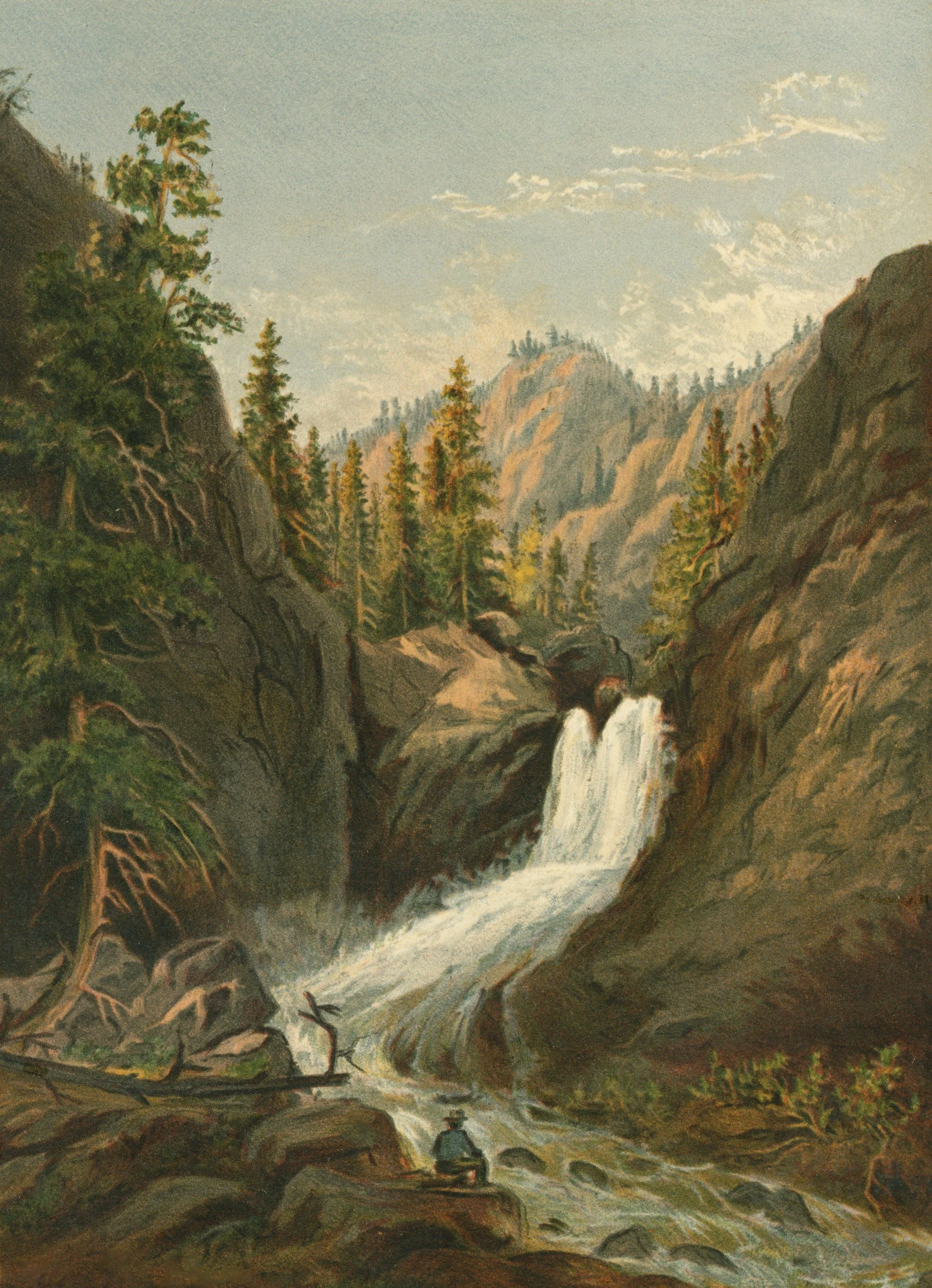
Boulder Park, Boulder Canon, by Helen Henderson Chain.
This layering creates a powerful sense of mystery. The scene offers enough visual information to invite us in, while withholding enough to sustain our curiosity. We can follow the pathways with our eyes, imagine moving between the different forms of refuge and anticipate what might be discovered beyond the next cluster of trees or distant rise. The composition provides both a sense of orientation and the promise of further experience. It is this balance between what we know and what we have yet to discover that makes the landscape so compelling. You can see something similar in the image here: Boulder Park, Boulder Canon, by Helen Henderson Chain.
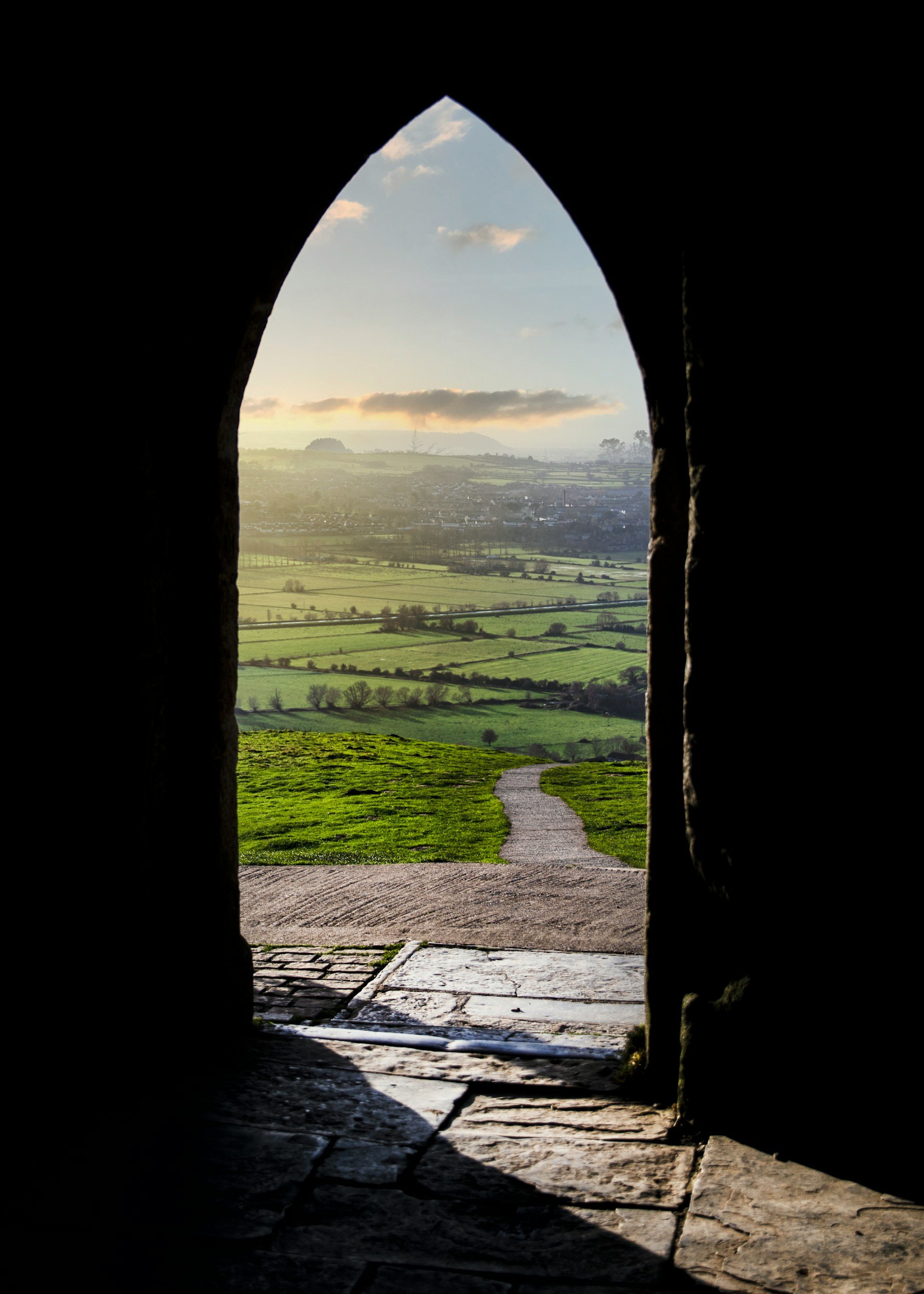
For Biophilic Design, the relationship between prospect, refuge and mystery offers a useful way to think about the quality of our everyday environments. A landscape does not need to be vast or spectacular to offer these experiences. A garden path that curves behind a planting bed, a view framed by trees, a sheltered bench overlooking a meadow or a window that looks out towards a changing sky can all create opportunities for discovery while retaining a sense of security. In an interior, the same qualities might be achieved through the arrangement of furniture, the positioning of openings, the use of layered lighting or the creation of spaces that offer different degrees of enclosure.
There is also an important distinction between designing a space that provides refuge and designing one that makes people feel confined. As Appleton’s observations of imposing buildings suggest, enclosure alone does not guarantee comfort. A sheltered space is more likely to feel restorative when people retain a sense of agency: when they can see something of their surroundings, understand how to leave, choose their level of engagement and move between different spatial conditions. Equally, prospect is not about maximising openness. A completely exposed environment may leave some people feeling vulnerable, while a framed view can offer visual connection without sacrificing a sense of shelter.
Appleton’s ideas help explain why a particular view draws us in, why a monumental façade can feel threatening, why a winding street makes us want to continue and why the interplay of light and shadow can transform our experience of a place. Prospect and refuge are not merely abstract concepts to be applied during the design process; they are qualities we encounter, interpret and respond to as we move through the world.
For those of us working in Biophilic Design, this is a valuable reminder that our relationship with nature is also shaped by the way environments allow us to see, explore, pause, retreat and feel connected to something beyond ourselves.
For some inspiration about how to create Prospect and Refuge in spaces treat yourself to a £4.99 download of Biophilic Design Landscape Architecture for examples, theory, science and more. https://journalofbiophilicdesign.com/shop/journal-of-biophilic-design-issue-20-landscape-architecture-ebook