
landscape

Finding Harmony: a King’s Vision

Finding Harmony: a King’s Vision

Designers are always searching for ideas that endure — ideas rooted not only in aesthetics, but in how humans live, heal and belong within the natural world. That is why viewing Finding Harmony: A King's Vision matters now. The film brings together decades of thinking from King Charles III about our relationship with nature, communities and the built environment — themes that sit at the heart of biophilic design.

For architects, landscape architects and urban designers, the documentary offers more than a portrait of a monarch’s environmental advocacy. It is, in many ways, a historical record of ideas that anticipated today’s conversations around regenerative design, nature-based solutions and the social value of green space. In a moment when the profession is grappling with climate, wellbeing and how cities must evolve, the film provides context — and a reminder that these principles have deep roots.

Designers should watch it not simply as a documentary, but as a source of hope and inspiration. It shows that reconnecting people, place and nature is not an abstract theory but a lived practice — one that can shape farms, neighbourhoods, prisons, schools and entire communities. At a time when the future can feel uncertain, the film argues that harmony with nature is still possible, and that design has a crucial role in achieving it.
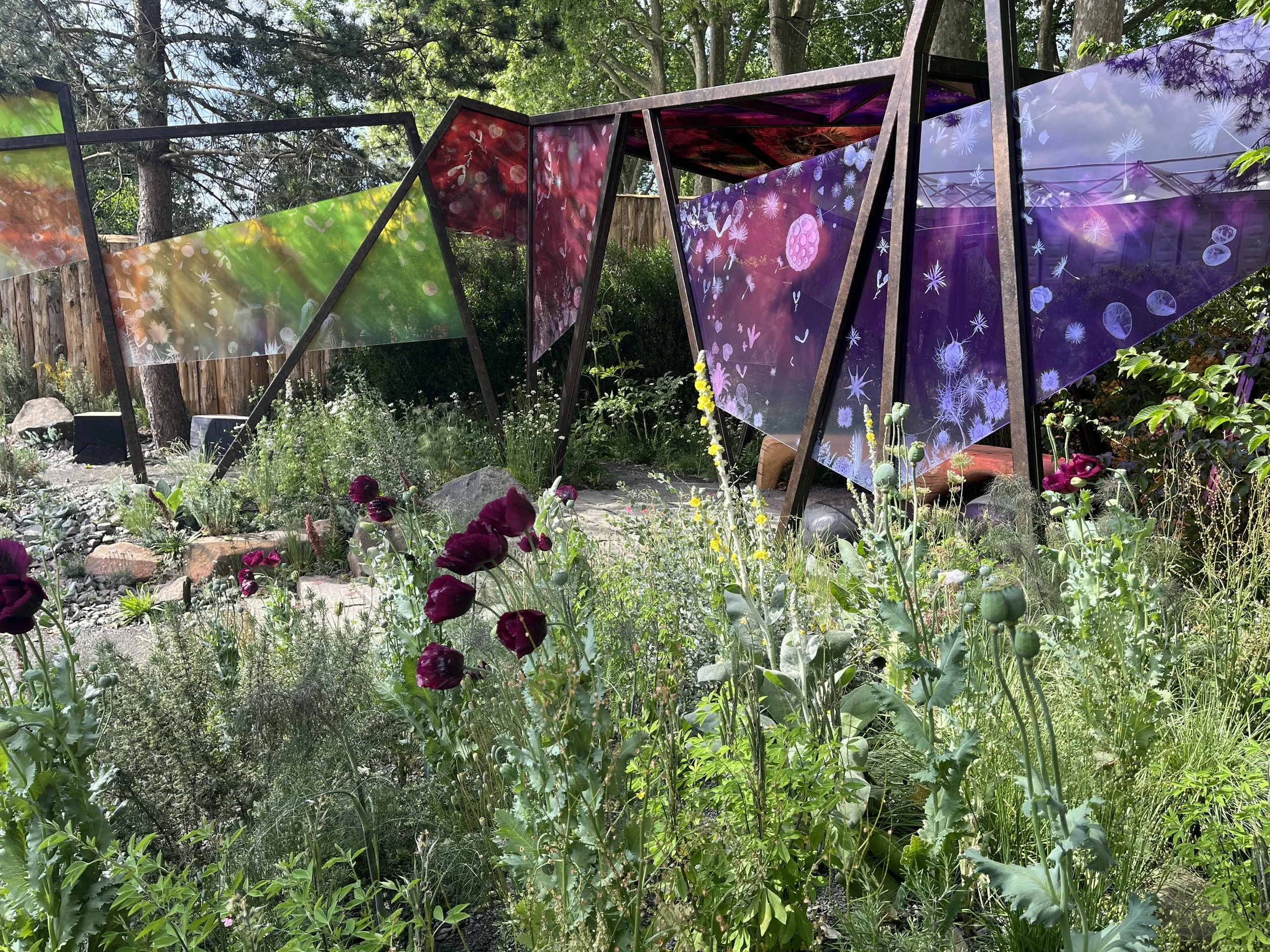
Biophilic influence from the 2025 RHS Chelsea Flower Show

Biophilic influence from the 2025 RHS Chelsea Flower Show

Biophilic influence from the 2025 RHS Chelsea Flower Show Something that could be perceived as outdated, yet still prevails, is that many people visit the prestigious RHS Chelsea Flower Show expecting to be wowed by the grandness of the gardens, much like they were in days of old; when the big corporates sponsored designers to build extravagant, potentially unachievable (to us mortals) works of art, with very little thought around the environmental impact of materials used, construction methods and certainly not a whisper of sustainability - gasp, what even is that? Thankfully, the tide has truly turned and we now see more focus on what is going on behind the scenes with an insistence on rehoming the gardens and a strong encouragement on using sustainable materials, planning clever water capture methods and building with minimal ground disturbance. This year, it was also wonderful to see so many of the planting schemes blending foraging, feeding and biodiversity needs, using companion planting and showing an in-depth knowledge of ecosystems, thus demonstrating how we as mere consumers can future-proof our own green spaces. I felt visitors were given renewed confidence that experimenting is actually okay, and gained vital inspiration in ways to interact with their own garden. READ ON….