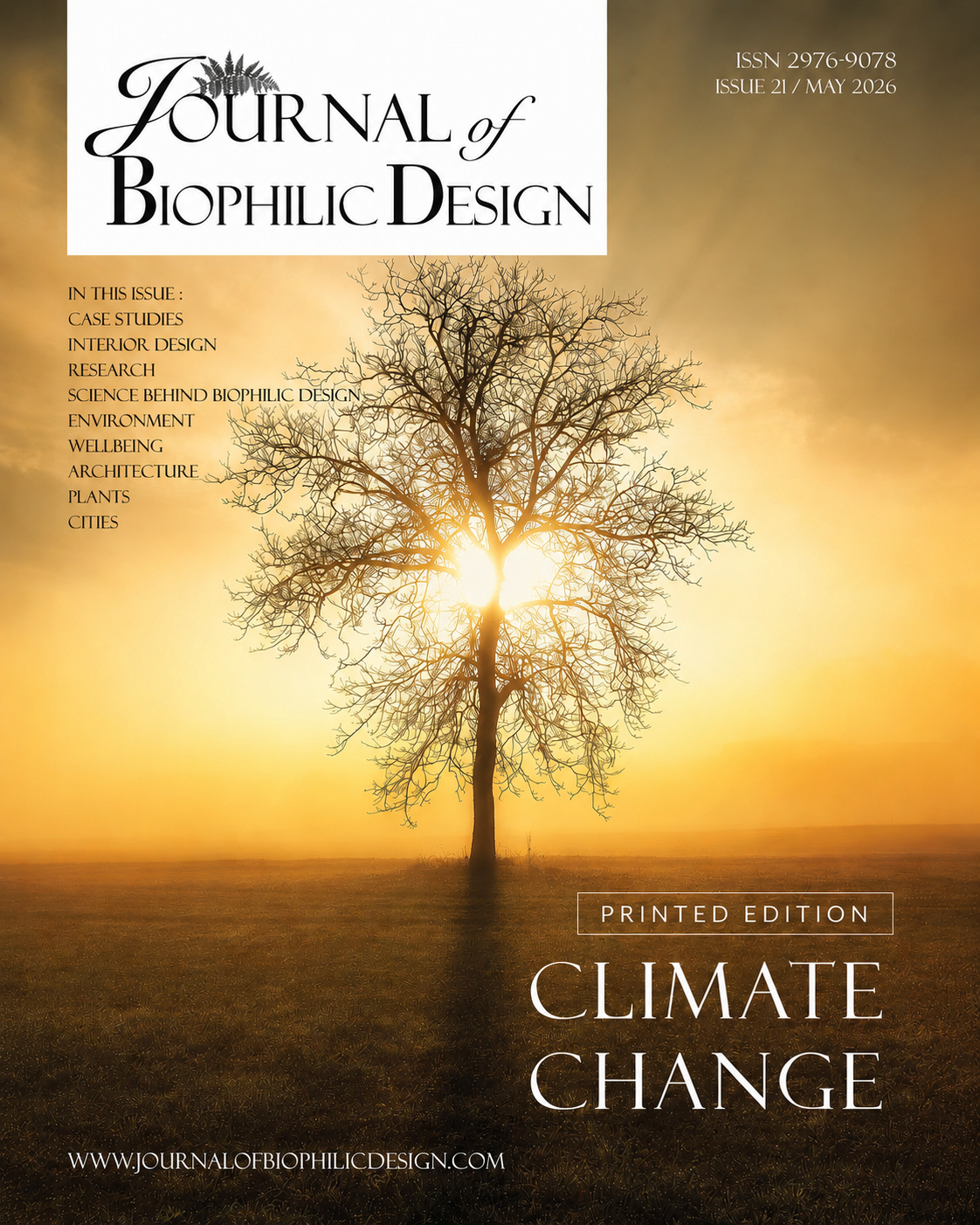
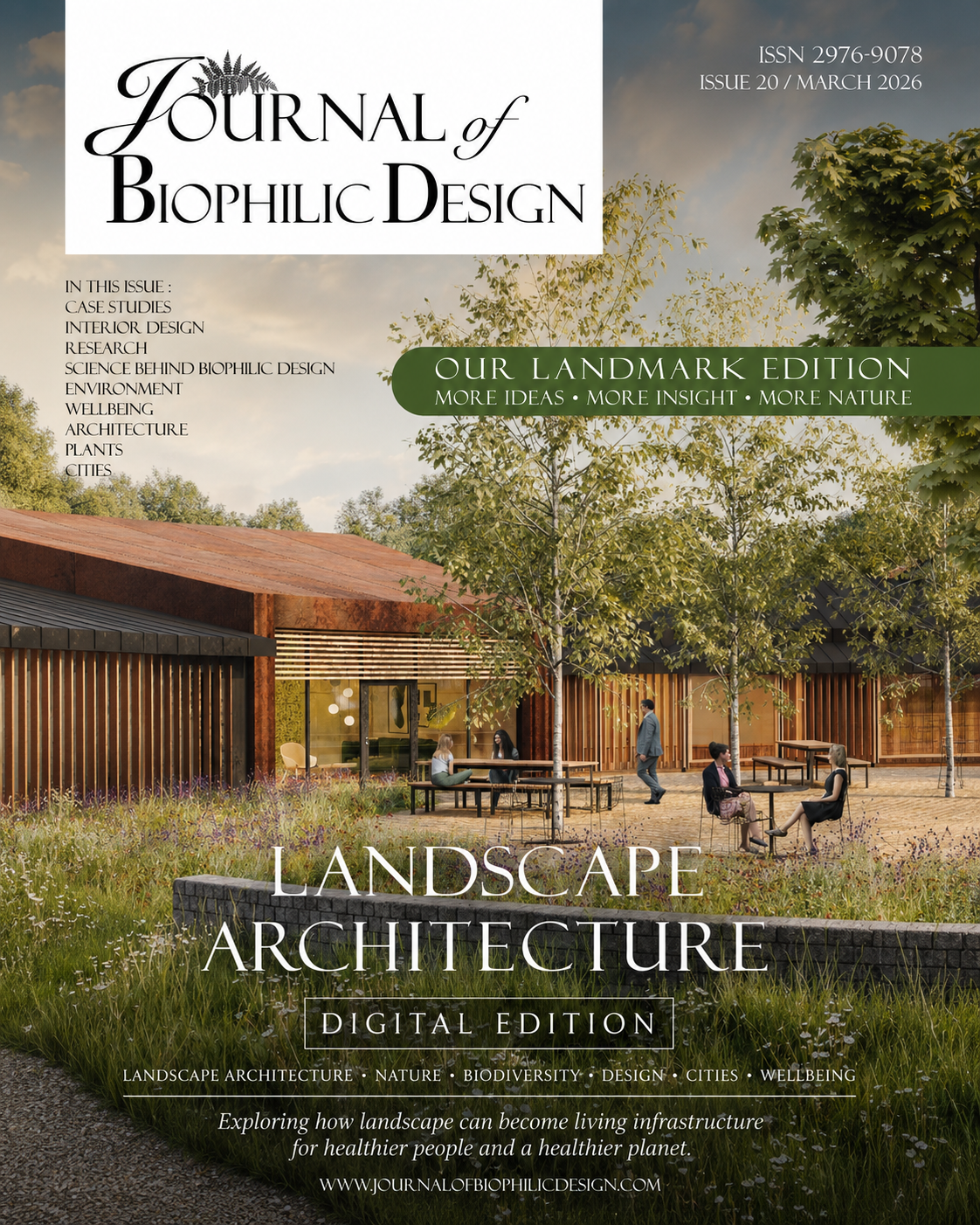
Journal of Biophilic Design Issue 21 - Climate Change - Printed Coffee Table Book
Climate Change, Biophilic Design and the Future of Sustainable Architecture and Design
How can biophilic design help tackle climate change? It's one of the defining questions facing architects, interior designers, landscape architects, planners, developers and policymakers today. As climate change accelerates, the built environment has a critical role to play in reducing carbon emissions, restoring biodiversity and creating healthier places for people to live, work, learn and heal.
Climate change is no longer a future concern—it is our present reality. Record-breaking temperatures, extreme weather events, biodiversity loss, poor air quality and increasing pressures on human health are being experienced across every region of the world. The way we design our buildings, cities and landscapes has never mattered more.
At the Journal of Biophilic Design, we believe that biophilic design is far more than an aesthetic appreciation of nature. It is a practical, evidence-based approach to creating sustainable architecture, healthy buildings, climate-resilient citiesand regenerative design solutions that benefit both people and the planet.
The science is clear. We already know enough to act.
Throughout this Climate Change edition, we explore how nature-based solutions, green infrastructure, urban greening, biophilic architecture, interior landscaping, circular design and biobased materials can help address some of the greatest environmental challenges of our time. We examine the latest research, innovative case studies and pioneering projects that demonstrate how the built environment can become a powerful force for climate adaptation and mitigation.
This issue explores topics including:
Climate change and the future of the built environment
Biophilic design principles for architecture and interiors
Circular economy strategies in design and construction
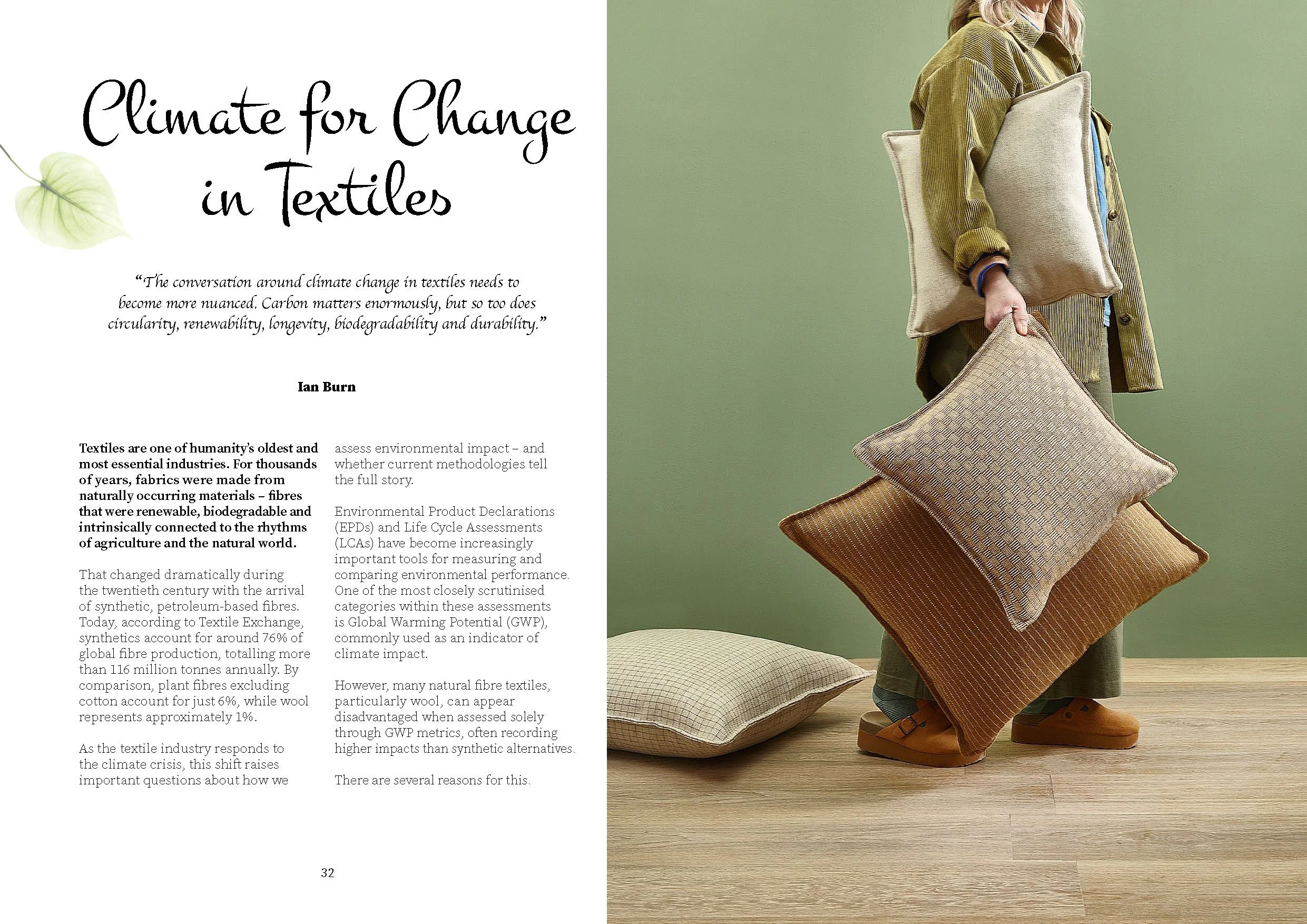
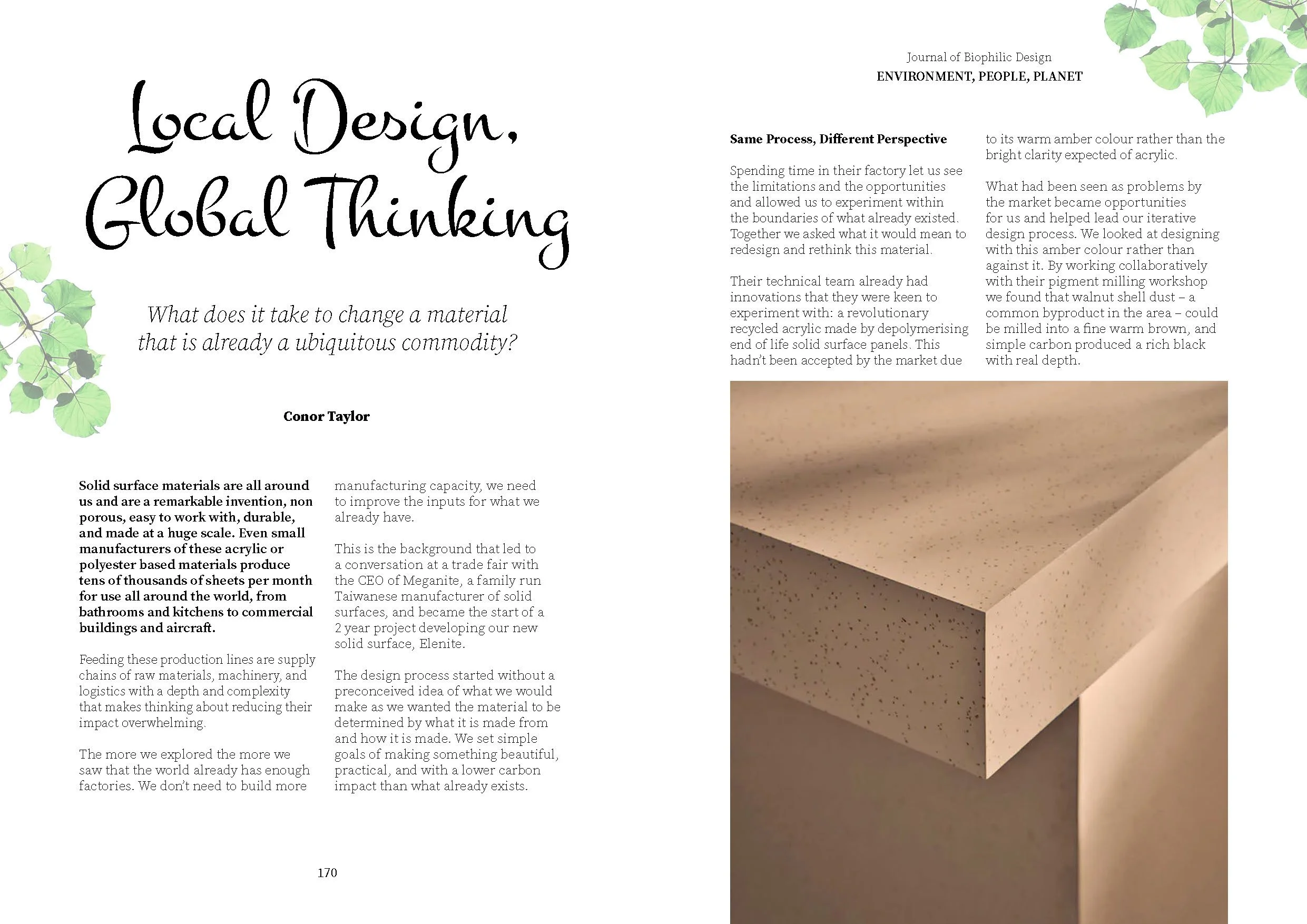
Biobased and low-carbon building materials
Biodiversity and regenerative landscape design
Urban greening and climate resilience
Healthy workplaces, schools and healthcare environments
Sustainable architecture and innovative design practice
Nature-positive development and resilient cities
Research shaping the future of biophilic design
Alongside expert interviews, thought leadership and practical case studies, we celebrate those leading the profession, including the BIID Anna Whitehead Shortlist, while highlighting innovations showcased during Milan Design Week 2026 that point towards a more regenerative future.
Every decision made within the built environment carries consequences. Every specification, every material choice, every planting strategy, every retrofit, every window orientation, every public realm improvement and every masterplan either contributes towards a healthier, lower-carbon future—or moves us further away from it. Collectively, these decisions shape the resilience of our communities and our planet.
This is why biophilic design matters.
At its heart, biophilic design is a way of thinking. It encourages designers to work with natural systems rather than against them. It reminds us that human health, biodiversity, climate resilience and environmental sustainability are not separate ambitions but deeply interconnected outcomes.
The solutions already exist.
Thoughtful urban greening can reduce the urban heat island effect while improving biodiversity and air quality. Trees and planting provide shade, sequester carbon and create healthier streets. Natural ventilation strategies can reduce reliance on mechanical cooling and lower operational carbon. Water-sensitive urban design can help manage flooding while restoring ecological systems. Biobased materials, circular construction, adaptive reuse and regenerative design approaches can significantly reduce embodied carbon while creating healthier interior environments.
Whether designing hospitals, schools, offices, homes, public spaces or entire cities, every project presents an opportunity to improve environmental performance while enhancing human wellbeing.
This edition demonstrates that climate-responsive design is not an aspiration for the future—it is already happening. Across architecture, interior design, landscape architecture, materials innovation, research and policy, practitioners are proving that nature-based solutions can deliver measurable environmental, social and economic benefits.
Imagine every school fostering children's connection with nature. Imagine every workplace prioritising wellbeing alongside productivity. Imagine hospitals where healing landscapes are considered essential infrastructure. Imagine cities where biodiversity, water, trees and ecosystems are planned as fundamental components of urban resilience rather than optional extras.
That future is entirely achievable.
The future of sustainable design will be determined by the choices we make today. Our responsibility now is to scale the solutions we already have, continue building the evidence base, share best practice and embed biophilic principles into every stage of planning, design and construction.
This edition is both a celebration of progress and a call to action.
Whatever we design, specify, build, commission or influence next, let's ensure it works with nature.
Because the climate cannot wait.
Neither should we.