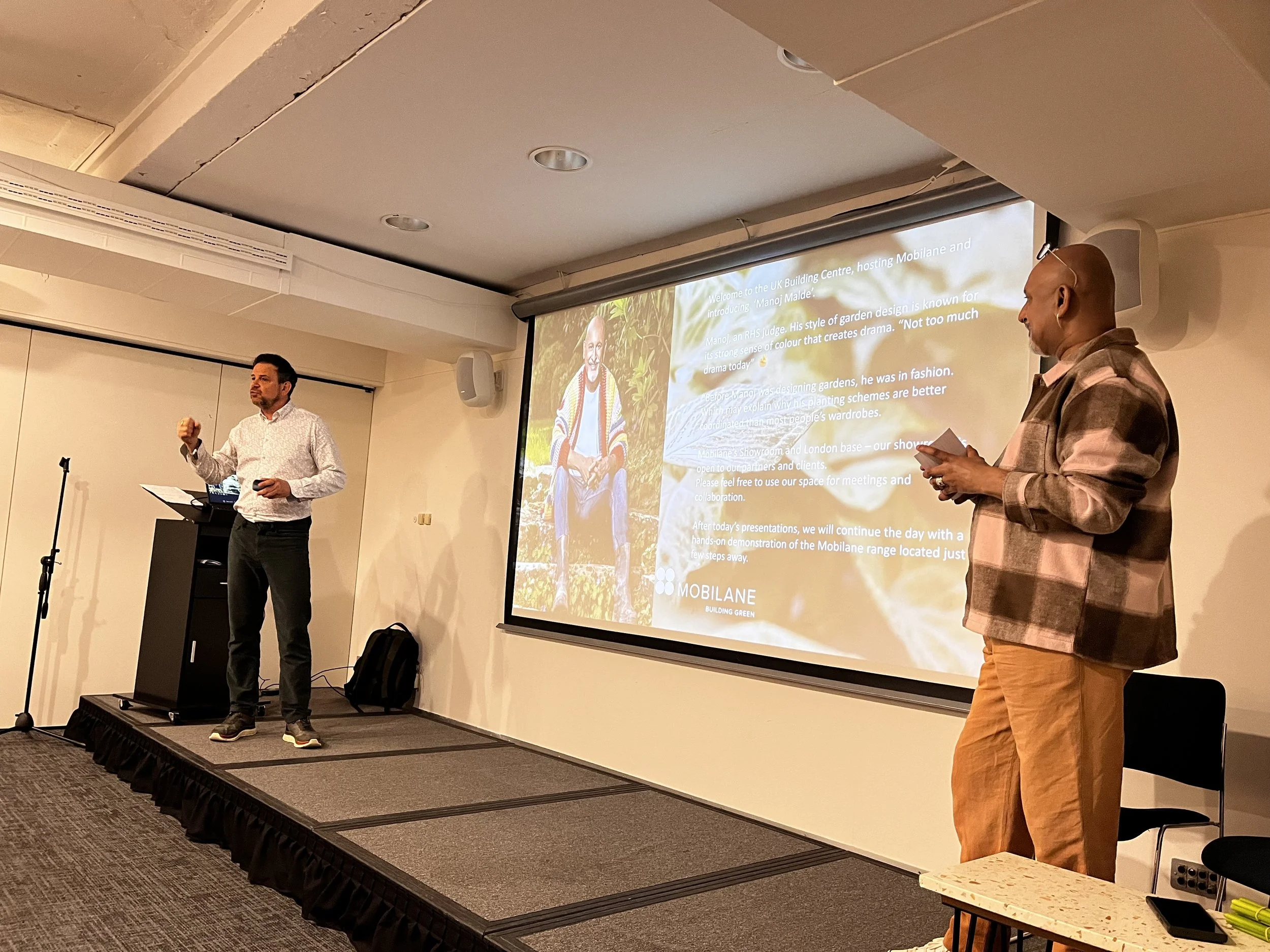
I was thrilled to be asked to attend a talk today hosted by Mobilane at The Building Centre, with award-winning garden designer, writer and TV presenter Manoj Malde who delivered a passionate and deeply personal exploration of living green walls and their role in the future of cities. Blending storytelling with research and practical design insight, Manoj made a compelling case that greenery in urban environments is a fundamental requirement for healthier, more resilient places to live.
Before becoming a garden designer, Manoj worked in the fashion industry, but a career shift led him into landscape and garden design. Early in that transition he spent time in Hong Kong. Surrounded by dense clusters of skyscrapers, he remembers waking one morning expecting to hear birdsong, only to be met with silence. The absence of a dawn chorus, something he had always taken for granted, left him feeling physically unsettled. It was that moment he realised something important, that when nature disappears from daily life, we feel it in our bodies.
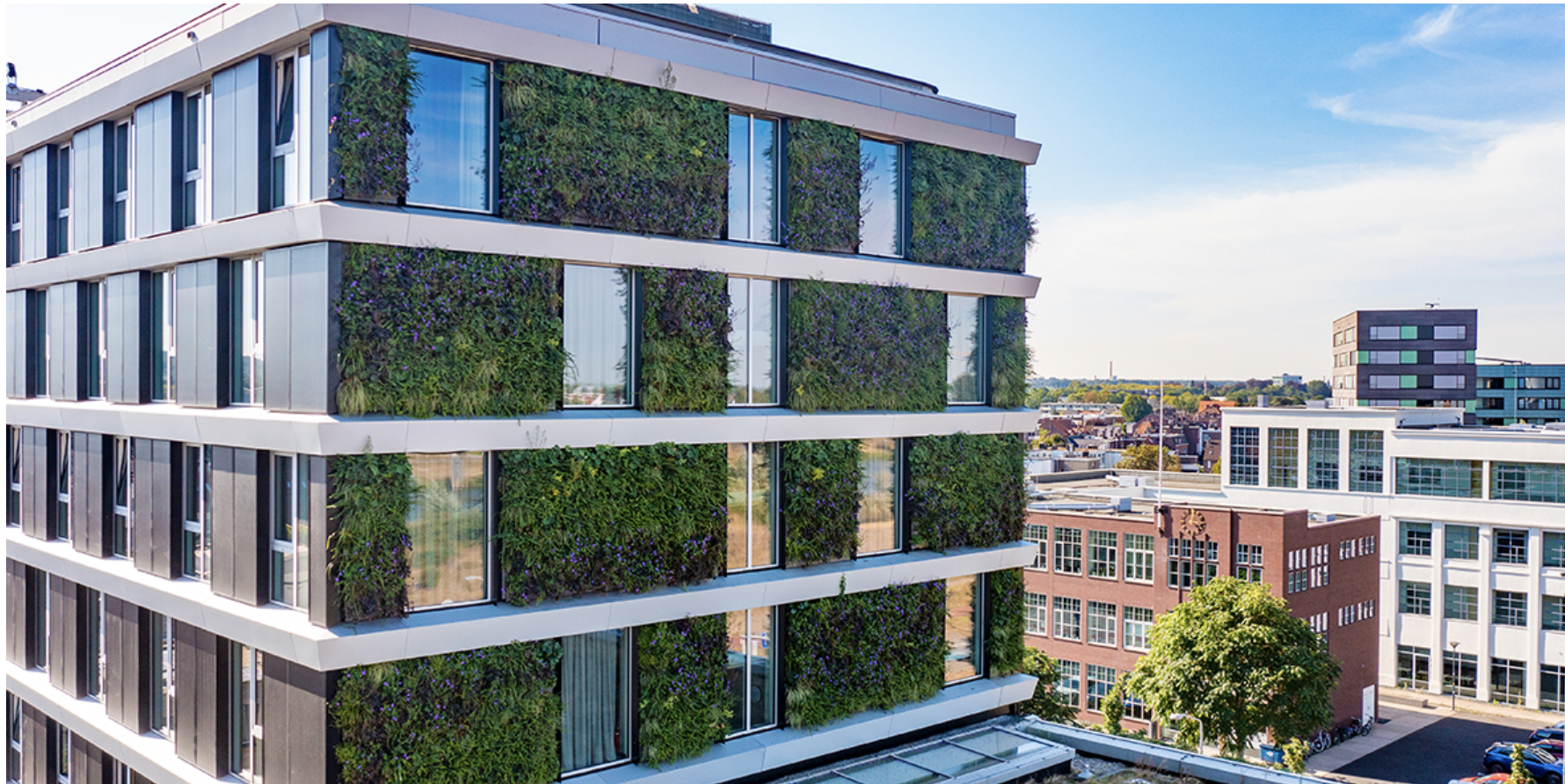
For Manoj, that experience explains why greenery must be treated as essential infrastructure rather than ornamental add-ons. Living green walls, green façades and vertical planting systems can transform cities where horizontal space for parks and gardens is limited.
One of his strongest arguments relates to biodiversity and the alarming decline in pollinators. Manoj highlighted research showing roughly a 20% drop in bee species in recent decades, which is threatening plant reproduction, food production and wider ecosystems. Vertical planting systems can provide vital habitat and nectar sources in dense urban environments. Even relatively small interventions can create stepping stones for pollinators moving through cities, helping to rebuild fragmented ecological networks.
What’s good for nature is also good for us. In the modern city we are surrounded by artificial noise, artificial light and artificial environments. The restorative effects of natural soundscapes, such as birdsong are well documented, with practices like forest bathing shown to reduce stress and lower blood pressure. Bringing plants into daily environments can produce measurable improvements in concentration, mood and productivity.
In workplaces and classrooms the impact can be particularly strong. Manoj pointed to studies showing that the presence of plants increases alertness and cognitive performance while reducing absenteeism. Even modest plant installations can transform how people feel within a space, making environments calmer, healthier and more supportive.
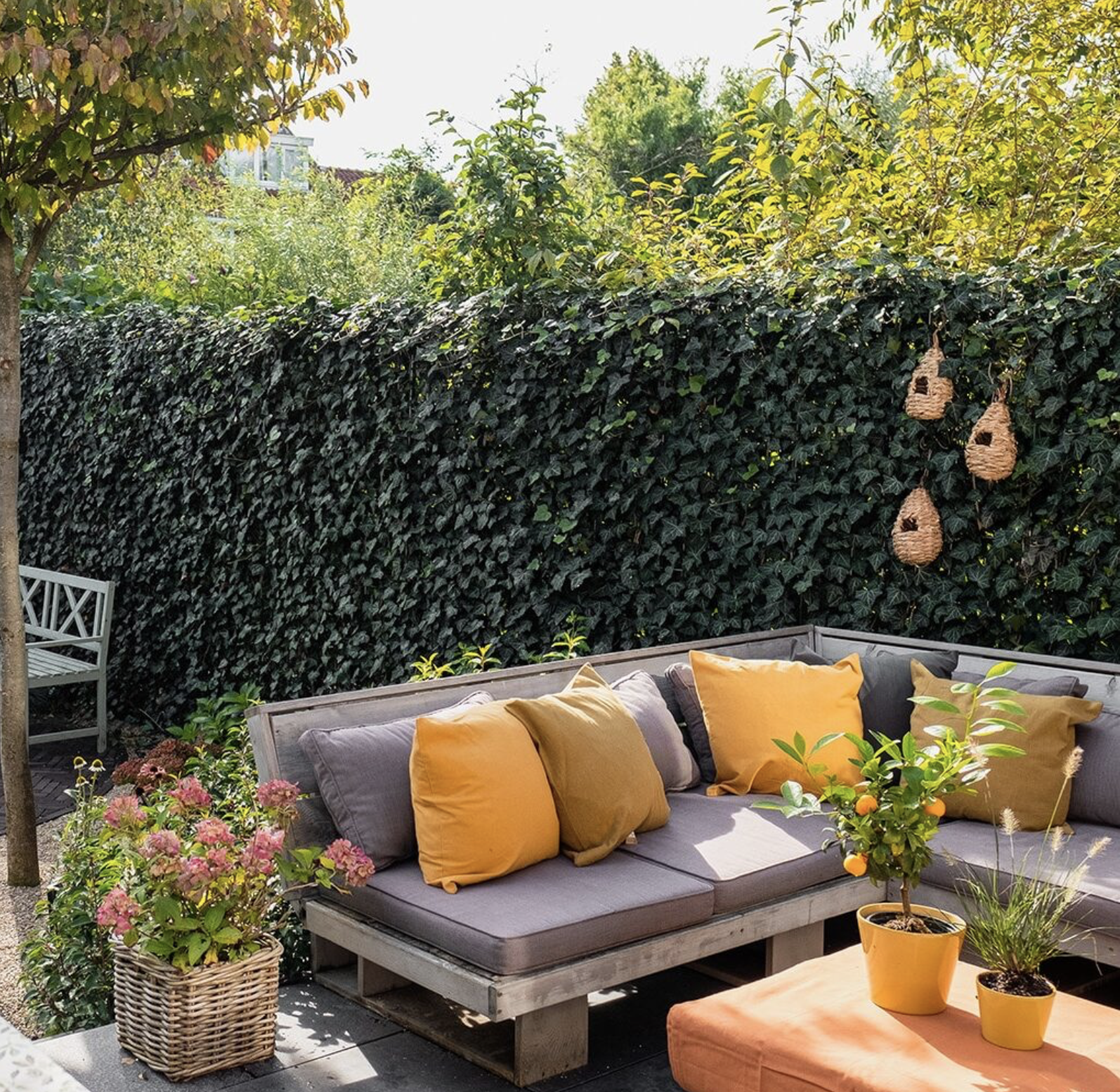
Living walls also play an important role in regulating urban climates. Manoj referenced research from the universities of Plymouth and Sheffield suggesting that vegetated façades can reduce building energy consumption by up to 30%. Plants shade surfaces from direct sunlight while evapotranspiration, the process by which plants release moisture, cools the surrounding air. The result is a natural microclimate that can significantly reduce reliance on mechanical cooling.
Air quality is another area where vertical greening delivers tangible benefits. Plants act as natural biofilters, capturing particulate matter and absorbing carbon dioxide. Manoj also noted that a single square metre of living wall can capture measurable amounts of CO₂ each year while trapping airborne pollutants, particularly valuable along busy streets, car parks and densely built residential areas.
Water management is also part of the story. Vegetated façades help intercept rainfall, slowing runoff and reducing the risk of flooding. In cities increasingly affected by extreme weather events, this capacity to absorb and manage water becomes an important component of climate resilience.
Manoj also highlighted the acoustic benefits of living walls. Layers of foliage and soil absorb and scatter sound waves, reducing urban noise by as much as 9 to 15 decibels. In traffic-dominated environments, that reduction can significantly improve comfort and quality of life.
Throughout his talk he illustrated these ideas with striking examples. One of the most iconic is Bosco Verticale in Milan — the celebrated “vertical forest” where hundreds of trees grow from the balconies of two residential towers. The project demonstrates how buildings themselves can become habitats, cooling the surrounding environment while filtering pollutants and supporting wildlife.
He also showed examples closer to home, of more modest interventions: rooftop installations, car parks transformed with vertical planting panels, and lush residential walls that turn blank façades into living ecosystems. Even indoors, he explained, “living pictures” composed of succulents, sedums and tropical plants can bring nature into offices, reception areas and bathrooms.
Practical planting knowledge is key. Manoj encouraged the designers in the room to think in ecological layers, namely canopy, shrub and groundcover and to carefully match species to microclimates. Shade-tolerant plants such as fatsia, asplenium and mahonia thrive in darker conditions, while sun-loving species like lavender and rosemary suit exposed façades. Indoors, plants such as monstera, Boston ferns and peace lilies can create visually striking yet resilient installations.
Complementing Manoj’s design perspective, Paul Garlick from Mobilane offered insight into how vertical greening systems are being developed and implemented at scale. Mobilane, a family-run company headquartered in Arnhem with nurseries in Slough, is working to make living walls more accessible through modular planting systems.
Paul described lightweight cassette panels that allow pre-planted living walls to be installed quickly while reducing structural load on buildings. Smart irrigation systems with sensors and monitoring technology help maintain plant health while minimising water use, making installations more reliable for both residential and commercial projects.

He also emphasised the importance of measurable ecological impact. Mobilane is collaborating on new biodiversity monitoring methods, including DNA-based insect scanning, to track the number and variety of species living within vertical habitats. This approach allows designers and developers to quantify biodiversity gains — an increasingly important factor as cities adopt biodiversity net-gain policies.
Beyond technical innovation, Paul highlighted the social value of vertical greening. Transforming neglected or vandal-prone walls with living vegetation can improve neighbourhood pride, create calmer streetscapes and support healthier environments, particularly helpful around schools and busy roads where air quality is a concern.
Taken together, the two presentations really hit home how vertical greening is a practical, multi-functional solution to many urban challenges. Cities that embrace nature, even on their walls, become healthier, cooler and more joyful places to live.
Architects, landscape designers, developers and clients must work together to rethink how we use the vertical surfaces around us. In dense cities, walls may be the most important green space we have left and turning them into living ecosystems could help reconnect urban life with the natural world.
To find out more about what Biophilic Design is visit: https://journalofbiophilicdesign.com/what-is-biophilic-design
To explore Mobilane’s super easy living wall systems visit: https://mobilane.com/en/home/
And to be inspired by the creativity that emanates from Manoj visit: