As record-breaking temperatures sweep across continents once again, it is becoming increasingly difficult to view extreme heat as an occasional weather event. From Europe and North America to Asia, Africa and Australia, heatwaves are growing more frequent, more intense and more prolonged. The impacts are profound: rising mortality, increased pressure on healthcare systems, declining productivity, infrastructure failure, biodiversity loss and growing social inequality.
Climate change is often discussed in terms of carbon emissions, energy systems and technological innovation. While these are all essential, we must also pay attention to how we design the places where people live, work, learn and heal. The built environment has become one of our greatest vulnerabilities during periods of extreme heat. Yet it also presents one of our greatest opportunities.
This is where Biophilic Design offers an evidence-based framework for action.
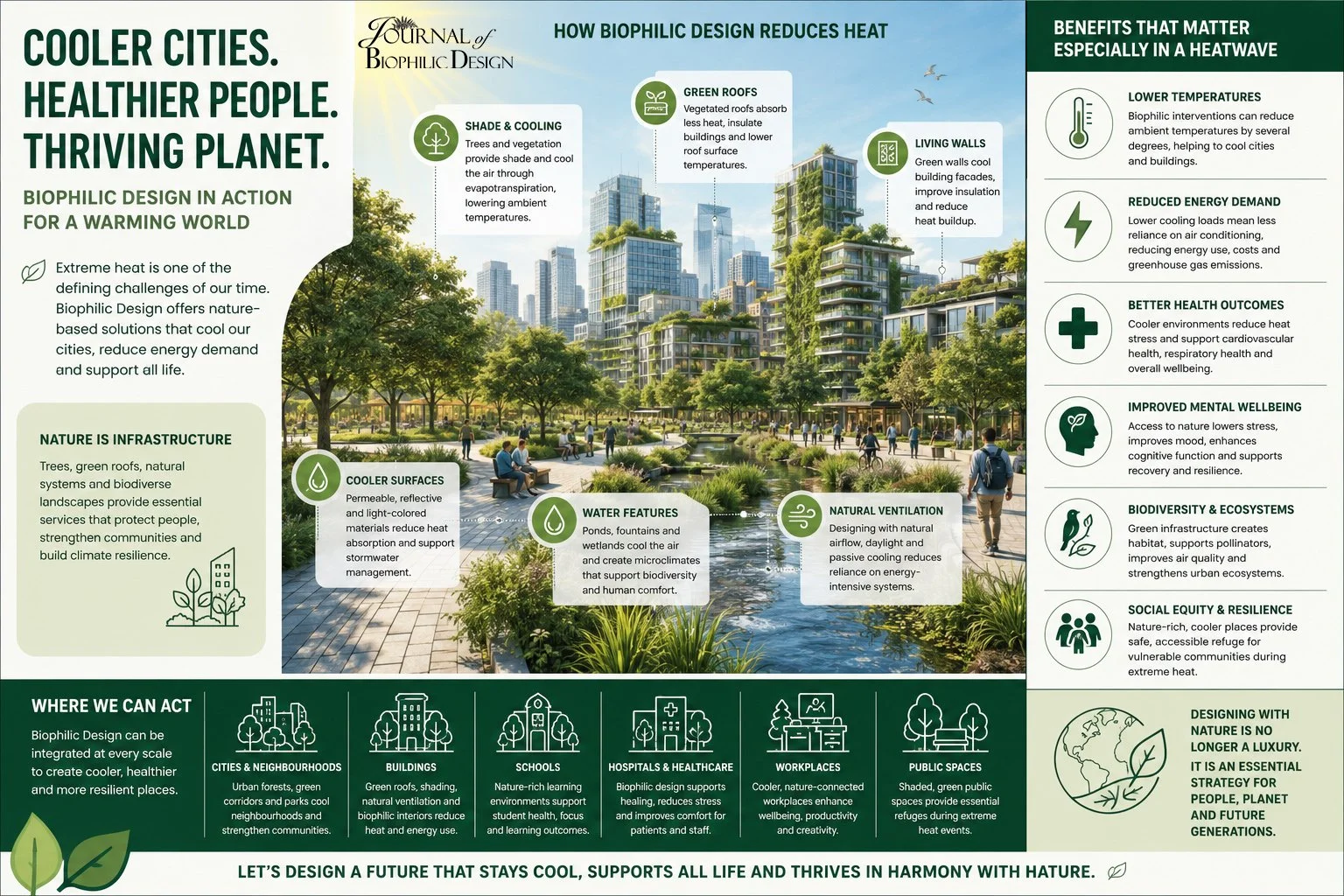
At its heart, Biophilic Design recognises that human beings are part of nature, not separate from it. By integrating natural systems, processes and experiences into buildings, neighbourhoods and cities, it seeks to create environments that support both ecological health and human wellbeing. Increasingly, the evidence shows that these same principles can play a vital role in climate adaptation, particularly in helping communities cope with rising temperatures.
Perhaps nowhere is this more apparent than in our cities. Urban areas often experience the "urban heat island" effect, where concrete, asphalt and dark surfaces absorb and retain heat, making cities significantly warmer than surrounding rural areas. In some locations, temperatures can be several degrees higher, particularly during the night when heat trapped by buildings and hard surfaces is slowly released back into the environment.
Biophilic interventions directly address this problem.
Urban trees, parks, green corridors and natural landscapes provide shade and cool the surrounding air through evapotranspiration, the process by which plants release water vapour into the atmosphere. Studies consistently demonstrate that tree-lined streets can be several degrees cooler than those lacking vegetation. At city scale, connected green infrastructure networks can significantly reduce ambient temperatures while creating habitats for wildlife and improving air quality.
Green roofs and living walls offer additional benefits. Vegetated roofs absorb less solar radiation than conventional roofing materials, helping to lower roof surface temperatures and reduce heat transfer into buildings. They also provide valuable habitat for pollinators and birds, help manage stormwater and contribute to urban biodiversity. Living walls can similarly cool building facades, improve insulation and reduce localised heat accumulation.
The cooling effects extend beyond outdoor environments. Buildings designed with biophilic principles frequently incorporate natural ventilation, daylight optimisation, shading strategies and passive cooling techniques inspired by natural systems. These approaches can reduce dependence on mechanical air conditioning while creating healthier and more comfortable indoor environments.
This is particularly important as energy demand rises during heatwaves. Conventional cooling systems often create a paradox: they protect occupants from extreme heat while increasing energy consumption and, in many regions, contributing to further greenhouse gas emissions. Biophilic and climate-responsive design can help break this cycle by reducing cooling loads through thoughtful integration of nature and passive environmental strategies.
Yet the benefits are not purely physical.
Extreme heat places considerable stress on the human body and mind. Research increasingly links higher temperatures with reduced cognitive performance, poorer concentration, increased aggression, disrupted sleep and declining mental wellbeing. Vulnerable populations—including older adults, children, people with pre-existing health conditions and those living in disadvantaged communities—are disproportionately affected.
Nature can help build resilience.
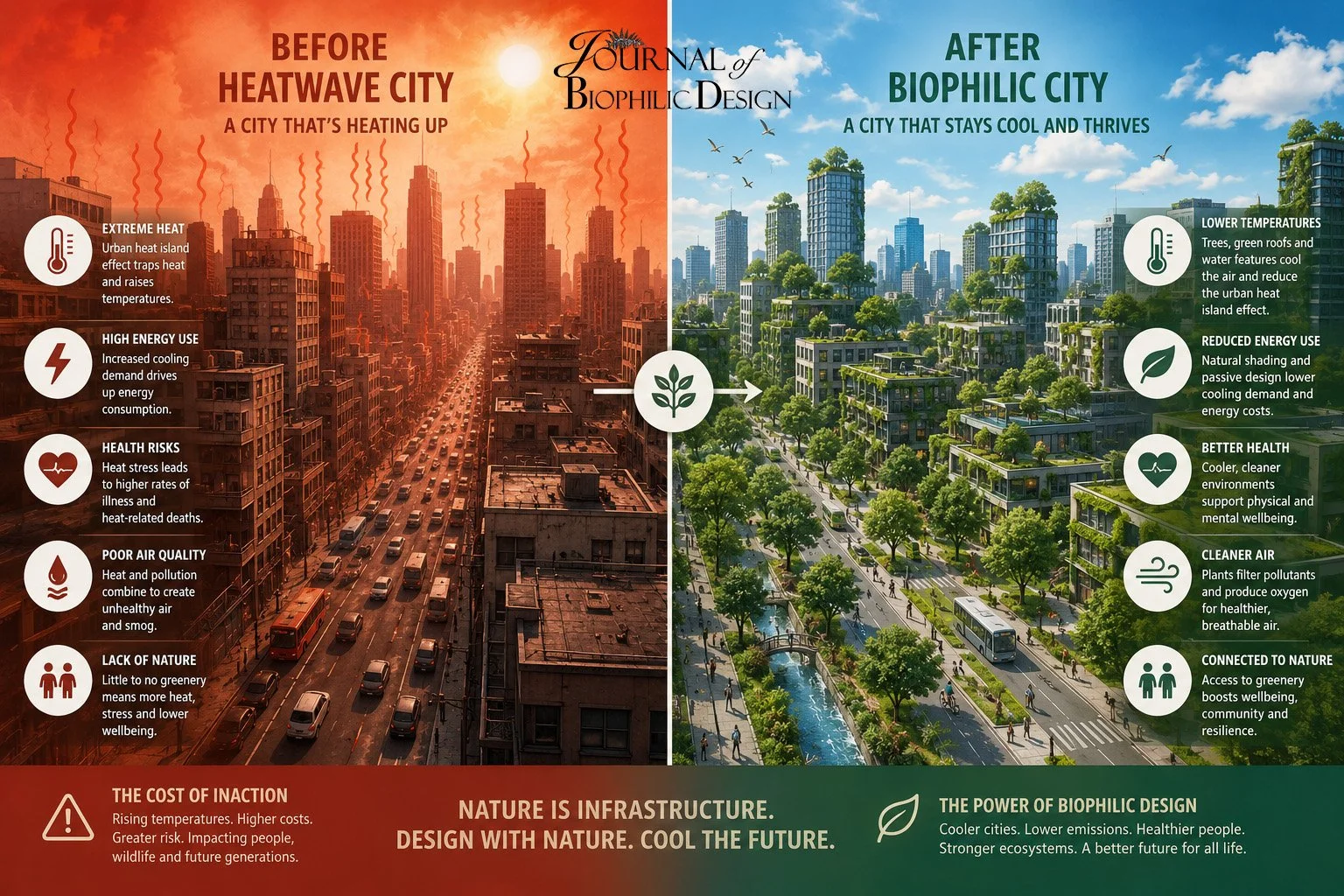
Access to green spaces has been associated with lower stress levels, improved mental health, enhanced social cohesion and better overall wellbeing. During periods of extreme heat, shaded parks, tree-covered public spaces and nature-rich environments can provide essential refuges for both people and wildlife. In healthcare settings, schools and workplaces, biophilic environments can support comfort, recovery, learning and performance even as external temperatures rise.
Importantly, Biophilic Design also encourages a shift in perspective. Rather than treating nature as an aesthetic feature or optional amenity, it positions natural systems as essential infrastructure. Trees, wetlands, green roofs, urban forests and biodiverse landscapes perform critical services that support public health, climate resilience and ecological stability. They are every bit as important as roads, utilities and buildings.
As governments, planners, developers, architects and policymakers seek solutions to the climate crisis, there is an urgent need to implement approaches that deliver multiple benefits simultaneously fast and for long term. Biophilic Design offers precisely that. It can help cool cities, reduce energy demand, improve public health, strengthen biodiversity, enhance climate resilience and reconnect people with the natural world upon which all life depends. We need to act NOW.
The global heatwaves we are witnessing today are a warning of the future we are rapidly approaching. We need to adapt, fast.
Biophilic Design provides a practical, evidence-informed pathway forward. It offers a framework that helps decision-makers translate climate science into tangible action across cities, buildings, schools, hospitals, workplaces and communities. In a warming world, designing with nature has to be an essential strategy for protecting people, supporting biodiversity and creating places capable of thriving in the decades ahead.
Dr Vanessa Champion, Founder and Editor, Journal of Biophilic Design.
The Journal of Biophilic Design is the independent global voice uniting designers, scientists, policymakers and industry leaders around a shared belief: that better relationships with nature can help heal people and our planet. We publish, broadcast and convene the conversations turning that vision into action.
www.journalofbiophilicdesign.com
What is Biophilic Design?